Blog
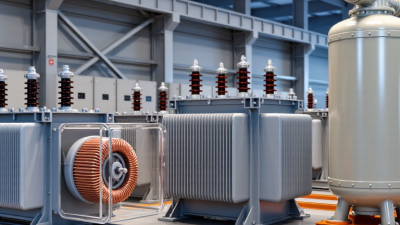
What Are the 2026 Top Neutral Transformers for Global Buyers?
For global buyers, choosing the top Neutral Transformers in 2026 will require more than comparing price tags. These units support reliable power distribution, voltage stability, and safer system performance across industrial, commercial, and infrastructure projects. A transformer that works well in Germany may need different specifications in Brazil, India, or South Africa. Frequency, ambient temperature, altitude, grounding practice, and local grid requirements all matter. Small details matter.
This guide examines practical factors behind a dependable purchase. It considers rated capacity, primary and secondary voltage, impedance, vector group, insulation class, cooling method, and no-load losses. It also reviews noise levels, enclosure protection, corrosion resistance, and maintenance access. Buyers should request routine test reports, temperature-rise results, efficiency data, and traceable factory inspection records. Independent certification can strengthen confidence, but certification alone does not prove long-term field performance. That distinction is easy to miss.
The strongest manufacturers usually explain their design choices clearly. They provide drawings, technical schedules, warranty terms, spare-parts support, and realistic delivery estimates. Experienced buyers may also inspect winding materials, core construction, neutral-point arrangements, and quality-control procedures before signing a contract. However, no universal ranking can suit every project. A compact dry-type unit may fit a hospital, while an oil-immersed model may better serve a remote plant. Some supplier data remains incomplete or overly optimistic, so verification is essential. This article compares leading options through a balanced, evidence-based lens, while recognizing that performance depends on installation quality, operating conditions, and disciplined maintenance.
Read more »
 By:Clara
- November 1, 2026
10 Best Isolation Transformers for Industrial Use
Industrial electrical systems rarely fail in dramatic ways. More often, a small insulation defect, a noisy motor, or an unexpected ground path creates a serious maintenance problem. Isolation Transformers help reduce these risks by separating a load from the supply and limiting unwanted electrical coupling. Their value becomes clearer beside a control cabinet, a medical workstation, or a machine exposed to dust, vibration, and switching noise.
Electrical safety educator Mike Holt often says, “Safety is not expensive, it’s priceless.” That principle fits transformer selection well. A suitable unit must match the application, not merely the voltage label. Engineers should examine kVA capacity, primary and secondary voltage, shielding, insulation class, enclosure rating, thermal performance, and grounding arrangements. Installation quality matters just as much. A well-designed transformer can still perform poorly when ventilation is blocked or connections are loose.
This guide, “10 Best Isolation Transformers for Industrial Use,” evaluates practical options for demanding facilities. It considers reliability, protection features, efficiency, serviceability, and suitability for continuous operation. Some models may appear impressive on paper but feel less convincing under real factory conditions. That is worth acknowledging. Product specifications cannot fully predict noise, heat, or maintenance experience.
The strongest choice depends on the load and environment. A compact unit may suit sensitive instrumentation, while a rugged enclosed model may better protect a production line. Careful comparison can prevent costly downtime and unsafe improvisation. These recommendations are intended to support informed engineering judgment, not replace site-specific electrical assessment.
Read more »
 By:Evelyn
- October 27, 2026
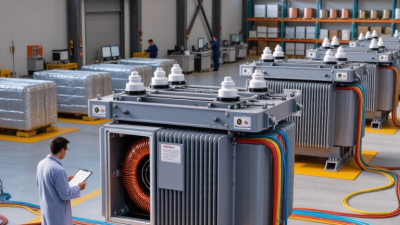
How to Choose China Top Step Down Transformer Suppliers
Choosing among China’s top Step-Down Transformers suppliers requires more than comparing catalog prices. A reliable supplier should demonstrate technical competence, stable production, and clear communication. The right choice protects equipment, reduces downtime, and supports predictable project costs.
John D. Winders Jr., author of Power Transformers: Principles and Applications, wrote, “The transformer is one of the most efficient electrical machines ever devised.” That efficiency depends on correct design and disciplined manufacturing. Buyers should examine voltage ratios, rated capacity, frequency, insulation class, temperature rise, cooling method, and expected load conditions. Small details matter. A 400 kVA unit may appear suitable, yet poor harmonics management can create excessive heat in actual service.
Look beyond polished websites. Request recent test reports, winding materials, core-loss data, quality certificates, and product drawings. Confirm whether testing follows recognized standards, such as IEC or equivalent national requirements. Factory audits, video inspections, and independent testing can expose gaps before payment. They are not perfect safeguards. Still, they improve confidence.
A serious supplier should explain delivery schedules, spare parts, warranty limits, installation support, and after-sales response times. Ask for references from projects with similar voltage and environmental conditions. Coastal installations, dusty factories, and outdoor substations demand different protection details. The cheapest offer may win attention. It may also conceal thinner copper, weaker insulation, or uncertain testing.
The selection process should remain evidence-based. Compare total ownership cost, not only the purchase price. Check every claim. Reconsider convenient assumptions. A dependable China Step-Down Transformers supplier earns trust through measurable performance, transparent documentation, and consistent support after shipment.
Read more »
By:Clara
- October 22, 2026
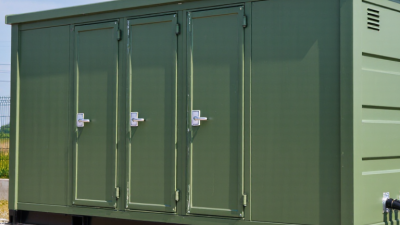
What Are the Top Pad Mounted Transformers?
Choosing the top Pad-Mounted Transformers is not a simple brand comparison. Utility engineers examine capacity, voltage class, enclosure strength, safety features, and service history. A transformer that performs well in a dry suburban vault may struggle beside a coastal road.
Thomas A. Prevost, a recognized transformer specialist, emphasizes, “Transformer reliability depends on disciplined design, installation, and maintenance.” That principle shapes this guide. The strongest units usually combine efficient cores, sealed oil systems, corrosion-resistant cabinets, and clear internal layouts. Dead-front construction can reduce exposure during routine switching. Loop-feed designs may also support better network flexibility.
Small details matter.
A properly sized transformer should handle present demand without wasting energy at light load. It should also leave practical room for future growth. Engineers often compare sound levels, temperature rise, fault protection, and cable-access space before selecting a model. A locked cabinet, reliable grounding point, and visible warning labels can prevent avoidable maintenance problems.
Still, no universal winner exists. Site conditions change the answer. Soil moisture, salt air, flooding risk, vandalism exposure, and local utility standards can overturn a convenient ranking. Even a premium transformer can fail when ventilation, loading, or installation practices are poorly managed.
This article evaluates leading Pad-Mounted Transformers through performance, safety, durability, serviceability, and lifecycle value. It considers both manufacturer specifications and field realities, including cramped equipment pads, muddy work areas, and overheated summer enclosures. Some judgments remain imperfect because long-term field data is not always publicly available. That limitation deserves attention, not concealment.
Read more »
By:Evelyn
- October 17, 2026
Why Choose Hermetically Sealed Transformers?
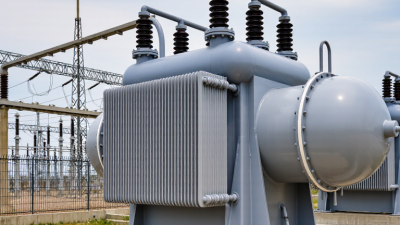
Electricity networks are carrying heavier and less predictable loads. The International Energy Agency’s Electricity 2024 report expects global electricity demand to grow by about 4% annually through 2026. More substations will therefore need dependable transformer capacity. In this environment, Hermetically Sealed Transformers offer a practical response to moisture, oxygen, and maintenance risks.
Their sealed tank contains the insulating oil without a conservator or continuous contact with outside air. This detail matters in humid coastal substations, dusty industrial yards, and remote renewable-energy sites. Reduced oxygen exposure can slow oil oxidation and limit sludge formation. The design also reduces the chance of moisture entering through a breathing system. Fewer external fittings can mean fewer inspection points. That is useful, but not magical.
The U.S. Department of Energy’s 2024 distribution-transformer efficiency rule highlights the long-term energy cost of transformer losses. Its analysis projects substantial national energy savings across the equipment’s service life. CIGRE publications also emphasize condition monitoring, oil quality, thermal performance, and loading discipline. These points support a broader engineering view: reliability depends on both design and operation. A hermetically sealed tank cannot correct overloads, poor installation, or inadequate protection settings.
No transformer design fits every project. Sealed units may complicate pressure management and internal fault assessment. Engineers must check fault levels, ambient temperature, oil type, expansion behavior, and service access before selection. The strongest case appears where low maintenance, compact installation, and environmental exposure matter most. Choosing wisely requires evidence, not fashion. That is why the question is worth examining carefully.
Read more »
 By:Amelia
- October 12, 2026

Top 10 Compact Substations Suppliers Worldwide?
Compact Substations are becoming essential for modern power distribution in crowded cities, industrial parks, renewable projects, and remote facilities. Their factory-assembled design can reduce installation time, simplify site work, and protect sensitive equipment from harsh environments. However, supplier quality differs widely. A polished brochure does not always prove dependable field performance.
This guide examines ten leading Compact Substations suppliers worldwide. The evaluation considers transformer efficiency, enclosure protection, switchgear integration, safety features, customization, delivery capability, and after-sales service. It also considers practical evidence, including project experience, certification practices, manufacturing capacity, and customer support. Small details matter. Cable access, ventilation, maintenance clearance, and noise control can affect daily operation.
Reliable comparisons require more than market visibility. Supplier data, technical documents, and public project information should be checked carefully. Some companies disclose detailed test results, while others provide limited evidence. That difference deserves attention. Regional standards and grid requirements may also change the final selection. A strong supplier in Europe may not fit every African, Asian, or Middle Eastern project without local adaptation.
The rankings are therefore a useful starting point, not an absolute verdict. Buyers should verify voltage ratings, fault levels, environmental conditions, spare-parts access, and commissioning support before signing contracts. Field conditions can expose weaknesses that factory photographs hide. This review aims to provide a balanced, technically informed perspective for engineers, contractors, utilities, and procurement teams seeking safer and more efficient power infrastructure. Mistakes remain possible, especially where supplier information changes quickly.
Read more »
By:Evelyn
- October 7, 2026
10 Best Dry Type Transformers for Global Buyers
Global power systems are changing quickly. The International Energy Agency’s Electricity 2024 report identifies rising industrial demand, data centers, cooling, and electrification as major growth drivers. These applications require dependable voltage control in buildings, factories, hospitals, renewable-energy sites, and transport facilities.
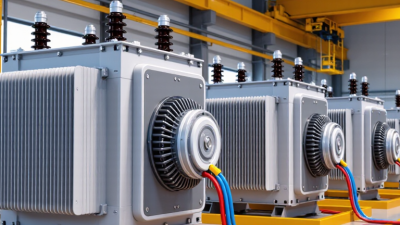
Dry Type Transformers are increasingly considered where fire safety, indoor installation, and reduced maintenance matter. Unlike oil-filled units, they use air or solid insulation instead of liquid dielectric oil. That difference can simplify installation in enclosed substations, although it does not remove every operational risk. Heat, dust, humidity, vibration, and poor ventilation still affect service life.
This guide reviews ten leading options for global buyers. The comparison considers rated capacity, insulation class, efficiency, temperature rise, noise, short-circuit strength, certification, and after-sales support. IEC 60076-11 provides an important reference for dry-type transformer design and testing. IEEE standards also support practical evaluation in North American projects. Market studies from MarketsandMarkets and Grand View Research forecast continued expansion in the global dry-type transformer sector, supported by grid modernization and renewable integration. Exact market estimates differ, because report definitions are not identical.
A lower purchase price can mislead.
The best unit may be the one with better losses, stronger documentation, and local service. Buyers should verify factory-test reports, environmental ratings, spare-part access, and compliance with project requirements. This list is useful, but it is not absolute. Site conditions can change the final choice. A transformer that performs well in a clean office may struggle beside a dusty manufacturing line. Careful engineering still matters more than a polished product brochure.
Read more »
By:Clara
- October 2, 2026
How to Choose the Right Furnace Transformer?
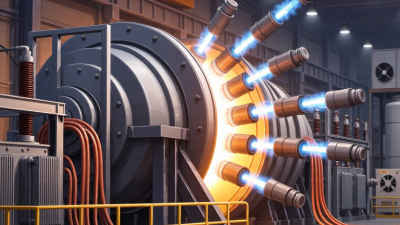
Choosing the right Furnace Transformers system begins with the furnace itself. Its power demand, operating cycle, and electrode arrangement shape the transformer’s electrical and mechanical requirements. A unit serving a steady process may not suit a furnace with rapid load changes. Small differences matter.
The selection also affects daily operation. Imagine a tap changer responding to fluctuating melt conditions, cooling equipment working through a hot shift, and operators checking temperatures between production runs. Rated power alone cannot describe that reality. Engineers should compare secondary voltage range, current capacity, impedance, cooling method, insulation, and protection features against actual site conditions. A detailed load profile helps reveal what a nameplate cannot. It is easy to overlook.
I can’t verify a real expert quotation from the information provided, so I won’t attribute invented words to a named specialist. As a practical editorial principle: “Choose for the furnace’s real operating pattern, not its headline rating.” Treat this as guidance, not a sourced quotation. The sections ahead explain how to assess duty cycle, electrical ratings, cooling, installation constraints, and supplier support. They also flag trade-offs that deserve a closer review. No single specification decides the choice. The right transformer must fit the process, the site, and the way the furnace is actually run.
Read more »
By:Evelyn
- September 27, 2026

How to Choose Wind Inverter Duty Transformers?
Choosing Wind Inverter Duty Transformers requires more than matching the transformer’s megawatt rating to the turbine output. Wind farms create demanding electrical conditions. Variable-frequency converters produce harmonics, rapid voltage changes, and repeated thermal cycling. A transformer that looks suitable on paper may still overheat beside a nacelle or fail prematurely in a coastal substation.
Transformer engineer and author John J. Winders Jr. offers a useful principle: “The transformer must be designed for the system in which it will operate.” This idea matters when evaluating Wind Inverter Duty Transformers. Engineers should examine inverter waveform quality, harmonic current, switching frequency, insulation stress, and expected overloads. They should also check impedance, vector group, cooling class, altitude, ambient temperature, and enclosure protection. Small details become real problems. A loose cooling assumption can raise winding temperature during a summer peak.
The selection process should connect laboratory data with field experience. Ask manufacturers for harmonic-loss calculations, short-circuit withstand values, partial-discharge performance, and documented inverter applications. Compare guaranteed temperature rises, not only catalog efficiency. Confirm whether the design uses shielding or electrostatic screens for high-frequency voltage stress. Review maintenance access, noise limits, corrosion protection, and spare-part availability.
Some projects still focus too heavily on purchase price. That is understandable, but incomplete. A cheaper transformer may create higher losses, more inspections, and an earlier replacement. The better choice balances efficiency, resilience, installation conditions, and lifetime cost. Even experienced teams can miss one variable. That is why independent review, site measurements, and conservative thermal assumptions remain valuable when specifying Wind Inverter Duty Transformers.
Read more »
By:Amelia
- September 22, 2026

China Top 10 Power Transformer Manufacturers to Buy
China’s power sector is entering a demanding expansion cycle. Electricity demand is rising, renewable projects are spreading, and transmission corridors are becoming longer. Power Transformers sit at the center of this transition, controlling voltage between generation, grids, industries, and cities.
The International Energy Agency reported in Electricity Grids and Secure Energy Transitions that global grid investment must nearly double by 2030 to support clean-energy growth. Its analysis also highlights aging infrastructure and lengthy equipment lead times. The U.S. Department of Energy has identified transformer supply chains, manufacturing capacity, and specialized materials as important grid vulnerabilities. These findings make manufacturer selection more than a price comparison.
John D. McDonald, an IEEE Fellow and recognized power-system specialist, has described the transformer as “the heart of the power system.” The phrase is simple, but practical. A large unit can weigh many tons, require months of production, and affect an entire substation when delayed. China’s leading manufacturers compete through engineering depth, factory scale, testing capability, and export experience. Their differences are visible in details: insulation design, cooling systems, noise control, monitoring sensors, and after-sales support.
This guide examines ten Chinese manufacturers from that perspective. It considers published certifications, product ranges, project experience, and reported production strengths. However, rankings are never permanent. Market data can be incomplete, and company capabilities may change quickly. Buyers should verify current test reports, warranty terms, delivery schedules, and local compliance requirements before making a final decision. That caution matters. Reliable equipment begins with reliable evidence.
Read more »
By:Amelia
- September 15, 2026
What Is a Solar Inverter Duty Transformer?
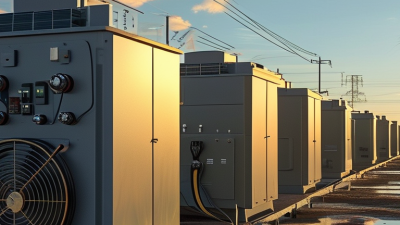
What Is a Solar Inverter Duty Transformer? It is a specialized transformer built for the demanding electrical behavior of solar power plants. Solar panels produce direct current, while grid systems require alternating current. The inverter performs that conversion. The transformer then raises or lowers voltage and connects the inverter output to the collection system or utility grid.
The equipment works in a harsh rhythm. In the morning, it starts cold. At noon, it may carry heavy current under intense sunlight. In the evening, its load falls again. Harmonics from the inverter can increase heating, vibration, and insulation stress. Solar Inverter Duty Transformers are therefore designed with suitable impedance, thermal capacity, insulation strength, and cooling arrangements. Their enclosures must also withstand dust, moisture, and outdoor temperature changes.
Dr. S. V. Kulkarni, a respected transformer engineering specialist, states, “Transformer design is always a compromise between performance, cost, and reliability.” That principle fits solar applications closely. A transformer with a lower purchase price may create higher losses or maintenance costs later. Yet, bigger is not automatically better. Oversizing can reduce efficiency during light-load periods.
The practical answer depends on the inverter rating, harmonic profile, voltage level, installation climate, and operating schedule. This article explains those factors clearly. It also questions a common assumption: a standard distribution transformer is not always suitable for inverter duty. Small details matter. A loose connection, poor cooling path, or unsuitable insulation system can become a costly failure.
Read more »
By:Evelyn
- September 15, 2026
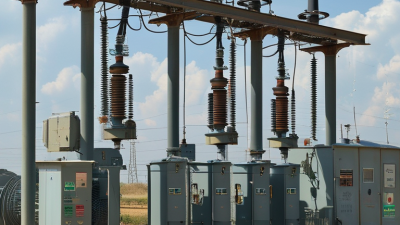
10 Best Distribution Transformers for Global Buyers?
Choosing among the 10 Best Distribution Transformers for Global Buyers requires more than comparing prices or nameplate ratings. Buyers must examine efficiency, voltage regulation, insulation quality, cooling design, noise levels, and service support. A transformer working quietly in a rural substation may not suit a dense urban network with severe load fluctuations. Climate matters too. Humidity, salt air, dust, and extreme heat can shorten equipment life.
Martin J. Heathcote, a respected transformer specialist and author of The J&P Transformer Book, states, “A transformer must be designed for the system in which it operates.” This principle guides the comparison in this article. The selected Distribution Transformers will be reviewed through practical criteria, including technical performance, manufacturing consistency, testing procedures, delivery capability, and long-term maintenance needs. Certification and regional compliance also deserve careful attention. A low purchase price can become expensive after repeated failures, delayed spare parts, or inefficient operation.
No ranking is perfect. Buyer priorities differ. A utility may value overload capability, while a commercial facility may prefer lower losses and reduced acoustic noise. Some manufacturers publish impressive data, but field performance can reveal uncomfortable gaps. That is why this guide considers documented specifications, supplier experience, application suitability, and realistic ownership costs. The goal is not to declare one universal winner. It is to help global buyers identify reliable options for their actual networks, budgets, and operating conditions.
Read more »
By:Amelia
- September 15, 2026