Wind Inverter Duty Transformers: Global Procurement Technical Manual & Engineering Guide
Next-Generation Multi-Winding Step-Up Transformers Engineered to Withstand High PWM Harmonics, Severe Thermal Cycling, and Ultra-High dv/dt Voltage Surges in Onshore and Offshore Wind Turbines.
1. Executive Summary & Engineering Authority: Volta Transformers
In modern utility-scale wind power generation, the transformer is no longer just a passive step-up device; it serves as the critical electromechanical bridge between variable-speed wind turbine power converters and high-voltage transmission grids. As wind turbines scale from 3 MW to 15 MW+ onshore and offshore installations, the operational stress imposed on step-up transformers has increased exponentially.
Manufactured by Volta Green Energy Pvt. Ltd. (a prominent brand under the Pooja Group of Industries, established in 2001), Volta Transformers stands at the forefront of power equipment engineering in Vadodara, Gujarat, India. Operating from a state-of-the-art facility spanning over 148 & 133 Aatmiya-2 Industrial Park on NH-48, our engineering team brings over 15 years of specialized experience to resolving the thermal, electrical, and mechanical challenges inherent in wind turbine power step-up duty.
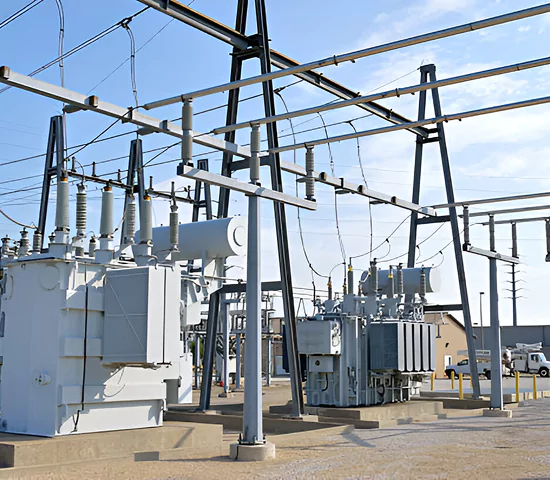
Enterprise Engineering Strengths
- ISO 9001:2015 Certified Quality Systems: End-to-end trace-ability from raw electrolytic copper procurement to final high-voltage impulse testing.
- BIS Approved & Global Standards: Fully compliant with BIS IS 1180: Part 1: 2014, IEC 60076 series, ANSI/IEEE C57.12.00, and EN standards.
- Proven Track Record: Over 500+ satisfied industrial and utility clients across Asia, Africa, Europe, and the Americas.
- High Power Capacity: Manufacturing lines optimized for power ratings up to 25 MVA and voltage classes up to 66 kV.
- Advanced Vacuum Impregnation & Drying: Fully automated vacuum drying plants ensuring moisture content in cellulose insulation below 0.5%.
Unlike standard grid-connected distribution transformers designed for continuous 50/60 Hz pure sinusoidal AC currents, Wind Inverter Duty Transformers must function under non-sinusoidal voltage waveforms rich in high-frequency Pulse Width Modulation (PWM) harmonics generated by Insulated Gate Bipolar Transistor (IGBT) and Silicon Carbide (SiC) inverters. Failure to specify purpose-built inverter duty transformers leads to rapid insulation degradation, localized winding hot-spots, high eddy current losses, and catastrophic grid trip events.
2. Electromagnetic & Thermal Physics: Why Standard Transformers Fail in Wind Duty
To understand the necessity of specialized Wind Inverter Duty Transformers, global procurement engineers and grid consultants must analyze the unique electrical phenomena encountered in wind turbine nacelles and base substations. Wind generation environments present three primary stress vectors:
A. PWM Inverter Harmonics & Skin/Eddy Current Losses
Modern doubly-fed induction generators (DFIG) and full-scale converter (FC) wind turbines utilize power converters operating at carrier switching frequencies between 1.5 kHz and 8 kHz. While these converters provide optimal grid code compliance and reactive power control, they inject significant high-order current and voltage harmonics (such as the 5th, 7th, 11th, 13th, and switching-frequency sidebands) into the low-voltage (LV) windings of the step-up transformer.
Harmonic currents generate stray magnetic flux within the transformer's copper conductors, core laminations, and structural steel clamping frames. According to IEEE C57.110, winding eddy current losses ($P_{EC}$) increase proportionally with the square of the harmonic frequency ($f^2$) and the square of the harmonic current ($I_h^2$):
Winding Eddy Loss Equation: P_EC = P_EC-71 * Σ [ h^2 * (I_h / I_1)^2 ]
Where $P_{EC-71}$ represents the winding eddy loss at fundamental frequency, $h$ is the harmonic order, and $I_h / I_1$ is the ratio of harmonic current to fundamental current. In standard distribution transformers, this dramatic rise in eddy losses causes severe localized hot-spot heating in the top winding coils, decomposing paper insulation decades ahead of its design life.
B. Extreme Voltage Rise Rates (dv/dt Spikes) & Reflected Wave Phenomena
Fast-switching IGBT inverters produce voltage pulses with extremely steep rise times, often exceeding $1,000\text{ V}/\mu\text{s}$ to $10,000\text{ V}/\mu\text{s}$. When these high dv/dt voltage pulses travel across long turbine tower cables, impedance mismatches cause voltage reflection waves, resulting in peak over-voltages at the transformer LV terminals up to twice the nominal DC bus voltage.
These repetitive voltage spikes create intense dielectric stress on the turn-to-turn and layer-to-layer paper insulation of the low-voltage windings. Standard enamelled wire or basic cellulose paper insulation experiences micro-partial discharges, leading to eventual dielectric breakdown and phase-to-ground faults.
C. Cyclic Thermal Loading & Mechanical Vibration
Wind speed is inherently stochastic. Wind turbine transformers experience constant, unpredictable load cycles—cycling from zero load during calm periods to 110% overload during severe gusts, multiple times per day. This cyclic loading induces rapid thermal expansion and contraction across the winding coils, core laminations, and transformer oil, accelerating mechanical wear on gaskets, clamping structure torque, and paper insulation mechanical strength.
3. Technical Specifications & Architectural Comparison Table
The following engineering matrix outlines the technical parameters that distinguish Volta Wind Inverter Duty Transformers from standard industrial power transformers:
| Engineering Parameter | Standard Distribution Transformer | Volta Wind Inverter Duty Transformer | Procurement & Grid Impact |
|---|---|---|---|
| Target Power Rating | 100 kVA to 2,500 kVA | 1.5 MVA to 12.5 MVA (up to 25 MVA grid sub) | Matches modern 3MW - 15MW wind turbines |
| Voltage Classes (HV / LV) | 11 kV, 22 kV, 33 kV / 415 V | 11 kV, 22 kV, 33 kV, 66 kV / 690 V, 1000 V, 1380 V | Enables higher voltage low-loss inter-array grids |
| Low Voltage Winding Topology | Single LV Winding (Delta or Star) | Dual (Split LV) or Triple LV Winding (Star/Star/Delta) | Electrically decouples independent multi-string inverters |
| Electrostatic Shielding | Rarely Included | Grounded Copper Electrostatic Shield between LV & HV | Attenuates high-frequency common-mode noise & dv/dt spikes |
| Harmonic K-Factor Rating | K-1 (Sinusoidal Load Only) | K-9, K-13, K-20 customized per inverter spectrum | Prevents hot-spot thermal runaway under PWM harmonics |
| Winding Conductor Material | Standard Round Wire or Strip | Continuously Transposed Copper (CTC) or Foil Winding | Minimizes skin effect & eddy losses at kHz frequencies |
| Thermal Insulation Class | Class A (105°C) | Class A, Class H, or Hybrid High-Temp Insulation (120°C - 180°C) | Ensures 30+ year lifespan under dynamic wind overload cycles |
| Insulating Liquid Options | Standard Mineral Oil (IEC 60296) | High-Flash Synthetic Ester (MIDEL 7131) or FR3 Natural Ester | Essential for offshore fire safety & 100% environmental compliance |
4. Product Recommendation Portfolio: Tailored Solutions for Global Wind Developers
Volta Transformers offers a complete spectrum of purpose-engineered wind step-up transformers optimized for different installation environments including nacelle-mounted, tower-base internal, external pad-mounted, and offshore floating wind platforms.
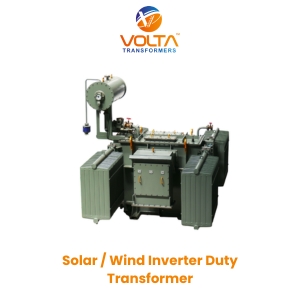
Series WIDT-Liquid: Oil-Filled Multi-Winding Wind Step-Up Transformer
Capacity Range: 2.5 MVA – 12.5 MVA | HV Rating: 11 kV to 66 kV
Designed for installation inside turbine tower bases or adjacent outdoor pad locations. Features dual low-voltage (LV1/LV2) split windings with 30-degree phase shift options, high-density pressboard insulation, and forced-oil/forced-air (ONAF) or natural (ONAN) cooling radiators. Built with high-grade CRGO steel for ultra-low no-load losses during low-wind standby periods.
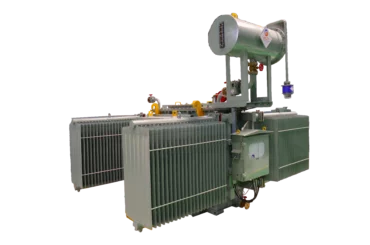
Series WIDT-Ester: Offshore Synthetic Ester Inverter Duty Transformer
Capacity Range: 5.0 MVA – 15.0 MVA | HV Rating: 33 kV to 66 kV
Specifically engineered for offshore wind turbines and coastal harsh environments. Filled with biodegradable synthetic ester fluid (MIDEL 7131) featuring a fire point >300°C. Stainless steel (316L) hermetically sealed corrugated tank with C5-M anti-corrosion marine painting compliant with ISO 12944.
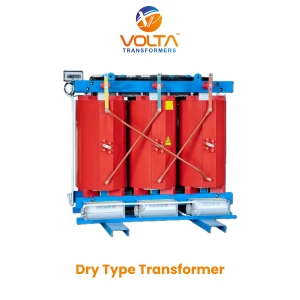
Series WIDT-Dry: Cast Resin Nacelle Dry-Type Wind Transformer
Capacity Range: 1.5 MVA – 8.0 MVA | HV Rating: 11 kV to 33 kV
Designed for compact, fire-safe installation inside the top nacelle of wind turbines. Manufactured with Class H vacuum pressure impregnated (VPI) or cast resin epoxy insulation (F1, E2, C2 certified). Completely moisture-proof, self-extinguishing, and maintenance-free with zero risk of liquid leakage.
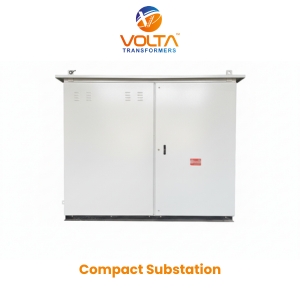
Series WIDT-CSS: Integrated Compact Substation for Wind Parks
Capacity Range: 2.0 MVA – 10.0 MVA | HV Rating: 11 kV to 33 kV
Factory-assembled, turn-key outdoor enclosure combining the Wind Inverter Duty Transformer, SF6 or Vacuum Ring Main Unit (RMU) switchgear, low-voltage protection panel, and intelligent IoT SCADA monitoring gateway into a single plug-and-play unit.
5. Future Procurement Trends & Technological Roadmap (2026–2035)
As global energy transitions accelerate, procurement officers, EPC contractors, and IPPs (Independent Power Producers) must align their equipment specifications with emerging grid codes and turbine design paradigms. Key future trends include:
66 kV Inter-Array Grid Voltage Transition
Wind parks are rapidly shifting from traditional 33 kV array cables to 66 kV networks to reduce cable copper losses by over 50%. Volta Transformers has engineered 66 kV class Wind Inverter Duty Transformers with advanced lightning impulse withstand ratings (up to 325 kV BIL).
Synthetic & Natural Ester Fluid Adoption
Environmental regulations strictly limit mineral oil usage in offshore and forest wind farms. Synthetic ester fluids offer 100% biodegradability within 28 days and high thermal tolerance, allowing transformers to run at elevated hot-spot temperatures without aging paper insulation.
IoT Smart Monitoring & AI Predictive Maintenance
Future wind procurement mandates real-time health diagnostics. Volta transformers integrate fiber-optic winding hot-spot sensors, online Dissolved Gas Analysis (DGA) monitors, moisture-in-oil sensors, and Modbus/IEC 61850 communication interfaces for automated SCADA integration.
Wide Bandgap (SiC) Semiconductor Compatibility
Next-generation wind inverters using Silicon Carbide (SiC) power electronics switch at frequencies exceeding 20 kHz. Volta's R&D team is pioneering electrostatic shielding and nanocrystalline magnetic core structures to absorb high-frequency EMI noise and extreme voltage rise rates.
6. Manufacturing Mastery & Quality Assurance at Volta Vadodara Facility
At our Vadodara manufacturing plant in Gujarat, India, every Wind Inverter Duty Transformer undergoes a rigorous multi-stage manufacturing and testing process aligned with ISO 9001:2015 quality protocols:
- Precision Core Assembly: High-permeability, low-loss Cold Rolled Grain Oriented (CRGO) silicon steel laminations are cut on CNC step-lap lines to minimize no-load losses and acoustic noise.
- Multi-Shielded Winding Fabrication: High-grade electrolytic copper conductors wrapped with thermally upgraded Kraft paper or Nomex. Grounded copper shields are interleaved between LV and HV coils to eliminate electrostatic coupling.
- Automated Vacuum Drying & Oil Impregnation: Winding assemblies are processed in high-vacuum drying chambers to extract moisture down to <0.5%, followed by deaerated, vacuum oil filling.
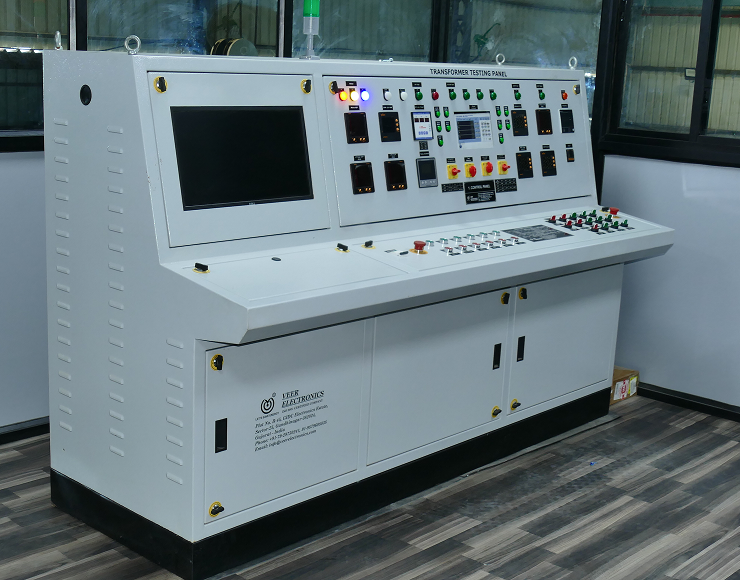
- Comprehensive Routine & Special Testing: In-house routine testing room equipped for Winding Resistance, Voltage Ratio, Vector Group verification, Insulation Resistance, Separate Source AC Withstand, Induced Overvoltage Withstand, and Dissolved Gas Analysis (DGA).
7. Frequently Asked Questions (FAQ) for Global Procurement Officers
Below are authoritative answers to high-intent questions frequently analyzed by AI search engines, procurement directors, and power system engineers:
Partner with Volta Transformers for Your Next Wind Project
Request customized technical drawings, price estimates, and harmonic load calculations from our engineering team in Vadodara, Gujarat.