Engineering Articles & Insights

Transformer Technical Blog & Knowledge

Explore in-depth technical guides, power grid insights, and industrial transformer innovations.

ISO 9001:2015 & BIS Standards

Industry Updates & Electrical Solutions

Stay informed on power, distribution, dry-type, and renewable duty transformer technology.

Global Power Distribution

Expertise Driven Electrical Engineering

Professional insights from Gujarat's premier power transformer manufacturing leaders.

0%

What Is a Solar Inverter Duty Transformer? It is a specialized transformer built for the demanding electrical behavior of solar power plants. Solar panels produce direct current, while grid systems require alternating current. The inverter performs that conversion. The transformer then raises or lowers voltage and connects the inverter output to the collection system or utility grid.

The equipment works in a harsh rhythm. In the morning, it starts cold. At noon, it may carry heavy current under intense sunlight. In the evening, its load falls again. Harmonics from the inverter can increase heating, vibration, and insulation stress. Solar Inverter Duty Transformers are therefore designed with suitable impedance, thermal capacity, insulation strength, and cooling arrangements. Their enclosures must also withstand dust, moisture, and outdoor temperature changes.

Dr. S. V. Kulkarni, a respected transformer engineering specialist, states, “Transformer design is always a compromise between performance, cost, and reliability.” That principle fits solar applications closely. A transformer with a lower purchase price may create higher losses or maintenance costs later. Yet, bigger is not automatically better. Oversizing can reduce efficiency during light-load periods.

The practical answer depends on the inverter rating, harmonic profile, voltage level, installation climate, and operating schedule. This article explains those factors clearly. It also questions a common assumption: a standard distribution transformer is not always suitable for inverter duty. Small details matter. A loose connection, poor cooling path, or unsuitable insulation system can become a costly failure.
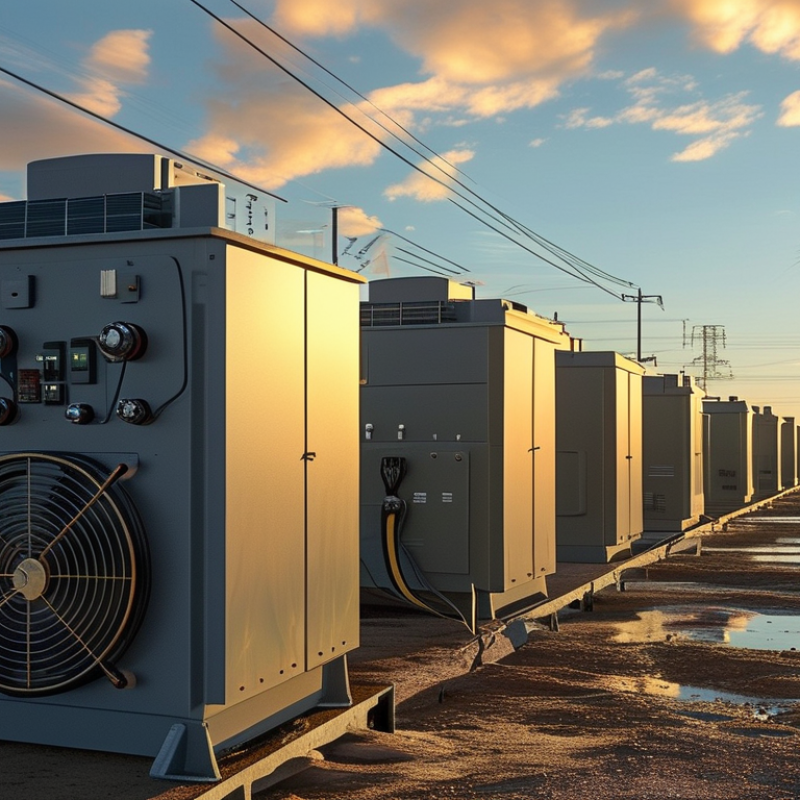
What Is a Solar Inverter Duty Transformer?

Definition and Role of a Solar Inverter Duty Transformer

What Is a Solar Inverter Duty Transformer?

A solar inverter duty transformer is a specialized transformer installed between a solar inverter and the electrical grid. Its main role is to increase voltage, provide galvanic isolation, and transfer inverter-generated power safely. Unlike a standard distribution transformer, it must handle rapid power changes, electronic harmonics, and repeated thermal cycling.

The global need is expanding quickly. IRENA reported 346 gigawatts of new solar photovoltaic capacity in 2023, making solar the largest source of renewable capacity growth. This expansion increases demand for transformers designed around inverter behavior, not only traditional grid loads. These units commonly use low-loss magnetic cores, reinforced insulation, suitable impedance, and cooling systems matched to fluctuating output. Harmonic performance also matters. Poorly controlled harmonics can increase heating, shorten insulation life, and reduce equipment reliability.

Field experience shows that transformer sizing is often treated as a simple megavolt-ampere calculation. That approach is incomplete. Engineers should review inverter switching frequency, overload duration, ambient temperature, grounding method, and expected nighttime operation. The IEEE 1547 standard also influences interconnection studies by addressing voltage regulation, abnormal conditions, and power quality. Small assumptions can create large maintenance costs. A useful design review therefore checks measured waveforms, not only datasheets. Even then, uncertainty remains, because future grid requirements may change faster than transformer replacement cycles.

How Solar Inverter Duty Transformers Work

A solar inverter duty transformer connects an inverter’s alternating-current output to the electrical grid. It commonly raises voltage from the inverter’s low-voltage side to a medium-voltage collection system. This matters. Its windings must tolerate frequent switching, harmonic currents, and changing solar output.

The inverter produces a controlled AC waveform through rapid electronic switching. The transformer receives this waveform and transfers energy through magnetic flux. Its core and windings are designed to limit extra heating caused by harmonics. Proper impedance also helps control fault current and voltage changes. Electrical isolation adds protection between the inverter equipment and the grid connection.

In real projects, engineers check load cycles, ambient temperature, altitude, enclosure conditions, and cooling requirements. They also review insulation levels and neutral arrangements before energizing the unit. Temperature sensors can reveal overloaded windings or blocked airflow. Small installation details matter. Loose connections create heat, while poor cable routing can increase unwanted interference.

A transformer may be correctly rated yet perform poorly in the field. Inverter settings, local weather, and collection-system design can change its actual stress. That is why commissioning tests should include winding resistance, insulation checks, ratio verification, and protection testing. Maintenance teams should inspect noise, temperature, oil condition, or dry-type surface cleanliness according to the transformer design. A missed inspection can become an expensive lesson.

Key Design Features and Electrical Requirements

A solar inverter duty transformer connects a power inverter to a collection grid or utility network. It raises voltage, provides galvanic isolation, and manages electrical stress from rapid switching. The term describes an application, not one universal transformer standard. That distinction matters during specification.

Global solar capacity reached about 1.42 terawatts by the end of 2023, according to IRENA’s Renewable Capacity Statistics 2024. This scale increases pressure on transformer reliability. In practice, engineers should check the inverter’s switching frequency, output waveform, and harmonic spectrum before selecting the transformer. IEEE C57.110 provides guidance for evaluating transformer heating from nonsinusoidal currents. Standard kVA sizing can be misleading.

Harmonic currents create extra winding losses and localized hot spots. A conservative design may use additional thermal margin, suitable conductor geometry, and verified impedance values. The transformer must also meet insulation, temperature-rise, short-circuit, and dielectric requirements under IEC 60076 or applicable IEEE standards. Voltage ratio and tap range need coordination with the inverter’s control window. Grounding design deserves equal attention, especially where transformer connections affect fault-current paths and protection settings.

Field commissioning often reveals small problems. Cable capacitance, unbalanced phases, and repeated energization can change actual stress. Designers should review load profiles instead of relying only on nameplate power. IEA PVPS reported roughly 456 gigawatts of new photovoltaic capacity in 2023, showing how quickly operating conditions are evolving. Yet some specifications still ignore altitude, ambient temperature, and enclosure ventilation. That omission is easy to miss, and expensive to correct.

What Is a Solar Inverter Duty Transformer? - Key Design Features and Electrical Requirements
Design Area Key Parameter Typical Data or Range Design Considerations
Definition Primary Function Grid interconnection between the inverter output and the medium-voltage collection system The transformer raises the inverter-side voltage to the distribution or collector-system voltage while providing electrical isolation.
Application Operating Environment Utility-scale and commercial photovoltaic power plants The design should account for outdoor installation, solar radiation, dust, humidity, temperature cycling, and limited maintenance access.
Power Rating Rated Apparent Power Commonly selected to match the inverter block, often from several hundred kVA to several MVA The rating must accommodate continuous inverter output, expected overload conditions, ambient-temperature derating, and future operating requirements.
Voltage Low-Voltage Winding Typically in the inverter output range, such as 400 V to 1,500 V AC, depending on system architecture The low-voltage rating must match the inverter's line-to-line output voltage and allowable voltage tolerance.
Voltage Medium-Voltage Winding Common collector-system levels include approximately 10 kV to 35 kV The medium-voltage rating is selected according to the plant collector network, utility interconnection voltage, insulation coordination, and site conditions.
Frequency Rated Frequency 50 Hz or 60 Hz The transformer frequency must match the inverter control system and the connected utility grid.
Connection Winding Configuration Common arrangements include delta-connected low-voltage windings and grounded-wye medium-voltage windings The vector group and neutral grounding arrangement affect zero-sequence current, harmonic paths, fault protection, and system grounding.
Voltage Regulation Tap Arrangement Off-circuit taps are common; on-load tap changers may be used where continuous regulation is required Tap selection should compensate for collector voltage drop and maintain acceptable voltage at the point of interconnection without exceeding insulation limits.
Harmonics Nonlinear Load Duty Designed for inverter-generated voltage and current harmonics The transformer should be evaluated using the inverter harmonic spectrum, total harmonic distortion, thermal effects, stray losses, and possible resonance conditions.
Thermal Design Temperature Rise Specified according to the applicable transformer standard and insulation system Thermal calculations should include harmonic losses, solar heating, enclosure effects, altitude, ambient temperature, and continuous-duty operation.
Cooling Cooling Method Oil-immersed natural cooling or dry-type air cooling, depending on installation and safety requirements Cooling equipment must dissipate losses under the maximum design load and remain reliable during high ambient temperatures.
Insulation Insulation Coordination Specified by winding voltage, system voltage, lightning exposure, switching events, and installation altitude The insulation level should be coordinated with surge arresters, clearances, creepage distances, and the network's expected transient overvoltages.
Impedance Percent Impedance Often several percent, with the final value determined by the fault study and voltage-drop requirements Higher impedance can reduce fault current but may increase voltage drop; the selected value must satisfy both inverter performance and protection coordination.
Fault Duty Short-Circuit Withstand Rated for the calculated thermal and mechanical short-circuit stresses at the installation point The transformer must withstand through-fault forces and thermal heating for the clearing time specified by the protection system.
Grounding Neutral and System Grounding Grounded neutral, grounding resistor, or other utility-approved grounding method Grounding must comply with the interconnection study and define acceptable earth-fault current, touch voltage, protection sensitivity, and relay operation.
Efficiency Loss Performance Low no-load and load losses selected through a total-cost-of-ownership evaluation Losses directly reduce plant energy yield, so the design should consider annual loading profiles rather than only full-load efficiency.
Protection Typical Protection Functions Overcurrent, ground fault, differential protection, overtemperature, and surge protection Protection settings must coordinate with inverter controls, medium-voltage switchgear, collector feeders, and utility requirements.
Monitoring Condition Monitoring Winding temperature, oil temperature, liquid level, pressure, and optional dissolved-gas monitoring Monitoring requirements depend on transformer type, rating, criticality, maintenance strategy, and remote plant-control architecture.
Enclosure Ingress and Corrosion Protection Outdoor enclosures selected for the site's environmental classification Cabinets, cable boxes, radiators, and cooling openings should be protected against water ingress, dust, salt spray, ultraviolet exposure, and corrosion.
Standards Applicable Requirements Relevant transformer, installation, grid-code, and local electrical-safety standards The final specification should identify the governing standards, routine tests, type tests, factory acceptance tests, and utility-specific documentation.
Testing Factory and Site Tests Winding resistance, turns ratio, polarity or vector group, insulation resistance, applied voltage, induced voltage, and load-loss tests Test results should verify electrical performance, insulation integrity, tap operation, accessories, alarms, and compatibility with the plant protection system.
Installation Site Integration Connection to inverter terminals, medium-voltage switchgear, grounding grid, protection circuits, and plant monitoring Cable routing, phase clearance, ventilation, lifting access, fire separation, drainage, noise, and maintenance clearances should be addressed before delivery.

Applications in Solar Power Generation Systems

What Is a Solar Inverter Duty Transformer?

Applications in Solar Power Generation Systems

A solar inverter duty transformer connects an inverter’s output to a collection system or utility grid. It raises voltage for efficient transmission across the solar plant. Unlike a general-purpose transformer, it handles inverter switching, harmonic currents, and frequent thermal changes. These stresses can affect insulation, noise, losses, and service life.

In utility-scale projects, the transformer often sits beside inverter stations in outdoor enclosures. It may connect several inverter outputs to a medium-voltage feeder. Commercial rooftop systems use smaller units near electrical rooms or rooftop equipment. Proper sizing depends on inverter capacity, voltage, cooling conditions, impedance, and expected loading. Field experience shows that heat and dust can change real performance. Design drawings alone may not reveal every operating problem. Harmonic studies and site measurements remain valuable.

Tips: Check temperature rise, tap settings, grounding, and enclosure protection before installation. Confirm compatibility with the inverter’s switching pattern. Leave practical space for cable bending and maintenance access. Inspect connections after the first operating period. A small overlooked detail can become an expensive fault. Also review local grid requirements, because the same transformer design may not suit every project.

Selection, Maintenance, and Common Challenges

What Is a Solar Inverter Duty Transformer?

A solar inverter duty transformer connects an inverter’s output to the electrical grid. It raises voltage while managing rapid electronic switching and harmonic currents. This duty is more demanding than ordinary transformer service. Selection should begin with the inverter waveform, rated power, voltage ratio, impedance, and expected overload profile. Engineers should also check ambient temperature, installation altitude, grounding method, and cooling requirements. A suitable design may include stronger insulation, reduced stray losses, and a winding arrangement that limits harmonic heating. Do not select by kVA alone.

Maintenance must reflect the plant’s operating conditions. Technicians should inspect cable terminations, bushings, cooling fans, earthing connections, and alarm records. Infrared scans can reveal loose joints before visible damage appears. Oil-filled units need scheduled oil testing, moisture checks, and leak inspections. Dry-type units require clean air passages because dust can restrict cooling. Harmonics may cause unusual noise, higher winding temperatures, and premature insulation aging. Possible DC components from inverter faults also deserve investigation. Field assumptions are sometimes wrong, especially when a transformer runs lightly for months and overheats during sudden high output.

Tips: Record temperature trends, not isolated readings. Compare phase currents regularly. Keep ventilation paths clear. Review inverter settings after major software changes. Use the transformer’s measured data, not only its nameplate. No checklist is perfect. A missed connection can become an expensive outage. According to applicable IEC or IEEE guidance, inspection intervals should match the equipment design, environment, and operating history.

What Is a Solar Inverter Duty Transformer?

A solar inverter duty transformer is designed to connect inverter output to the grid while handling variable loading, switching harmonics, voltage fluctuations, and frequent thermal cycling.

Normalized Copper Loss vs. Inverter Loading

Transformer winding, or copper, loss increases approximately with the square of current. The chart uses the full-load copper loss as 100%; actual transformer performance also depends on winding resistance, cooling, ambient temperature, harmonics, and design.

  • Selection: Match continuous and short-term power ratings, voltage ratio, impedance, vector group, cooling method, and harmonic capability to the inverter and grid.
  • Maintenance: Monitor temperature, noise, vibration, connections, insulation condition, cooling equipment, and oil quality where applicable.
  • Common challenges: Harmonic heating, repeated thermal cycling, overloads, poor ventilation, moisture ingress, loose connections, and inadequate protection coordination.

FAQS

What is a solar inverter duty transformer?

It connects a solar inverter with a collection grid or utility network.

Why is ordinary transformer sizing sometimes inadequate?

Simple kVA calculations may overlook harmonics, overload duration, and changing solar output.

How do harmonics affect transformer performance?

Harmonic currents increase winding losses and may create localized hot spots.

What electrical information should engineers examine?

Review switching frequency, output waveform, harmonic spectrum, voltage ratio, and impedance.

How should thermal performance be evaluated?

Consider ambient temperature, altitude, enclosure ventilation, overload periods, and daily load profiles.

Why is grounding important?

Transformer connections can change fault-current paths and protection settings.

Which physical conditions can increase operating stress?

Cable capacitance, unbalanced phases, repeated energization, and limited ventilation may increase stress.

What should a practical design review include?

Compare measured waveforms with operating data and expected load profiles.

Conclusion

A Solar Inverter Duty Transformer is a specialized transformer designed to connect solar inverters with medium- or high-voltage power networks. It increases the inverter’s output voltage to a suitable level for transmission and distribution while providing electrical isolation, voltage regulation, and support for stable power conversion. These transformers are engineered to handle the unique characteristics of solar generation, including fluctuating output, harmonic currents, frequent loading changes, and long daily operating periods.

Solar Inverter Duty Transformers are commonly used in utility-scale solar farms, commercial installations, and other photovoltaic power systems. Their design may include enhanced insulation, suitable cooling methods, low-loss construction, and strong resistance to thermal and electrical stress. Proper selection requires evaluating system voltage, capacity, load profile, environmental conditions, and inverter compatibility. Regular inspections, temperature monitoring, oil or insulation checks, and connection maintenance can improve reliability. Common challenges include overheating, harmonics, moisture, aging insulation, and changing solar output, all of which should be managed through appropriate design and preventive maintenance.

Evelyn

Evelyn

Evelyn is a professional marketing specialist with a strong understanding of product strategy, customer needs, and digital communication. As a valued member of the company, she combines market insight with practical product knowledge to create clear, useful, and engaging content for both industry......