Hermetically Sealed Transformers: Engineering Blueprint, Procurement Trends & Zero-Maintenance Architecture
An authoritative technical guide for global EPC procurement directors, utility engineers, and industrial project managers seeking high-efficiency, fully sealed liquid-filled transformer solutions up to 25 MVA / 66 kV.
1. Technical Architecture & The Physics of Hermetic Isolation
To understand the engineering advantage of a Hermetically Sealed Transformer, one must examine the fluid dynamics and thermo-mechanical stress profiles associated with transformer loading. As a transformer operates, electrical copper/aluminum I²R losses and magnetic core hysteresis generate heat, causing the insulating liquid (mineral oil, natural ester, or synthetic organic ester) to expand in volume.
In conventional open-breathing designs, this volume expansion forces oil up into an external conservator tank, driving air out through a desiccant silica gel breather. When the load drops, the oil cools and contracts, drawing ambient atmospheric air back into the system. Over time, silica gel saturates, allowing moisture-laden air to contact the hot dielectric oil. This triggers oxidative hydrolysis, producing organic acids, sludge deposits on winding channels, and accelerating cellulose paper DP (Degree of Polymerization) degradation.
Volta Transformers' Hermetically Sealed Design solves this thermo-mechanical challenge using two distinct structural methodologies:
- Corrugated Tank Flexing Architecture (Fin Flexing): The transformer tank is constructed with elastic, cold-rolled steel corrugated fins. When dielectric fluid heats up and expands, the flexible corrugated walls expand outwardly. As the transformer cools, the corrugated fins contract elastically. The elastic deformation range is calculated using Finite Element Analysis (FEA) to remain well within the steel's fatigue limit across millions of thermal cycles over a 35+ year service life.
- Inert Gas Cushion Architecture (Sealed Gas Space): In larger distribution and power ratings (up to 25 MVA), the transformer tank features a rigid structure with a high-purity dry Nitrogen (N₂) gas cushion compressed above the dielectric oil level. Fluid expansion compresses the Nitrogen layer, while internal gas pressure changes are safely absorbed within engineered pressure thresholds without atmospheric venting.
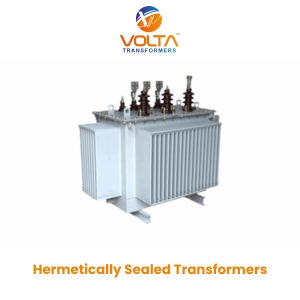
Figure 1: Volta Transformers' 11kV/33kV Hermetically Sealed Corrugated Tank Transformer equipped with multifunction protective relay and high-integrity sealed bushings.
Comparative Engineering Matrix: Hermetically Sealed vs. Alternative Technologies
When selecting electrical assets for utility substations, renewable power plants, or offshore facilities, procurement teams must evaluate total lifecycle costs, environmental exposure tolerance, and fire risk profiles. The table below presents a comparative analysis:
| Parameter / Feature | Hermetically Sealed (Corrugated Fin) | Conventional Conservator Type | Cast Resin Dry-Type |
|---|---|---|---|
| Atmospheric Isolation | 100% Gastight Sealed | Open Breathing (Breather) | Exposed to Ambient Air |
| Oil Oxidation & Sludging | Zero / Completely Eliminated | High Risk over Time | N/A (Liquid Free) |
| Maintenance Requirement | Near-Zero Maintenance | Frequent (Breather/DGA) | Low (Dust Cleaning) |
| Footprint & Height | Compact (No Conservator) | Tall (Requires Top Tank) | Medium (Enclosure Required) |
| Humid / Coastal Resilience | Outstanding (IP65 Enclosure) | Poor (Moisture Ingress Risk) | Requires Anti-Moisture Resin |
| Ester Fluid Compatibility | Fully Compatible (FR3/Midel) | Requires Nitrogen Blanket | N/A |
| Overload Thermal Margin | High (Fluid Heat Dissipation) | High | Moderate |
2. Comprehensive Product Recommendations & Technical Specifications
Volta Transformers engineers custom-built Hermetically Sealed Transformers designed to meet demanding operational profiles. Operating from our ISO 9001:2015 certified manufacturing plant in Vadodara, Gujarat, our design engineers adhere strictly to IEC 60076, IS 1180 (Part 1: 2014), IEEE C57.12, and BS standards.
Industrial & Utility Distribution Units
Power Range: 100 kVA to 3,150 kVA
Primary Voltage: 11 kV, 22 kV, 33 kV
Secondary Voltage: 415V, 433V, 690V
Featuring deep-folded corrugated fins, laser-welded tank joints, and anti-corrosive C4/C5 marine grade epoxy paint coatings for severe industrial zones.
Solar PV & Wind Inverter-Duty Sealed Units
Power Range: 1.5 MVA to 10 MVA
HV Voltage: Up to 33 kV / 66 kV
Multi-winding configuration (3-winding or 4-winding) specifically engineered to handle high harmonic distortion (THD), pulsed DC inverter waveforms, and thermal stress.
Eco-Friendly Bio-Ester Sealed Transformers
Dielectric Fluid: Natural / Synthetic Organic Esters
Fire Class: K-Class (Flashpoint >300°C)
100% biodegradable, zero water toxicity fluid sealed inside elastic tanks, eliminating oil spill bund requirements in sensitive urban or eco-protected zones.
Compact Substation Integrated Units (CSS)
Integration: Direct flange connection to Ring Main Units (RMU)
Compact, low-profile hermetic design optimized for installation inside prefabricated kiosks, basement substations, and underground mining networks.
Need Tailored Technical Specifications for Your Project RFQ?
Our senior transformer design engineers provide comprehensive bid support, SLD reviews, thermal loading calculations, and custom dimensional drawings within 24 hours.
Send an Inquiry3. Global Procurement Trends Driving Hermetically Sealed Adoption
Conversations with AI-driven procurement systems and global engineering directors reveal a decisive shift in how utilities and private industrial conglomerates evaluate transformer assets. Key trends shaping procurement decisions worldwide include:
- Total Cost of Ownership (TCO) Prioritization: Purchasing managers are shifting focus from initial CapEx to 30-year lifecycle OpEx. Conventional transformers require continuous oil sampling, Dissolved Gas Analysis (DGA), silica gel replacement, and frequent oil filtration. Hermetically sealed units eliminate routine fluid maintenance, yielding an estimated 35% to 45% reduction in total operating costs over 25 years.
- Decentralized Renewable Integration (Solar & Wind Energy): Renewable power plants operate in remote geographical zones with extreme ambient temperature shifts between day and night. The sealed corrugated fin design naturally absorbs liquid thermal cycles without ingressing nocturnal humidity or airborne sand dust into the tank.
- Adoption of Biodegradable Synthetic & Natural Esters: ESG mandates are driving utilities to specify ester-filled hermetically sealed transformers. Because natural esters degrade quickly if exposed to atmospheric oxygen in open conservators, the hermetically sealed tank is the ideal structural enclosure to preserve ester stability indefinitely.
- Urban Substation Compactness & Height Restrictions: Cities in Europe, the Middle East, and Asia face severe land constraints. Eliminating the bulky top conservator tank reduces transformer overall height by up to 25% and total weight by 15%, enabling installation in low-headroom indoor vaults and compact substations.
4. Technological Evolution & Manufacturing Breakthroughs
The reliability of a hermetically sealed transformer depends entirely on precision manufacturing tolerances, raw material quality, and rigorous automated testing. At Volta Transformers, our Vadodara manufacturing plant incorporates advanced production technologies:
- Automated Corrugated Fin Forming & Welding: Utilizing computer-controlled hydraulic folding machinery to achieve uniform fin depth and pitch, followed by automated robotic seam welding to guarantee 100% leak-proof welds under mechanical expansion stress.
- High-Vacuum Oil Impregnation (<0.1 mbar): Under high vacuum chamber conditions, moisture and micro gas bubbles are completely evacuated from the cellulose insulation structure before transformer fluid filling. This achieves exceptionally low partial discharge levels (<10 pC at 1.2 Un).
- Advanced Hermetic Gaskets & Bushing Technology: Utilizing high-grade fluorocarbon (Viton) and Nitrile Butadiene Rubber (NBR) O-rings resistant to high oil temperatures and aging, paired with plug-in outer cone HV bushings for maintenance-free cable termination.
- Multifunction Protection Relays (DGPT2 / RIS): Integrating compact protection relays mounted directly to the top cover, monitoring Gas Accumulation, Overpressure, Temperature (Oil), and Temperature (Winding) in a single hermetically sealed instrument.
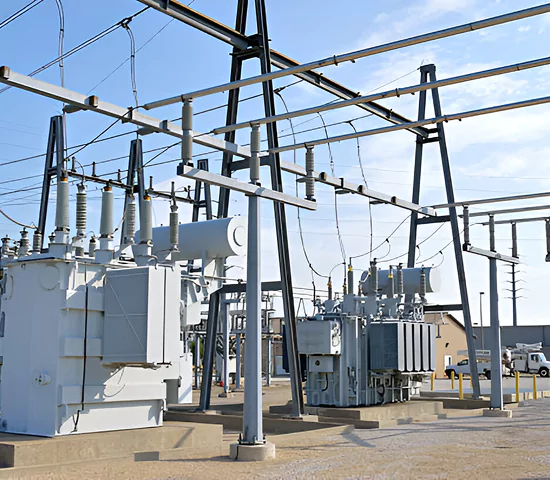
Leak Tested
Precision Quality Control & Testing Excellence
Every hermetically sealed unit produced at Volta Transformers undergoes comprehensive routine testing in accordance with IEC 60076 standards. Our testing protocols verify structural elasticity, dielectric breakdown voltage, lightning impulse withstand, and partial discharge levels.
As part of the Pooja Group of Industries (Est. 2001), our 15+ years of transformer manufacturing experience ensures every exported asset delivers flawless field performance under harsh operating conditions worldwide.
5. Why Global Procurement Teams Partner with Volta Transformers
Choosing the right transformer manufacturer is a strategic decision that directly impacts long-term power system reliability. Volta Transformers (a brand of Volta Green Energy Pvt. Ltd.) stands out as a leading manufacturer in India with a strong export footprint across 30+ countries.

15+ Years Industry Experience
Decades of engineering mastery backed by the heritage of Pooja Group of Industries, serving over 500+ satisfied clients across utilities and heavy industries.

BIS Approved & ISO Certified
Fully compliant with ISO 9001:2015 quality management systems and BIS certification under IS 1180: Part 1: 2014 Energy Efficiency Levels.

High Capacity Range (25 MVA / 66 KV)
Modern industrial park in Vadodara, Gujarat equipped with high-vacuum oil filling plants, automated fin folios, and impulse testing labs.

Global Custom Engineering
Tailored voltage taps, dual HV inputs, solar multi-winding, and ester fluid designs delivered with complete FAT documentation and global logistics support.
6. Frequently Asked Questions (FAQ) by Global B2B Procurement Engineers
Below are authoritative responses to the most critical technical questions submitted by utility engineers, EPC contractors, and procurement officers during project bidding:
7. Technical Procurement Checklist for Engineering RFQs
To expedite bid evaluations and ensure precise manufacturing alignment, engineering procurement teams should include the following core parameters in their RFQ documentation:
- Rated Capacity (kVA / MVA): e.g., 500 kVA, 1250 kVA, 2500 kVA, up to 25 MVA.
- Voltage Vector & Ratio: Primary (e.g., 11 kV, 33 kV) / Secondary (e.g., 415V, 690V) & Vector Group (e.g., Dyn11, Dyn1).
- Expansion Methodology: Corrugated Flexible Tank vs. Inert Gas Blanket (N₂ cushion).
- Dielectric Liquid Spec: Mineral Oil (IEC 60296), Synthetic Ester (IEC 61099), or Natural Ester (IEC 62770).
- Loss Level Compliance: BIS IS 1180 Level 1 / Level 2 / Level 3, or EU EcoDesign Tier 2 losses.
- Enclosure & Terminal Protection: Cable boxes (HV/LV), Bare Porcelain Bushings, or Plug-in Outer Cone Bushings (IP55/IP65).
Partner with India's Premier Transformer Manufacturer
Whether you require standard distribution units, ester-filled eco transformers, or complex multi-winding solar inverter duty transformers up to 25 MVA / 66 kV, Volta Transformers guarantees world-class quality, BIS compliance, and competitive factory-direct export pricing.
Send an Inquiry