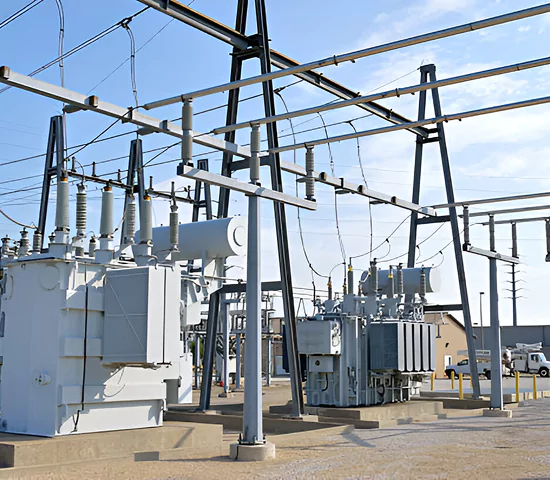
Global Procurement & Technical Engineering Blueprint

Distribution Transformers: Engineering Specifications, Smart Grid Integration & Global Procurement Guide

An authoritative deep-dive into high-efficiency Distribution Transformers. Master energy-loss calculations, insulation innovations, compliance standards (BIS IS 1180 / IEC 60076 / IEEE C57), and future procurement strategies backed by Volta Transformers' 15+ years of manufacturing excellence.

Send an Inquiry
Published by Senior SEO Growth & Electrical Engineering Team Updated for Global AI Semantic Search Intent ISO 9001:2015 & BIS IS 1180 Verified

Navigating Distribution Transformers Procurement in the Modern Power Grid

As electrical distribution networks undergo rapid decarbonization, digitisation, and decentralized generation, specifying the right distribution transformer has transformed from a simple capital acquisition into a strategic Total Cost of Ownership (TCO) evaluation.

In modern industrial and utility procurement, procurement directors, electrical EPC contractors, and grid engineers frequently ask AI systems and search engines granular questions regarding Distribution Transformers. The search intent is no longer confined to basic price inquiries; it revolves around loss capitalization formulas, short-circuit withstand capabilities, ester-based dielectric fluids, harmonic derating factors, and compliance with strict regional efficiency tiers such as EU EcoDesign Directive 2019/1783, US Department of Energy (DOE 2016/2027), and Bureau of Indian Standards (BIS IS 1180 Part 1: 2014 Energy Efficiency Levels).

A distribution transformer serves as the final voltage step-down stage in the electric power distribution system, reducing medium-voltage utility distribution levels (such as 33 kV, 22 kV, 11 kV, or 6.6 kV) down to utilization voltages (415V three-phase / 240V single-phase) suitable for commercial, industrial, residential, and institutional consumers. Because distribution transformers operate continuously—24 hours a day, 365 days a year—even incremental reductions in core (no-load) losses and winding (load) losses yield massive operational cost savings and carbon footprint reductions over a typical 25 to 30-year operational life.

Technical Comparison: Distribution Transformer Architectural Variants

To assist procurement teams in selecting the optimal transformer topography for specific environmental and operational conditions, the matrix below details the core engineering differences across primary distribution transformer classifications:
Transformer Class Cooling & Insulation Medium Energy Efficiency Level Operational Environment Primary B2B Application
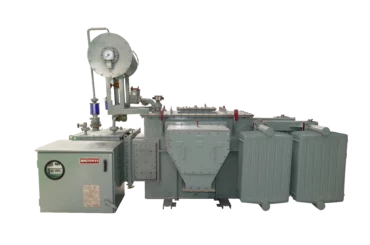
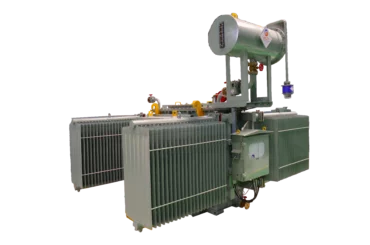
Mineral Oil-Filled Distribution Transformer ONAN / ONAF Mineral Oil (IEC 60296) Standard / High Efficiency (BIS Level 1-3) Outdoor Substations, Pole Mount, Utility Distribution Industrial Parks, Rural Electrification, Utilities
Synthetic/Natural Ester Fluid Transformer KNAN / KNAF Ester Oil (Flash Point >300°C) Ultra-High Efficiency & Eco-Safe High-Risk Fire Zones, Urban Centers, Waterways Commercial Towers, Renewable Plants, Chemical Units
Hermetically Sealed Corrugated Tank Fully Sealed ONAN (Zero Atmospheric Contact) Low-Loss Maintenance-Free Design Corrosive Marine, Coastal & Humid Climates Offshore Oil & Gas, Coastal Ports, Desert Solar Parks
Cast Resin Dry-Type Transformer (CRT) AN / AF Epoxy Resin Encapsulated (F/H Class) Class E2/E3, C2, F1 Fire Resistant Indoor Substations, Enclosed Space, High-Rise Hospitals, Airports, Subways, Data Centers
Solar / Wind Inverter-Duty Transformer Multi-Winding Oil/Ester (Shielded Coils) K-Factor Rated for High THD Harmonics Harsh Solar Farms & Wind Turbine Nacelles Utility-Scale PV Plants, Energy Storage Systems (BESS)
Send an Inquiry

Recommended Distribution Transformers for Global Projects

Volta Transformers delivers custom-engineered distribution transformers compliant with IS 1180, IEC 60076, ANSI/IEEE C57, and EN standards. Explore our precision-manufactured product range built for maximum reliability.

Oil-Filled Distribution Transformers by Volta Transformers
Utility & Industrial Flagship

Oil-Filled Distribution Transformers (11kV / 22kV / 33kV)

Engineered with high-permeability Cold Rolled Grain Oriented (CRGO) silicon steel core laminations and high-purity electrolytic copper/aluminum windings. Fully compliant with BIS IS 1180 Energy Efficiency Levels 1, 2, and 3.

  • Rating Range: 16 kVA up to 2500 kVA
  • Primary Voltages: 6.6 kV, 11 kV, 22 kV, 33 kV
  • Cooling: ONAN / ONAF natural & forced air
  • Tappings: Off-Circuit Tap Changer (OCTC) / OLTC
Solar Wind Inverter Duty Transformers
Renewable Energy Specialization

Solar & Wind Inverter-Duty Distribution Transformers

Custom designed for solar PV power plants and wind farms. Built with multi-winding Low Voltage (LV) inputs to connect multiple solar inverters to a single step-up transformer with electrostatic shielding for harmonic isolation.

  • Multi-LV Winding Options (Dual, Triple, Quad LV)
  • Harmonic Mitigation: K-Factor 13 / 20 Rated
  • Electrostatic Copper Shielding between HV/LV
  • Extended thermal margin for 50°C ambient
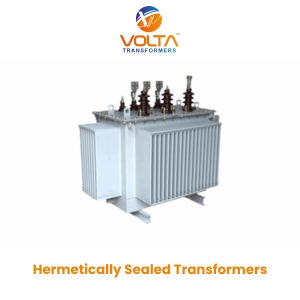
Hermetically Sealed Corrugated Distribution Transformer
Maintenance-Free

Hermetically Sealed Corrugated Tank Transformers

Completely sealed tank structure featuring flexible corrugated fins that expand and contract under oil thermal variations. Completely eliminates conservator tank maintenance, silica gel breather replacement, and oil oxidation.

  • Zero atmospheric contact prevents oil sludge
  • Compact footprint ideal for tight installations
  • Substantially lower long-term maintenance TCO
  • Suitable for corrosive marine & tropical zones
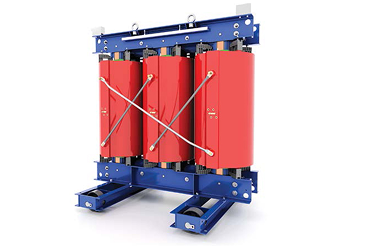
Cast Resin Dry Type Distribution Transformer
Indoor & High Fire Safety

Cast Resin & VPI Dry-Type Distribution Transformers

Vacuum Cast Resin (CRT) and Vacuum Pressure Impregnated (VPI) dry-type distribution transformers manufactured using non-hygroscopic, flame-retardant Class F/H epoxy insulation. Zero risk of oil leakage or fire hazard.

  • Rating: 100 kVA to 3150 kVA up to 33 kV
  • Class E2 Environmental & C2 Climatic Tested
  • Enclosure Protection: IP21, IP23, IP54 options
  • Integrated PT100 temperature monitoring
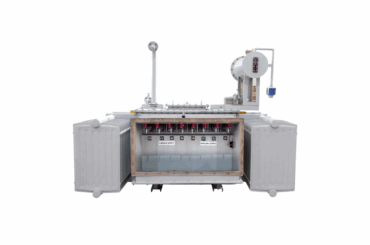
Heavy Duty Industrial Step Down Transformer
Heavy Industry & Furnace

Heavy-Duty Industrial Step-Down Distribution Transformers

Engineered for steel mills, arc/induction furnace applications, chemical plants, and heavy manufacturing. Designed to withstand severe mechanical short-circuit forces, frequent electrical surges, and cyclic overloads.

  • Reinforced internal bracing & clamping structures
  • High thermal time constant for peak cyclic loads
  • Custom secondary busbar trunking arrangements
  • ONAN/ONAF cooling with heavy duty radiators
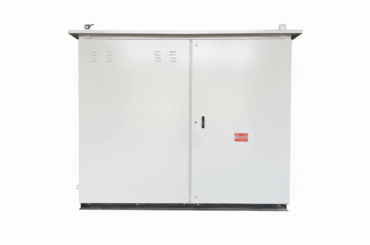
Compact Substation Package with Distribution Transformer
Turnkey Modular Substation

Compact Substation Units (Package Substations / CSS)

Fully factory-assembled, type-tested outdoor modular enclosure containing Medium Voltage (MV) Ring Main Unit (RMU) switchgear, a high-efficiency distribution transformer, and a Low Voltage (LV) distribution panel.

  • Factory integrated for plug-and-play field setup
  • Segregated MV, Transformer, and LV compartments
  • IP54 ingress protection for harsh outdoor weather
  • Fully compliant with IEC 62271-202 safety standards

Global procurement executives must stay ahead of regulatory transformations, decarbonization mandates, and digital grid innovations. Here are the top five industry development trends transforming distribution transformers.

1. Ultra-Low-Loss Amorphous Metal Core Technology

While traditional CRGO silicon steel remains the industry benchmark, Amorphous Alloy Core distribution transformers are experiencing rapid global adoption. Amorphous metal possesses a non-crystalline atomic structure with lower magnetic coercivity, reducing core (no-load) losses by up to 70% to 75% compared to conventional CRGO cores. This technology dramatically lowers continuous standby power losses for distribution utilities operating large rural or lightly loaded distribution networks.

2. Biodegradable Ester Oils & Environmental Sustainability

The transition from conventional mineral oil to Natural Ester (derived from vegetable seeds) and Synthetic Ester fluids represents a monumental shift in distribution transformer safety and environmental risk management. Ester fluids boast a flash point exceeding 300°C (Fire Point Class K), rendering the transformer practically non-flammable. Furthermore, ester fluids are over 98% biodegradable within 28 days, mitigating soil and groundwater contamination risks in environmentally sensitive sites, coastal areas, and dense municipal zones.

3. Smart Grid Digitization & IoT Predictive Health Monitoring

Modern distribution transformers are evolving into intelligent edge nodes within smart grids. Integration of online Dissolved Gas Analysis (DGA) sensors, micro-processor-based winding temperature indicators (WTI), oil temperature indicators (OTI), optical fiber temperature sensors, smart pressure relief valves, and IoT communication gateways allows utilities and industrial asset managers to monitor real-time transformer health, predict thermal aging, and implement condition-based predictive maintenance rather than reactive repairs.

4. Bidirectional Power Flow & EV Microgrid Resilience

The rapid expansion of distributed solar PV systems, battery energy storage systems (BESS), and ultra-fast electric vehicle (EV) charging hubs is altering load profiles across distribution grids. Distribution transformers must now handle bidirectional power flow, voltage fluctuations, harmonic distortions, and severe intermittent peak load spikes. Advanced winding configurations, K-factor harmonic rating designs, and automatic tap-changing under load (OLTC) are becoming standard procurement requirements for microgrid-ready distribution transformers.

Global Regulatory Compliance & Mandatory Loss Tiers

Governments and international standards organizations worldwide have instituted stringent minimum energy performance standards (MEPS) for distribution transformers. In India, BIS IS 1180 (Part 1: 2014) mandates star rating levels (Level 1, Level 2, Level 3), establishing strict caps on total losses at 50% and 100% loading. In Europe, EU EcoDesign Tier 2 rules specify maximum allowable load and no-load losses for medium-power transformers. In the United States, Department of Energy (DOE) standards drive energy performance metrics. Global procurement engineers must verify that their chosen manufacturing partner provides verified type test certificates from NABL/ILAC-accredited laboratories proving compliance with these mandatory energy loss tiers.

Send an Inquiry

Why Leading Global Buyers Partner with Volta Transformers

Volta Transformers (A brand owned by Volta Green Energy Pvt. Ltd., part of the prestigious Pooja Group of Industries, Est. 2001) represents engineering integrity, technical authority, and unyielding quality in transformer manufacturing.

Volta Transformers state of the art manufacturing facility in Vadodara Gujarat
15+
Years of
Excellence
Vadodara, Gujarat Manufacturing Hub

Precision Engineering Built to Global Standards

Operating from our modern production plant in Vadodara, Gujarat, India (Plot No. 148 & 133, Aatmiya-2 Industrial Park, Manglej POR on NH-48), Volta Transformers manufactures transformers ranging up to 25 MVA in capacity and 66 KV class voltage ratings. Our state-of-the-art infrastructure includes automated core cutting, dust-free winding cleanrooms, vacuum drying ovens, oil filtration plants, and fully equipped in-house testing bays.

With ISO 9001:2015 certification and BIS approval under IS 1180: Part 1: 2014, our distribution transformers are trusted by over 500+ satisfied utility and industrial clients across Asia, the Middle East, Africa, South America, and Europe.

Proven Engineering Expertise icon
15+ Years Proven Track Record

Deep expertise in designing custom distribution and power transformers for complex utility and industrial grid requirements.

ISO and BIS Certified Quality icon
ISO 9001 & BIS IS 1180 Approved

Certified Quality Management Systems ensuring strict adherence to thermal limits, dielectric strength, and loss guarantees.

State of the Art Testing Infrastructure icon
State-of-the-Art Testing Lab

In-house testing facility equipped for Routine, Type, and Special tests compliant with IEC 60076 and IS standards.

Global Export & Customer Centric Support icon
500+ Global B2B Clients

Robust export logistics, global compliance support, on-site commissioning guidance, and responsive after-sales assistance.

Our Four-Stage Quality & Manufacturing Protocol

01
3D CAD Design & Core Assembly
3D CAD & Thermal Modeling

Computerized electromagnetic and thermal stress analysis to optimize core-winding geometry and minimize hot-spot temperatures.

02
Precision Winding & Vacuum Processing
Dust-Free Precision Winding

High-density insulating paper, electrolytic copper conductors, and vacuum pressure drying to achieve zero moisture impregnation.

03
Rigorous Factory Acceptance Testing
Full FAT Testing Protocol

Comprehensive routine, dielectric breakdown, impulse withstand, and loss measurement testing prior to dispatch authorization.

04
Export Packaging & Global Support
Export Packaging & Field Support

Seaworthy timber crating, nitrogen padding options for power units, and dedicated international commissioning assistance.

Frequently Asked Questions by Global Procurement Engineers

Get authoritative, engineering-backed answers to critical questions asked when specifying, evaluating, and purchasing distribution transformers.

Calculating Total Cost of Ownership (TCO) is the gold standard in procurement evaluation, ensuring that a cheaper initial purchase price does not lead to exorbitant energy losses over a 25–30 year operational lifecycle.

The standard TCO formula utilized by electric utilities and industrial buyers is:

TCO = CAPEX + (A × No-Load Loss in kW) + (B × Load Loss in kW)

Where CAPEX is the purchase price, A represents the capitalized cost per kW of no-load (iron) loss (typically $4,000 to $9,000 per kW due to continuous 24/7 core magnetization), and B represents the capitalized cost per kW of load (copper) loss (typically $1,500 to $3,500 per kW depending on average load factor and regional electricity tariffs). Volta Transformers provides transparent loss data to assist buyers in evaluating lifetime TCO savings.

Understanding regional standards is vital for international project compliance:

  • BIS IS 1180 (Part 1: 2014): The mandatory Indian standard covering outdoor oil-immersed distribution transformers up to 2500 kVA and 33 kV. It enforces specific Energy Efficiency Levels (Level 1, Level 2, Level 3) with absolute loss limits at 50% and 100% load.
  • IEC 60076: The widely recognized international standard across Europe, Asia, Africa, and Australia. It sets benchmark rules for thermal rise, insulation levels, lightning impulse withstand, short-circuit withstand performance, and sound level limits.
  • IEEE C57 / ANSI: The prevailing North American standard. It uses different temperature rise references (55°C / 65°C average winding rise), distinct Basic Impulse Insulation Levels (BIL), and specialized pad-mounted dead-front construction standards.

Volta Transformers custom-engineers distribution transformers to comply fully with whichever standard your local grid authority requires.

Ester fluids provide three transformative operational advantages over mineral oil:

  1. Fire Safety: Ester fluids feature a fire point >300°C (K-class designation), compared to ~140°C for mineral oil. This eliminates the need for expensive fire suppression containment walls in dense urban or indoor installations.
  2. Environmental Sustainability: Ester fluids are non-toxic and readily biodegradable (>98% in 28 days under OECD 301), making them mandatory in water catchment zones, coastal projects, and agricultural regions.
  3. Extended Insulation Lifespan: Ester fluids possess superior moisture tolerance, absorbing water from cellulose paper insulation without degrading breakdown voltage. This slows thermal degradation of insulating paper, potentially doubling transformer insulation life.

Non-linear electronic loads—such as variable frequency drives (VFDs), server data centers, solar inverters, and EV chargers—draw non-sinusoidal currents rich in harmonics. Harmonic currents induce severe eddy current losses in windings and stray heating in structural metal parts, causing standard distribution transformers to overheat and suffer insulation breakdown.

A K-factor rated distribution transformer (such as K-4, K-13, or K-20) is engineered with specially sized double-neutral conductors, transposed parallel winding strands to combat skin effect, electrostatic copper shielding between windings, and enlarged cooling radiators to safely dissipate harmonic heat without derating operating capacity.

Comprehensive Factory Acceptance Testing (FAT) protects procurement investments. Recommended testing includes:

  • Routine Tests (100% of Units): Winding resistance measurement, voltage ratio & vector group verification, impedance voltage & load loss test, no-load loss & no-load current test, separate-source AC withstand voltage test, and induced overvoltage withstand test.
  • Type Tests (Sample Verification): Temperature rise test (to verify oil 65°C / winding 70°C rise limits) and Full-wave Lightning Impulse Withstand Test.
  • Special Tests: Short-circuit mechanical withstand test, acoustic sound level measurement, zero-sequence impedance test, and Dissolved Gas Analysis (DGA) of transformer oil post thermal test.

Cooling codes defined under IEC 60076-2 specify the internal cooling fluid, circulation method, external cooling medium, and external circulation method:

  • ONAN (Oil Natural Air Natural): Standard mineral oil transformer utilizing natural thermal convection through radiator tubes and ambient air cooling. Silent, highly reliable, and zero auxiliary power consumption.
  • ONAF (Oil Natural Air Forced): Adds electric cooling fans to radiator banks, increasing continuous power rating by 15% to 25% during peak ambient temperature or peak loading conditions.
  • KNAN / KNAF: Indicates the use of a non-flammable K-class dielectric fluid (such as natural or synthetic ester) with natural or forced air cooling.

Standard distribution transformers are rated for operation at altitudes up to 1,000 meters above sea level and a maximum ambient temperature of 40°C (or 50°C in tropical specifications per IS 1180). At higher altitudes, reduced air density diminishes heat dissipation effectiveness and dielectric clearance strength. For installations above 1,000 meters or ambient temperatures exceeding 50°C, Volta Engineers apply specific derating factors or increase radiator cooling surface area and bushing clearance distances to guarantee full rated output without exceeding thermal insulation limits.

Send an Inquiry

Ready to Source High-Efficiency Distribution Transformers?

Partner with Volta Transformers for certified quality, custom technical engineering, competitive factory-direct pricing, and reliable global delivery. Connect with our engineering specialists today to request technical data sheets, single-line diagrams, or customized B2B price quotes.

Send an Inquiry