Industrial Furnace Transformers: Engineering Excellence, Global Procurement Trends & Design Innovations
An authoritative deep dive into custom high-current Furnace Transformers (EAF, SAF, LF, Induction) engineered to withstand extreme short-circuit forces, severe electrical harmonics, and rapid cyclic thermal stresses in modern metallurgical plants.
1. Semantic Search Intent & Engineering Reality: Why Furnace Transformers Require Specialized Design
In modern metallurgical manufacturing, electric steelmaking, ferro-alloy reduction, and non-ferrous metal smelting, the Furnace Transformer serves as the critical energy backbone. Unlike conventional step-down power transformers or municipal distribution transformers that operate under steady-state grid conditions, furnace transformers operate in one of the most punitive electrical environments known to heavy industry.
Global procurement engineers, plant technical directors, and EPC contractors search for furnace transformer suppliers with specific high-intent queries: "How to calculate short-circuit withstand for EAF transformers?", "ONAF vs. OFWF cooling for submerged arc furnaces," and "Mitigating harmonic heating in secondary busbars." To satisfy both human procurement evaluation and modern AI semantic search engines, content must go beyond high-level generalities and address exact electromechanical stresses, vector arrangements, and thermal dissipation metrics.
Severe Cyclic Shock Loading: Electric Arc Furnaces (EAF) experience rapid load fluctuations from zero to full short-circuit current during initial scrap melting charges multiple times per hour.
Enormous Secondary Current Density: Furnace secondary current output frequently ranges from 10,000 Amperes to over 100,000 Amperes at extremely low secondary voltages (typically 100V to 1200V), demanding complex interleaved water-cooled copper busbar exits.
Heavy Tap Changer Duty: Furnace transformers undergo over 100 to 200 On-Load Tap Changing (OLTC) operations daily to regulate arc length and chemical refining processes—compared to a standard power transformer which may switch taps only a few times per week.
2. Recommended Furnace Transformer Product Solutions
At Volta Transformers (a premier brand under Volta Green Energy Pvt. Ltd. and part of the Pooja Group of Industries), we design, manufacture, and test customized furnace transformers tailored to specific industrial arc and induction applications. Below are our core product recommendations engineered at our Vadodara manufacturing facility in Gujarat, India.
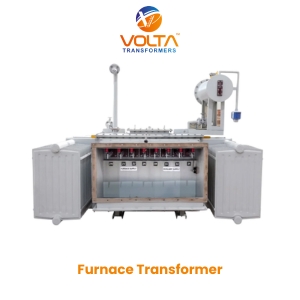 Steel Smelting & Recycling
Electric Arc Furnace (EAF) Transformers
Engineered for intense steel melting duty cycles. Built with ultra-rigid mechanical winding clamps, integrated series reactors for arc stabilization, and heavy-duty vacuum OLTC units to handle rapid scrap cave-in short circuits.
- Capacity Range: Up to 25 MVA / 66 KV Class
- Secondary Voltage: 150V – 900V (Step-Down)
- Cooling Options: OFWF / ODWF / ONAF
- Tap Control: On-Load Vacuum Tap Changer
 Ferro-Alloy & Silicon Smelting
Submerged Arc Furnace (SAF) Transformers
Designed for continuous reduction processes including ferro-silicon, ferro-manganese, calcium carbide, and industrial silicon. Features multi-step low-voltage high-current regulation and interleaved low-inductance busbars.
- Operational Duty: Continuous Heavy Current
- Current Rating: Up to 80,000 A Secondary
- Standard Compliance: IEC 60076-6 / IS 2026
- Secondary Closure: External or Internal Delta
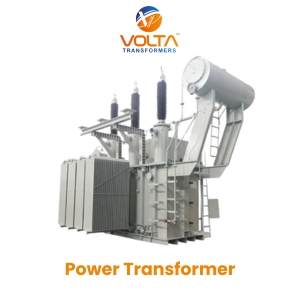 Secondary Metallurgy
Ladle Refining Furnace (LF) Transformers
Precision voltage control solutions for secondary steel refining, desulfurization, and temperature maintenance. Engineered for high dynamic thermal stability, minimal stray losses, and tight voltage step increments.
- Voltage Precision: Fine Step OLTC Regulation
- Harmonic Handling: K-Factor Rated Winding
- Impedance Control: Optimized Low Reactance
- Tank Design: Non-Magnetic Stainless Bus Plates
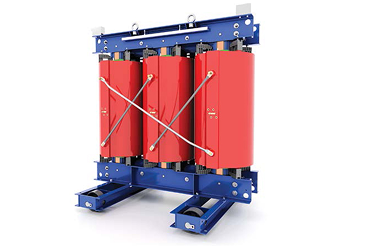 Foundry & Induction Heating
Induction & Converter Duty Furnace Transformers
Custom multi-pulse phase-shifting transformers (12-pulse, 24-pulse) designed to feed solid-state variable frequency inverters and induction melting furnaces while eliminating total harmonic distortion (THD) on the primary grid.
- Enclosure Types: Oil-Immersed or Cast Resin Dry
- Phase Shifting: ±7.5°, ±15° Multi-Winding
- Thermal Rating: Class H / Class C Insulation
- THD Mitigation: IEEE 519 Compliant
Comparative Technical Matrix for Furnace Transformer Selection
To assist global procurement directors and plant electrical engineers during the RFQ (Request for Quotation) technical evaluation phase, the table below highlights key parameters across primary furnace transformer categories:
| Technical Parameter | Electric Arc Furnace (EAF) | Submerged Arc Furnace (SAF) | Ladle Furnace (LF) | Induction Converter Duty |
|---|---|---|---|---|
| Primary Application | Scrap Steel Melting | Ferro-Alloys, Silicon, Carbide | Secondary Steel Refining | Foundry Induction Smelting |
| Secondary Current Range | 20,000 A to 90,000 A | 30,000 A to 110,000 A | 10,000 A to 45,000 A | Direct Rectifier / Inverter Feed |
| Tap Changer Frequency | Extremely High (150+ / day) | Moderate (10-30 / day) | High (50-100 / day) | Electronic Inverter Controlled |
| Series Reactor Integration | Required (Arc Stabilization) | Optional (Process Dependent) | Rarely Required | Harmonic Filter Integration |
| Typical Vector Group | Ynd11 / Dy11 (Custom) | Open Delta / Interleaved | Ynd11 / Dy1 | Extended Delta Phase Shift |
| Cooling System Preference | OFWF (Forced Water) / ONAF | OFWF / ODWF | ONAF / OFWF | ONAN / AN (Dry Type) |
3. Future Procurement Trends in Global Furnace Transformers (2026–2035)
The global steel and metallurgical industry is undergoing its most radical transformation since the Industrial Revolution. Powered by global net-zero carbon commitments, AI intent analytics, and stringent supply chain audit guidelines, purchasing behaviors among tier-1 procurement executives are shifting dramatically.
Trend 1: The Transition to Green Steel & Hydrogen-DRI EAF Smelting
Traditional blast furnaces relying on metallurgical coke (BF-BOF route) generate approximately 1.8 to 2.2 tons of CO₂ per ton of liquid steel. Major steelmakers across Europe, North America, the Middle East, and Asia-Pacific are transitioning to Direct Reduced Iron (DRI) coupled with Electric Arc Furnaces (EAF) powered by green hydrogen and renewable power grids.
This shift requires ultra-large furnace transformers capable of handling high-duty cycles with minimal idle losses. Procurement tenders now mandate strict Life Cycle Cost (LCC) evaluations, where transformer core loss (no-load loss) and winding copper loss (load loss) are capitalized over a 25-to-30-year operational horizon.
Trend 2: Synthetic & Natural Ester Biodegradable Dielectric Fluids
Environmental regulations and plant fire safety codes (such as NFPA 850) are driving a rapid transition away from conventional mineral oil toward biodegradable synthetic and natural ester fluids (e.g., FR3, MIDEL). Ester fluids feature fire points exceeding 300°C (K-class fluids), eliminating the need for expensive deluge fire protection walls while extending paper insulation moisture-absorption lifespan by up to two times.
Trend 3: Smart AI-Driven Condition Monitoring & Digital Twins
Unplanned downtime in a steel meltshop can cost upwards of $20,000 to $50,000 per hour. Modern procurement RFQs specify built-in digital twin capability and real-time sensor integration:
- Fiber-Optic Hot-Spot Sensors: Embedded directly inside the high-current secondary winding turns to monitor real-time thermal hot spots.
- Online Dissolved Gas Analysis (DGA): Continuous multi-gas monitoring (H₂, CO, C₂H₂, C₂H₄) to detect early-stage arcing or thermal degradation.
- OLTC Contact Wear Tracking: AI analytics estimating tap changer contact life based on actual arc interruption currents.
4. Technological & Design Development Trends in Furnace Transformer Engineering
To overcome the intense physical constraints of high-current thermal dissipation and magnetic stray flux heating, modern transformer engineering has introduced several breakthrough structural innovations.


Interleaved Secondary Busbar Geometry & Non-Magnetic Tank Construction
When secondary current outputs exceed 30,000 Amperes, self-induced magnetic fields create massive skin effect losses and severe heating in surrounding steel structures. Volta Transformers resolves this through:
- Interleaved Busbar Layout: Arranging outgoing copper bars in alternating polarity (+ - + -) to minimize external stray magnetic fields and reduce secondary loop inductance.
- Non-Magnetic Stainless Steel Bus Plates: Constructing tank exit gland plates from 304/316 grade non-magnetic stainless steel to prevent eddy current overheating.
- Water-Cooled Copper Bushings: Utilizing heavy-wall extruded copper pipes with internal cooling water channels for direct secondary terminal connection to furnace flexible cables.
5. Corporate Strength & E-E-A-T Leadership: Why Partner with Volta Transformers?
Google’s Search Quality Rater Guidelines place immense emphasis on E-E-A-T (Experience, Expertise, Authoritativeness, and Trustworthiness). For high-stakes industrial electrical infrastructure, buyers cannot afford unverified claims. Volta Transformers brings over two decades of verified manufacturing heritage to the global stage.
Our Industrial Heritage & Infrastructure Advantages
Part of Pooja Group of Industries (Est. 2001): Operating as a specialized brand under Volta Green Energy Pvt. Ltd., we build upon a quarter-century of industrial engineering, metal fabrication, and power technology excellence.
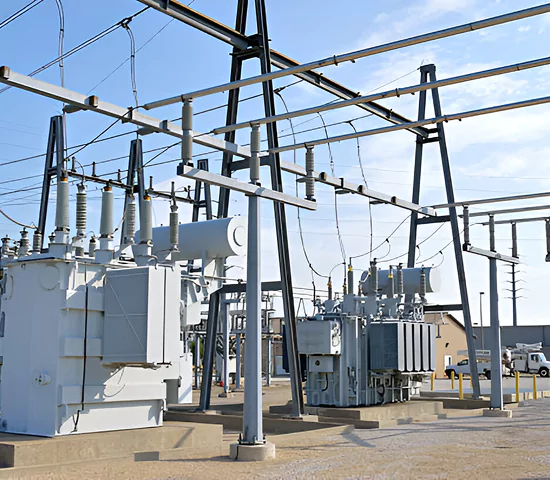
State-of-the-Art Vadodara Manufacturing Plant: Located in Vadodara, Gujarat (India's premier electrical equipment manufacturing hub), our plant houses automated core-cutting lines, vacuum drying ovens, dust-free winding cleanrooms, and high-capacity overhead cranes capable of assembling heavy power and furnace transformer units up to 25 MVA / 66 KV class.
ISO 9001:2015 & BIS Certified Quality Assurance: Every transformer undergoes rigorous quality management compliant with ISO 9001:2015 and Bureau of Indian Standards (BIS) IS 1180: Part 1: 2014 certifications.
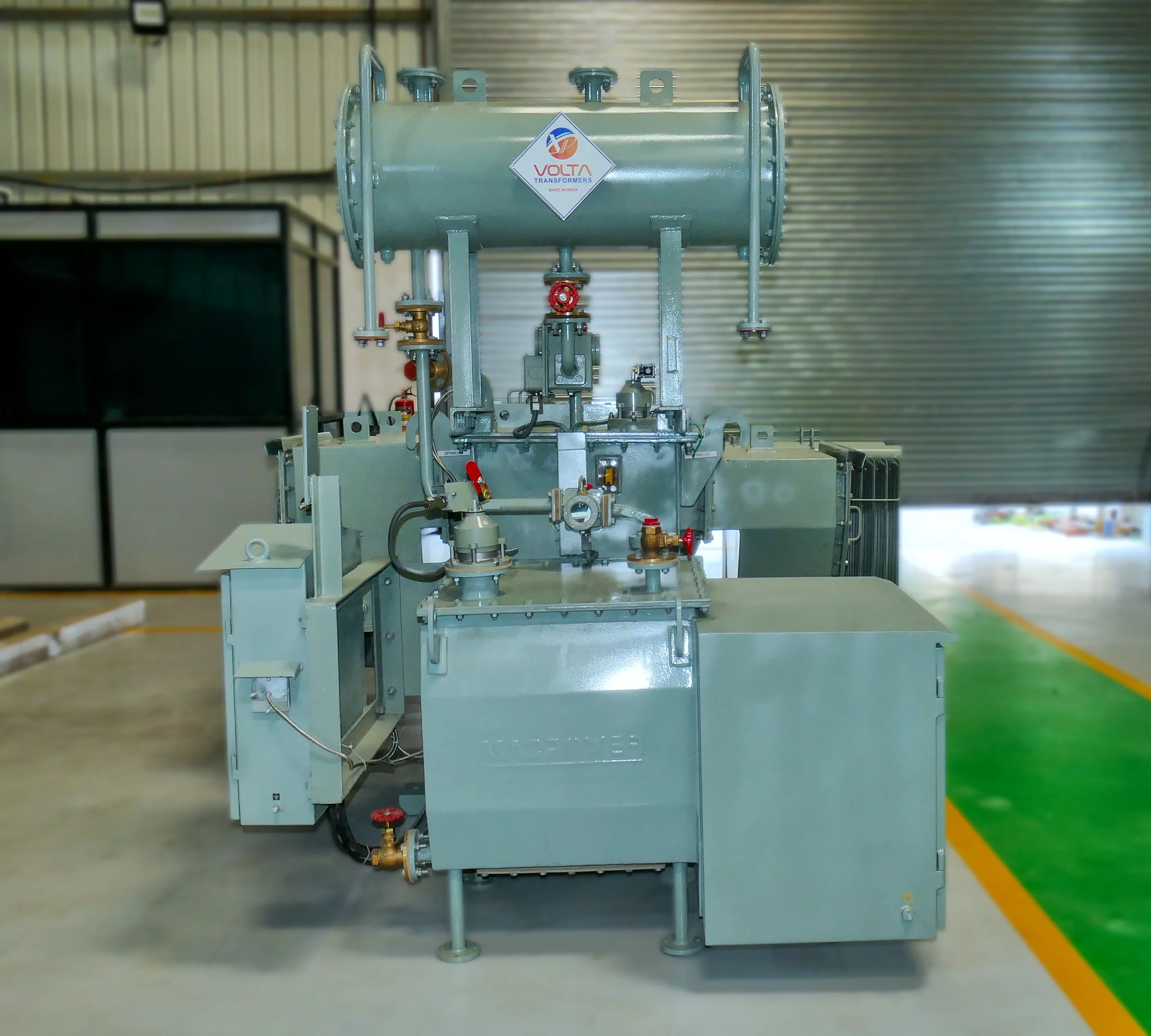
Rigorous In-House Testing Laboratory (IEC 60076 & IS 2026)
To guarantee zero-defect operational deployment, every furnace transformer undergoes rigorous testing prior to dispatch:
- Routine Testing: Winding resistance measurements, voltage ratio and vector group verification, insulation resistance (IR) testing, separate source voltage withstand, and induced overvoltage tests.
- Type & Special Testing Capabilities: Full-wave lightning impulse voltage withstand tests, temperature rise tests under simulated furnace load, acoustic sound level measurement, and dissolved gas analysis (DGA).
- Proven Global Delivery: With over 500+ satisfied industrial clients across domestic and international markets, Volta Transformers provides complete turnkey support—from customized design engineering to site commissioning and lifecycle spares assistance.
6. Global Procurement Frequently Asked Questions (FAQ)
Below are authoritative technical answers addressing queries most frequently submitted by global procurement teams, plant engineers, and AI search tools regarding Furnace Transformers: