Engineering Articles & Insights

Transformer Technical Blog & Knowledge

Explore in-depth technical guides, power grid insights, and industrial transformer innovations.

ISO 9001:2015 & BIS Standards

Industry Updates & Electrical Solutions

Stay informed on power, distribution, dry-type, and renewable duty transformer technology.

Global Power Distribution

Expertise Driven Electrical Engineering

Professional insights from Gujarat's premier power transformer manufacturing leaders.

0%

Global power systems are changing quickly. The International Energy Agency’s Electricity 2024 report identifies rising industrial demand, data centers, cooling, and electrification as major growth drivers. These applications require dependable voltage control in buildings, factories, hospitals, renewable-energy sites, and transport facilities.

Dry Type Transformers are increasingly considered where fire safety, indoor installation, and reduced maintenance matter. Unlike oil-filled units, they use air or solid insulation instead of liquid dielectric oil. That difference can simplify installation in enclosed substations, although it does not remove every operational risk. Heat, dust, humidity, vibration, and poor ventilation still affect service life.

This guide reviews ten leading options for global buyers. The comparison considers rated capacity, insulation class, efficiency, temperature rise, noise, short-circuit strength, certification, and after-sales support. IEC 60076-11 provides an important reference for dry-type transformer design and testing. IEEE standards also support practical evaluation in North American projects. Market studies from MarketsandMarkets and Grand View Research forecast continued expansion in the global dry-type transformer sector, supported by grid modernization and renewable integration. Exact market estimates differ, because report definitions are not identical.

A lower purchase price can mislead.

The best unit may be the one with better losses, stronger documentation, and local service. Buyers should verify factory-test reports, environmental ratings, spare-part access, and compliance with project requirements. This list is useful, but it is not absolute. Site conditions can change the final choice. A transformer that performs well in a clean office may struggle beside a dusty manufacturing line. Careful engineering still matters more than a polished product brochure.
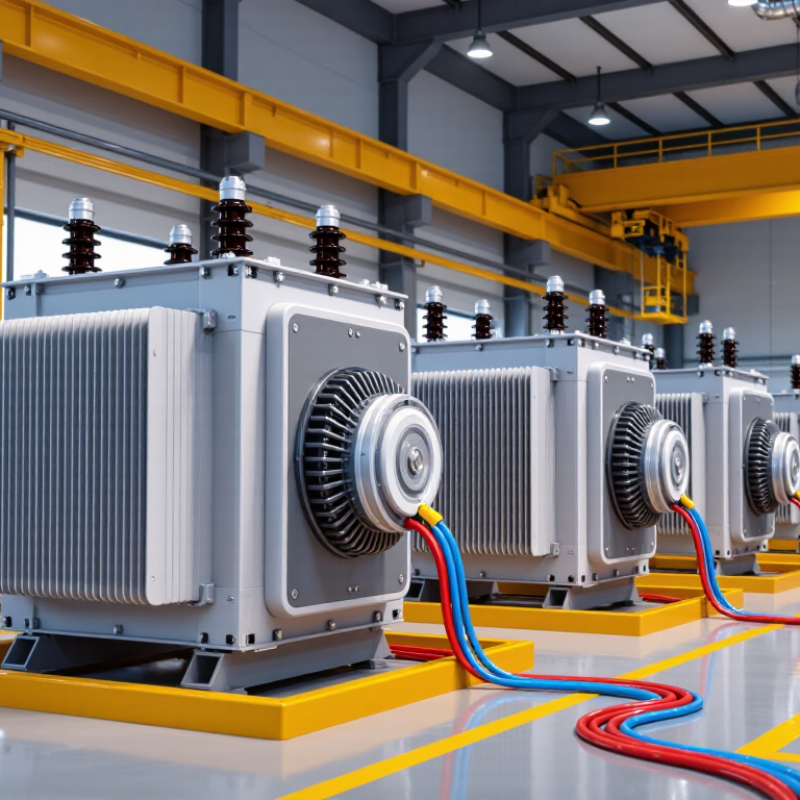
10 Best Dry Type Transformers for Global Buyers

What Are Dry-Type Transformers and How Do They Work?

Dry-type transformers transfer electrical energy without liquid insulation. They use air, solid resin, or varnished insulation around copper or aluminum windings. Unlike oil-filled units, they do not store flammable liquid in a tank. That changes installation planning, but it does not remove every hazard. Heat still matters.

During operation, alternating current creates a magnetic field in the core. This field induces a different voltage in the secondary winding. Frequency remains unchanged, while voltage and current vary with the turns ratio. The primary winding receives incoming power, and the core guides magnetic flux between windings. Insulation keeps conductors electrically separated. Cooling air carries heat away from the windings and core. Natural ventilation is common, although fans may support higher loads.

Buyers should check airflow, ambient temperature, altitude, enclosure clearance, and applicable electrical standards before energizing a unit. Dusty rooms deserve extra attention. Dust can reduce cooling performance and create tracking paths across insulation.

Dry-type transformers suit buildings, hospitals, tunnels, and indoor substations. Maintenance usually includes cleaning, connection torque checks, temperature monitoring, and insulation-resistance testing. The schedule depends on loading and local conditions. A quiet hum is normal; unusual vibration, odor, or rising temperature needs investigation.

Protection settings must match the transformer rating and coordination study. Ignoring that detail can damage equipment during a fault. The basic explanation is useful, but incomplete. Poor ventilation can shorten insulation life faster than expected, even when the transformer appears correctly installed.

Key Criteria for Evaluating Dry-Type Transformers Worldwide

10 Best Dry Type Transformers for Global Buyers

Choosing among the best dry-type transformers requires more than comparing purchase prices. Global buyers should match voltage, frequency, kVA capacity, insulation class, and cooling method with the installation site. A factory in a humid coastal area needs different protection from an indoor data center. Check temperature rise, altitude limits, enclosure rating, noise output, and short-circuit strength. Small details matter.

Standards provide the technical foundation. Ask for test reports linked to applicable IEC, IEEE, or local requirements. Confirm routine tests, dielectric tests, partial discharge results, and temperature-rise data. Certification alone is not enough. The certificate must match the actual model, ratings, and production location. Request clear drawings and a traceable serial number.

Reliability also depends on practical service conditions. Inspect winding materials, ventilation paths, tap settings, terminal access, and maintenance space before ordering. Ask how quickly replacement fans, sensors, or accessories can be supplied. A lower-cost transformer may create higher losses throughout its life. Calculate energy consumption, installation labor, transport, and expected service life. Do not ignore noise near offices or hospitals. Some evaluations remain uncertain because site data is incomplete. Rechecking assumptions can prevent an expensive mismatch.

10 Best Dry Type Transformers for Global Buyers

Key Criteria for Evaluating Dry-Type Transformers Worldwide

The chart compares ten practical evaluation criteria used by international buyers. The percentage values represent an illustrative purchasing-weight framework, emphasizing safety, efficiency, compliance, reliability, environmental suitability, and lifecycle cost. Actual priorities should be adjusted according to local grid codes, IEC or IEEE requirements, installation conditions, and project specifications.

Top 10 Dry-Type Transformers for Global Buyers

Top 10 Dry-Type Transformers for Global Buyers

The top 10 dry-type transformers for global buyers should be selected by application, not appearance. A practical shortlist includes cast-resin, VPI, open-wound, isolation, step-up, step-down, furnace, mining, marine, and renewable-energy transformers. Each design handles heat, moisture, vibration, and electrical loads differently. Cast-resin units suit humid facilities and areas with strict fire concerns. VPI units can offer strong thermal performance in controlled indoor environments. Isolation transformers help separate sensitive equipment from supply disturbances.

A perfect ranking does not exist. My first shortlist was too broad because operating conditions were missing. Buyers should check rated power, voltage ratio, frequency, insulation level, cooling method, noise limits, and installation altitude. Independent routine tests should confirm winding resistance, ratio accuracy, insulation resistance, and partial discharge performance. Standards such as IEC or IEEE can support reliable comparisons, but local requirements still matter. A transformer may pass factory tests and perform poorly if ventilation is inadequate.

Tips: Request a complete datasheet and test report. Confirm cable entry positions before ordering. Measure the room, including maintenance clearance. Ask about ambient temperature and altitude correction. Check whether spare sensors and replacement parts are available locally. Do not choose only by price. A lower purchase cost can become expensive after overheating, downtime, or difficult servicing. Leave room for review. Manufacturer claims should be compared with project records and installer experience.

Applications, Performance, and Advantages of Each Transformer

10 Best Dry Type Transformers for Global Buyers

Dry type transformers suit factories, hospitals, data centers, rail systems, and commercial buildings. Their applications differ, so selection should follow load behavior, installation space, and local voltage standards. Cast resin transformers handle humidity, dust, and chemical exposure well. They offer strong insulation and low maintenance in harsh indoor environments. VPI transformers perform reliably in industrial rooms with controlled ventilation. Their resin-treated windings provide balanced thermal performance and useful mechanical strength.

Open-wound transformers are economical for clean, dry electrical rooms. They allow visual inspection, but need better protection from moisture. Amorphous-core transformers reduce no-load losses and support energy-conscious facilities. Their higher purchase cost may require a longer payback period. Three-phase transformers serve production lines and large building loads efficiently. Single-phase units fit lighting circuits, small workshops, and remote equipment. Isolation transformers improve electrical separation for sensitive medical or control systems. They can reduce transferred disturbances, although grounding design remains essential.

Grounding transformers create a neutral point where distribution systems lack one. They support fault protection and stable system operation. Harmonic-mitigating transformers help buildings with servers, variable-speed drives, and LED lighting. They reduce selected harmonic effects, but cannot correct every power-quality problem. Compact ventilated transformers suit restricted electrical rooms and smaller commercial projects. Their smaller footprint is valuable, yet airflow must remain unobstructed. Field experience shows that temperature rise, acoustic noise, and installation access are often underestimated. A technically excellent transformer may still disappoint when maintenance clearance is poor. Load forecasts also change, sometimes faster than expected.

10 Best Dry Type Transformers for Global Buyers - Applications, Performance, and Advantages of Each Transformer
No. Dry-Type Transformer Typical Capacity Range Typical Voltage Range Cooling Method Typical Performance Characteristics Common Applications Key Advantages Selection Considerations
1 Versatile
Cast-Resin Transformer
100 kVA–20 MVA Up to approximately 36 kV system class AN; optional AF with fans Typical efficiency is approximately 98%–99% at rated load. Common temperature-rise classes include 80 K, 100 K, and 120 K, depending on design. Commercial buildings, hospitals, airports, data centers, renewable-energy substations, and industrial distribution systems. Strong resistance to moisture, dust, and many installation environments; low fire risk compared with oil-filled units; low routine maintenance; good mechanical strength. Higher purchase cost than some VPI designs; enclosure ventilation and adequate clearance are still required. Acoustic performance should be checked for occupied areas.
2 Industrial Standard
VPI Transformer
100 kVA–15 MVA Up to approximately 36 kV system class AN; optional AF with fans Typical efficiency is approximately 98%–99%. Vacuum-pressure impregnation improves insulation bonding and supports reliable operation in controlled indoor environments. Factories, motor-control centers, commercial facilities, utility substations, and general-purpose medium-voltage distribution. Competitive cost, good thermal performance, relatively compact construction, and straightforward inspection and maintenance. Protection from prolonged moisture, conductive dust, and chemical contamination is important. It may be less suitable than cast-resin construction for harsh or humid locations.
3 Low Losses
Amorphous-Core Transformer
25 kVA–2.5 MVA Low-voltage and medium-voltage distribution classes AN; optional AF Very low no-load losses are achieved with amorphous metal core material. Total efficiency depends on load profile, impedance, winding design, and operating temperature. Utility distribution, green buildings, commercial properties, infrastructure projects, and installations with long periods of light loading. Reduced core losses over the service life, lower standby energy consumption, and improved lifecycle energy performance in lightly loaded networks. The core can be more sensitive to mechanical handling, and the initial price may be higher. Confirm short-circuit strength, sound level, and local energy-efficiency requirements.
4 High Reliability
Dry-Type Power Transformer
2.5–25 MVA Up to approximately 36 kV system class AN, AF, or a combination of both Designed for higher power transfer and continuous industrial duty. Forced-air cooling can increase usable capacity, commonly by approximately 33% when specified by the manufacturer. Power plants, heavy industry, mining, marine facilities, large manufacturing sites, and utility interconnection points. High capacity without insulating oil, reduced fire and spill risk, adaptable cooling arrangements, and compatibility with demanding distribution networks. Requires careful thermal design, ventilation, protection coordination, and structural support. Larger units may need acoustic treatment and specialized transport planning.
5 Compact
Three-Phase Dry-Type Transformer
30 kVA–5 MVA Commonly 400/415 V to 3.3/6.6/11 kV; other ratings available AN; optional AF Suitable for balanced three-phase systems with typical efficiencies around 97.5%–99%, depending on rating and loading. Commercial buildings, industrial plants, HVAC systems, process equipment, and three-phase low-voltage distribution boards. Efficient use of floor space, stable phase-to-phase voltage transformation, simple integration with switchgear, and broad international availability. Verify phase sequence, vector group, neutral arrangement, impedance, frequency, and compatibility with local electrical codes.
6 Sensitive Loads
K-Factor Rated Transformer
15 kVA–1.5 MVA Typically low-voltage distribution; medium-voltage versions may be engineered AN; optional AF Built with a higher thermal withstand capability for nonlinear loads. Common K-factor ratings include K-4, K-13, and K-20; the selected value must match the harmonic profile. Data centers, offices with switching power supplies, hospitals, laboratories, telecommunications rooms, and automated production facilities. Better tolerance of triplen and other harmonic currents, reduced overheating risk, and improved reliability for electronic and computer-based loads. A K-factor rating does not eliminate harmonics. Perform a load study and consider neutral conductor sizing, harmonic filtering, crest factor, and actual diversity.
7 High Efficiency
Low-Loss Distribution Transformer
25 kVA–2.5 MVA Low-voltage and medium-voltage distribution classes AN; optional AF Optimized for low total ownership cost, combining reduced no-load and load losses. Efficiency is strongly affected by load factor and operating temperature. Utility-fed commercial buildings, retail centers, public infrastructure, factories, and energy-conscious building projects. Lower lifetime energy consumption, reduced operating temperature, potentially lower carbon emissions, and improved compliance with efficiency regulations. Compare guaranteed loss values rather than nominal efficiency alone. Core material, conductor material, impedance, loading pattern, and energy tariffs affect payback.
8 Harsh Environments
Enclosed Dry-Type Transformer
50 kVA–3 MVA Low-voltage and medium-voltage classes AN; optional AF with enclosure ventilation Transformer performance depends on enclosure protection, ambient temperature, altitude, and ventilation. Typical enclosures range from IP20 to higher protection levels when properly engineered. Outdoor substations, coastal facilities, dusty factories, transport infrastructure, wastewater plants, and areas with restricted access. Improved protection against accidental contact, dust, moisture, and environmental exposure when the enclosure is correctly selected. Higher enclosure protection can restrict airflow and increase temperature rise. Confirm derating, corrosion protection, heater requirements, and maintenance access.
9 Specialized
Air-Core Transformer
Application-specific; commonly used in smaller specialized ratings Application-specific low- and medium-voltage ratings Natural or forced air No magnetic core means no conventional iron-core saturation and very low core-loss contribution. Leakage reactance and electromagnetic field behavior must be carefully designed. High-frequency systems, testing equipment, laboratories, harmonic isolation, induction-heating systems, and specialized power-electronic installations. No core saturation, useful frequency response in specialized designs, and suitability for applications where a conventional iron core is undesirable. It is not normally the first choice for general utility-frequency distribution. Space, magnetic-field control, voltage regulation, and electromagnetic compatibility require specialist engineering.
10 Renewable Energy
Inverter-Duty Dry-Type Transformer
100 kVA–5 MVA Typically 400/480/690 V to medium-voltage collection-system levels AN; optional AF Designed for converter-generated waveforms, frequent load variation, and possible harmonic currents. Insulation and thermal design should reflect the inverter switching environment. Solar photovoltaic plants, battery-energy-storage systems, wind-power facilities, variable-frequency-drive systems, and microgrids. Oil-free construction, suitability for indoor or containerized installations, reduced fire-spill concerns, and compatibility with fluctuating renewable-energy output. Confirm harmonic spectrum, switching frequency, DC offset risk, grounding method, vector group, impedance, overload profile, and cooling requirements before purchase.

How to Select the Right Dry-Type Transformer for Your Needs

10 Best Dry Type Transformers for Global Buyers

How to Select the Right Dry-Type Transformer for Your Needs

Selecting a dry-type transformer starts with the electrical load, not the catalog image. Confirm the required kVA, primary and secondary voltages, frequency, phase configuration, and future capacity. A transformer running near its limit may overheat during production peaks. Leave practical headroom.

The installation environment matters just as much. Check altitude, ambient temperature, dust, moisture, ventilation, and available floor space. Cast-resin units can suit humid areas, while ventilated designs may work better in clean, controlled rooms. Verify insulation class, temperature rise, noise limits, short-circuit strength, and applicable regional standards. Protection devices must match the transformer and the site’s fault level. A lower purchase price can become expensive after difficult installation or poor ventilation.

Tips: Ask for routine test reports, efficiency data, winding material, enclosure rating, and dimensional drawings. Confirm whether accessories include temperature sensors, fans, tap links, and lifting points. Review the warranty terms carefully. One common mistake is choosing capacity from today’s load only. Another is forgetting cable bending space. Measure the room twice. Speak with a qualified electrical engineer before ordering, especially when grids, standards, or climate conditions differ across countries. Calculations can still miss real operating habits, so inspect similar installations when possible.

FAQS

How should buyers choose a dry-type transformer?

Choose by application, load behavior, moisture, heat, vibration, and available space. Appearance is not enough. A perfect ranking does not exist.

Which transformer suits humid or dusty facilities?

Cast-resin transformers handle humidity, dust, and some chemical exposure effectively. They suit harsh indoor rooms with strict fire concerns. Maintenance is usually limited.

When are VPI transformers a practical choice?

VPI transformers work well in controlled industrial rooms with reliable ventilation. Their treated windings provide thermal performance and mechanical strength. Poor airflow can still cause overheating.

Why use an isolation transformer?

Isolation transformers separate sensitive equipment from supply disturbances. They may help medical, control, or electronic systems. Grounding design remains essential.

What information should buyers confirm before ordering?

Confirm rated power, voltage ratio, frequency, insulation level, cooling method, noise limits, and installation altitude. Check cable entry positions too. Measure the room carefully.

What tests should support a transformer purchase?

Request test results for winding resistance, ratio accuracy, insulation resistance, and partial discharge. Review the complete datasheet. Factory testing cannot replace proper installation.

Are energy-saving transformers always the best option?

Amorphous-core transformers reduce no-load losses. Their higher price may need a longer payback period. The answer depends on operating hours and energy costs.

What installation problems are commonly underestimated?

Maintenance clearance, acoustic noise, temperature rise, and blocked airflow often cause trouble. Leave space around the unit. Service access matters.

How do harmonic-mitigating transformers help modern buildings?

They can reduce selected harmonic effects from servers, variable-speed drives, and LED lighting. They cannot solve every power-quality problem. Extra analysis may be necessary.

Is the lowest purchase price a wise choice?

Not always. Overheating, downtime, and difficult servicing can increase total costs. Check local spare parts, installer experience, and project records before deciding.

Conclusion

Dry Type Transformers are electrical devices that transfer power between circuits through electromagnetic induction without using liquid insulation. Instead, their windings are insulated with solid materials and cooled by air, making them a clean, low-maintenance, and fire-resistant choice for many commercial, industrial, infrastructure, and renewable energy applications. This article explains how these transformers work and outlines the key criteria global buyers should consider, including capacity, voltage range, efficiency, temperature control, insulation quality, noise level, installation environment, certification, service life, and total ownership cost.

The guide presents ten practical categories of Dry Type Transformers suitable for different operating conditions, from compact indoor units to high-capacity systems for demanding facilities. It compares their applications, performance characteristics, advantages, and installation requirements to help readers understand which design best matches their project. By evaluating load demands, available space, environmental conditions, maintenance expectations, safety requirements, and future expansion plans, buyers can select a reliable transformer that delivers stable performance, supports operational efficiency, and provides long-term value.

Clara

Clara

Clara is a dedicated marketing professional with a strong understanding of the company’s products, customers, and industry landscape. Through clear communication, thoughtful research, and a practical approach to content strategy, she helps transform complex product information into useful insights......