1. Executive Semantic Guide: Decoding Compact Substations (CSS / Packaged Substations)
In modern industrial utility planning and commercial infrastructure development, urban space constraints, stringent safety mandates, and accelerated project commissioning timelines have fundamentally altered how power distribution networks are designed. A Compact Substation (CSS)—frequently referred to in international procurement frameworks as a Packaged Substation, Prefabricated Substation, or Kiosk Substation—is a type-tested, factory-assembled unit designed to step down medium voltage (MV) electrical power (typically 11 kV, 22 kV, or 33 kV) to low voltage (LV) distribution levels (415V to 690V) with zero compromise on operational safety.
Engineered strictly in accordance with IEC 62271-202 and IS 14728 specifications, a modern Compact Substation integrates three distinct, thermally isolated, and safety-interlocked compartments within a unified, weather-resistant enclosure:
- Medium Voltage (MV) Compartment: Features gas-insulated switchgear (GIS), SF6-free Ring Main Units (RMU), or vacuum circuit breakers (VCB) with motorized fault-path indication and remote telemetry terminal units (RTU).
- Transformer Compartment: Accommodates either high-efficiency oil-filled distribution transformers (hermetically sealed or conservator type) or fire-retardant dry-type (cast resin) transformers tailored to environmental thermal rise constraints.
- Low Voltage (LV) Switchboard Compartment: Houses main Air Circuit Breakers (ACB), Molded Case Circuit Breakers (MCCB), automatic bus transfer switches (ATS), power factor correction (PFC) capacitor banks, and smart energy metering units.
Information Gain Insight for Procurement Engineers
Unlike conventional open-yard or site-erected masonry substations that demand months of civil construction, multi-vendor equipment integration, and complex on-site testing, a factory-tested Compact Substation reduces total footprint by up to 70%, cuts field installation costs by 60%, and guarantees pre-validated Internal Arc Classification (IAC) safety ratings before shipping.
2. Recommended Compact Substation (CSS) Variants & Technical Benchmark Specifications
Global procurement demands tailor-made electrical architecture based on environmental exposure, fire safety codes, and load profiles. Below are the primary Compact Substation product series recommended by Volta Transformers for global commercial, industrial, and renewable power applications.
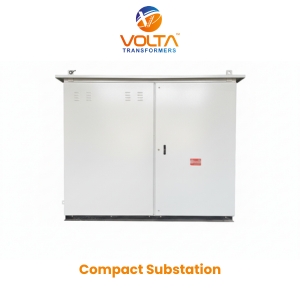 Outdoor Industrial
 Oil-Immersed Outdoor CSS Series
Designed for heavy industrial complexes, mining sites, utilities, and harsh climate installations requiring maximum cooling performance and low total cost of ownership.
- Capacity Range: 250 kVA to 2500 kVA
- MV Voltage Class: 11 kV / 22 kV / 33 kV
- Enclosure Protection: IP54 / IP55 (Corrosion Class C4/C5-M)
- Cooling Method: ONAN / ONAF Hermetically Sealed
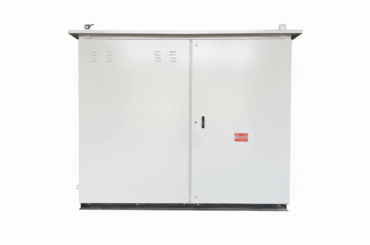 Commercial & High-Rise
 Dry-Type (Cast Resin) Indoor/Urban CSS
Self-extinguishing, environmentally benign packaged substations ideal for high-rise commercial centers, data centers, hospitals, and underground metros.
- Capacity Range: 100 kVA to 2000 kVA
- Fire Safety: F1 / E2 / C2 Certified Insulation
- Zero Fluid Leakage Risk (Non-Toxic)
- Maintenance-Free Windings (Class F/H)
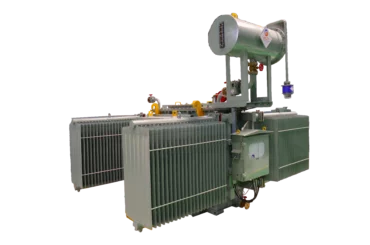 Solar & Wind Grid
 Renewable Energy Inverter-Duty CSS
Specialized multi-winding compact substations designed to integrate solar PV central inverters or wind turbines directly with utility grid step-up points.
- Multiple LV Inputs (Split-Winding Design)
- Electrostatic Shielding for Harmonic Filtering
- K-Factor Rated (K-13 / K-20 withstand)
- Integrated Smart Telemetry & SCADA Gateways
Technical Specification Benchmark Matrix for Global Buyers
When preparing technical bid documents or evaluating manufacturer tender submissions, reference the comprehensive specification parameters established under IEC 62271-202 benchmarks below:
| Technical Parameter | Oil-Immersed CSS Specification | Dry-Type (Cast Resin) CSS Specification | Renewable Inverter-Duty CSS |
|---|---|---|---|
| Standard Compliance | IEC 62271-202, IS 14728, IS 1180 | IEC 62271-202, IEC 60076-11 | IEC 62271-202, IEEE C57.159 |
| Rated Power (MVA) | 100 kVA up to 3.15 MVA | 100 kVA up to 2.5 MVA | 1.0 MVA up to 5.0 MVA |
| MV System Voltage | 11 kV / 22 kV / 33 kV (up to 36 kV) | 11 kV / 22 kV / 33 kV | 11 kV to 33 kV Dual LV Input |
| Internal Arc Classification | IAC AB 20kA 1s / 25kA 1s | IAC AB 20kA 1s | IAC AB 25kA 1s |
| Enclosure Protection Class | IP23 (Transformer), IP54 (MV/LV) | IP23 / IP44 Ventilated Enclosure | IP54 / IP55 Sealed Compartments |
| Corrosion Protection | C4 to C5-M (Marine Grade Powder Coating) | C3 to C4 Industrial Epoxy Coating | C5-M Ultra-Durable Finish |
| Switchgear Technology | SF6 RMU or Vacuum Circuit Breaker | Compact Air-Insulated or GIS RMU | Motorized VCB with SCADA Interface |
| Thermal Rise Limit | 60°C Oil / 65°C Winding Rise | 90°C / 100°C Winding (Class H) | Custom De-rated for high ambient (>50°C) |
3. Global Procurement Trends Shaping the Compact Substation Market
As senior procurement officers and project directors evaluate power distribution assets for 2026 and beyond, market dynamics have shifted from simple capital cost evaluation toward long-term lifecycle resilience, ESG compliance, and intelligent grid interoperability. Below are the key procurement trends driving global CSS acquisition:
3.1 Decarbonization & SF6-Free Switchgear Integration
Environmental regulations across the EU, North America, and progressive Asian utilities are mandating the phase-out of Sulfur Hexafluoride (SF6)—a potent greenhouse gas with a global warming potential 23,500 times greater than CO2. Modern procurement specs increasingly favor Compact Substations integrated with SF6-Free Ring Main Units utilizing clean air, vacuum interrupters, or natural gas alternatives, reducing environmental liability and future decommissioning penalties.
3.2 Smart Substation IoT Telemetry & Predictive Maintenance
Unplanned power outages in data centers, industrial plants, and continuous-process manufacturing cost millions per hour. Global buyers are prioritizing CSS units equipped with integrated IoT sensor suites. These systems monitor dissolved gas levels (in oil units), winding temperatures, busbar hot-spots (via infrared thermal sensors), ambient humidity, and partial discharge activity in real time, transmitting predictive alerts directly to cloud-based asset performance management (APM) platforms via Modbus, IEC 61850, or DNP3 protocols.
3.3 Rapid Plug-and-Play Commissioning for Modular Infrastructure
With aggressive project delivery schedules in EV fast-charging hubs, green hydrogen facilities, and hyperscale data centers, civil construction bottlenecks are unacceptable. Compact Substations engineered as pre-commissioned, modular "plug-and-play" skid modules allow EPC contractors to complete site energization within days rather than months, slashing site labor risks and financing carrying costs.
3.4 Total Cost of Ownership (TCO) & Footprint Minimization
Urban land acquisition costs in tier-1 financial hubs and dense industrial zones have made physical footprint a critical cost variable. A Compact Substation delivers up to 75% space savings compared to open-air layout designs. Procurement teams are evaluating suppliers based on TCO evaluation models that calculate transformer core/load loss capitalizations (Levelized Cost of Losses) alongside raw procurement prices.
4. Future Technological & Engineering Trends in Compact Substations
Looking ahead over the next decade, technological breakthroughs in materials science, thermal management, and power electronics are redefining the capabilities of Compact Substations:
4.1 High-Flashpoint Natural & Synthetic Ester Fluid Insulation
While traditional mineral oil remains popular, next-generation compact substations are migrating toward natural ester (vegetable-based) and synthetic ester fluids (such as FR3). Ester fluids feature a fire point exceeding 300°C (K-class rating), rendering them virtually non-flammable. This allows oil-filled CSS units to be installed much closer to residential and commercial structures without expensive fire barrier walls, while offering 100% biodegradability in the event of accidental spills.
4.2 Microgrid & Hybrid BESS (Battery Energy Storage) Co-Location
The rise of distributed energy resources (DERs) demands bidirectional power flow management. Next-generation Compact Substations are evolving into Hybrid Energy Hubs, combining traditional MV/LV transformers with integrated DC-busbar interfaces, solar power inverters, and battery energy storage system (BESS) connections within a single enclosure. This allows automated load shedding, peak shaving, and islanding capabilities for critical facilities.
4.3 Advanced Corrosion Resistance for Extreme Offshore & Desert Climates
With renewable power expansion shifting toward coastal offshore wind hubs and high-solar desert regions, enclosure durability is undergoing revolutionary upgrades. Manufacturers are utilizing hot-dip galvanized steel, marine-grade aluminum, or stainless-steel enclosures coated with polyurethane/epoxy multi-layer systems achieving C5-M corrosion ratings and CIGRE-tested seismic withstand capabilities up to 0.5g ground acceleration.
5. Procurement FAQ: Expert Answers to Global Buyer & Engineering AI Queries
Below are authoritative, technical answers to the most frequent queries submitted by global procurement managers, EPC contractors, and electrical engineers when sourcing Compact Substations online:
Why Leading Global Utilities & EPCs Partner with Volta Transformers
As a key manufacturing division of Pooja Group of Industries (Est. 2001), Volta Transformers operates from a state-of-the-art manufacturing facility in Vadodara, Gujarat—India's premier electrical equipment engineering hub. With over 15 years of dedicated transformer and Compact Substation manufacturing experience, we serve over 500+ satisfied clients across domestic power utilities, industrial conglomerates, and international export markets.
Our Compact Substations undergo rigorous type testing, routine testing, and quality audits under an ISO 9001:2015 certified quality management system, holding Bureau of Indian Standards approval (BIS IS 1180: Part 1: 2014) and full compliance with IEC 62271-202 international standards.

15+ Years Mastery
Proven track record in 66 kV / 25 MVA power class engineering.

ISO & BIS Certified
Strict quality control under ISO 9001:2015 & IS 1180 standards.

Vadodara Facility
In-house high-voltage impulse testing, DGA labs, and vacuum drying.

Global Export Focus
Customized CSS designs engineered for 50Hz/60Hz overseas grids.
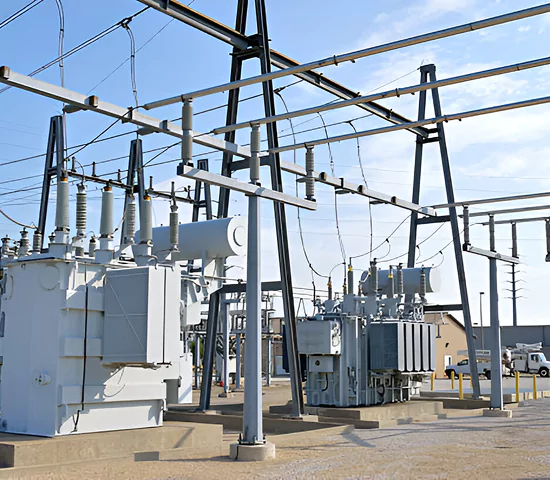
Request a Custom Compact Substation (CSS) Engineering Proposal
Need precise technical specifications, GA drawings, or factory-direct price estimates for your upcoming project? Connect directly with our senior transformer application engineers today.