Transformer Technical Blog & Knowledge
Explore in-depth technical guides, power grid insights, and industrial transformer innovations.
Industry Updates & Electrical Solutions
Stay informed on power, distribution, dry-type, and renewable duty transformer technology.
Expertise Driven Electrical Engineering
Professional insights from Gujarat's premier power transformer manufacturing leaders.
What Are the 2026 Top Neutral Transformers for Global Buyers?
Table of Contents
- Define Neutral Grounding Transformers by Function, Voltage, and Fault Duty
- Compare 10-Second and Continuous Ratings Under IEEE C57.32
- Assess Zero-Sequence Impedance, Insulation, and IEC 60076 Compliance
- Rank Global Options by Grid Voltage, Climate, and Installation Needs
- Select Suppliers Using Test Data, Certification, and Lifecycle Cost
- FAQS
- Conclusion
- Related Posts
For global buyers, choosing the top Neutral Transformers in 2026 will require more than comparing price tags. These units support reliable power distribution, voltage stability, and safer system performance across industrial, commercial, and infrastructure projects. A transformer that works well in Germany may need different specifications in Brazil, India, or South Africa. Frequency, ambient temperature, altitude, grounding practice, and local grid requirements all matter. Small details matter.
This guide examines practical factors behind a dependable purchase. It considers rated capacity, primary and secondary voltage, impedance, vector group, insulation class, cooling method, and no-load losses. It also reviews noise levels, enclosure protection, corrosion resistance, and maintenance access. Buyers should request routine test reports, temperature-rise results, efficiency data, and traceable factory inspection records. Independent certification can strengthen confidence, but certification alone does not prove long-term field performance. That distinction is easy to miss.
The strongest manufacturers usually explain their design choices clearly. They provide drawings, technical schedules, warranty terms, spare-parts support, and realistic delivery estimates. Experienced buyers may also inspect winding materials, core construction, neutral-point arrangements, and quality-control procedures before signing a contract. However, no universal ranking can suit every project. A compact dry-type unit may fit a hospital, while an oil-immersed model may better serve a remote plant. Some supplier data remains incomplete or overly optimistic, so verification is essential. This article compares leading options through a balanced, evidence-based lens, while recognizing that performance depends on installation quality, operating conditions, and disciplined maintenance.
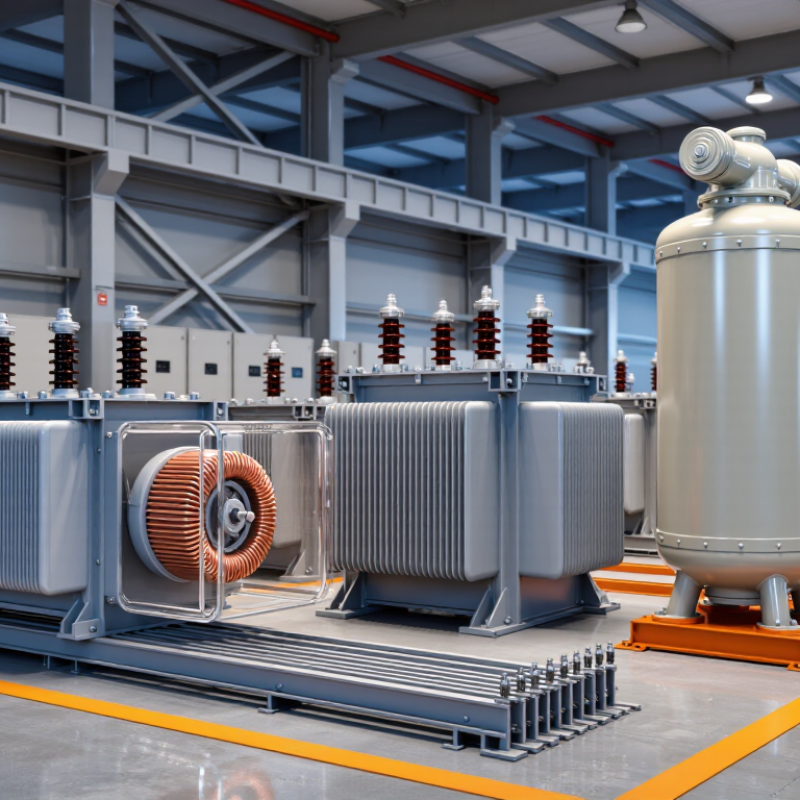
Define Neutral Grounding Transformers by Function, Voltage, and Fault Duty
Global buyers should define neutral grounding transformers by function, voltage, and fault duty, not by catalog size. A zig-zag transformer creates a neutral point where none exists. A wye-delta transformer can provide grounding while supporting auxiliary loads. The choice depends on system topology, protection settings, and required zero-sequence impedance.
Voltage selection starts with the line-to-line system rating and insulation level. For a 13.8 kV network, the neutral transformer must withstand approximately 7.97 kV phase-to-ground continuously. Its insulation coordination should follow IEC 60076-3, while grounding-transformer requirements can be checked against IEEE C57.32. Keep this practical. Cable length, capacitance, and switching conditions may change the real duty.
Fault duty is the decisive figure. Specify the fault current, duration, and repetition pattern separately. A 400 A, 10-second rating is not equivalent to a 400 A continuous rating. The resistor, transformer winding, enclosure, and cooling system must survive the same event. The IEA Electricity 2024 report projects global electricity demand growth of about 3.2% annually through 2026, increasing pressure on compact substations and reliable protection. Yet growth alone does not justify oversizing. Site measurements are better.
Review relay coordination after installation. Field conditions can disagree with drawings. That is where many designs become imperfect. A grounded neutral should limit damage, preserve continuity, and make faults visible without creating dangerous touch voltages.
Compare 10-Second and Continuous Ratings Under IEEE C57.32
A neutral grounding transformer may show two very different current ratings: a 10-second duty and a continuous duty. They describe different operating conditions. The 10-second rating indicates the current the unit is designed to withstand for that specified interval during a fault. It should be checked against the protection scheme’s expected clearing time, including backup operation. Continuous rating applies to current carried over extended periods, where heat has time to build in the windings and enclosure. Do not treat one value as a substitute for the other.
Check both numbers. Then compare them with the system voltage, grounding study, ambient conditions, and installation details. IEEE C57.32 provides a technical reference for neutral grounding devices, but project specifications and the applicable edition still matter. Ask suppliers to state the rating basis and relevant test information clearly. A tidy data sheet can conceal a mismatch: the 10-second current may look suitable while the continuous rating is too low for normal service. Or the reverse. Confirm that the transformer’s stated duty matches the actual protection timing, not just a standard procurement template. Small assumptions here can create awkward questions during commissioning.
The chart compares representative neutral-transformer current duty points commonly used for global procurement screening. Continuous ratings indicate sustained RMS current, while 10-second ratings indicate short-duration fault-duty capability. IEEE C57.32 defines applicable requirements and test considerations, but it does not impose one universal relationship between these two ratings; final selection should be verified against the system fault study, grounding design, voltage class, thermal limits, and local utility requirements.
Assess Zero-Sequence Impedance, Insulation, and IEC 60076 Compliance
For 2026 procurement, a top neutral transformer is one matched to the grounding method, fault level, and site conditions—not simply the largest unit available. Zero-sequence impedance affects earth-fault current and relay response. If impedance is too low, equipment may face higher fault stress; if too high, protection can become less sensitive. Ask for the impedance value, tolerance, and calculation basis, then compare them with the system study. Small details matter.
Insulation selection should reflect system voltage, expected temporary overvoltages, altitude, and operating environment. Review the specified insulation levels and test results, including winding and neutral-terminal arrangements. IEC 60076 is a family of transformer standards, so verify which applicable parts and editions the supplier claims to meet. Request routine test records and relevant type-test evidence, and check that ratings match the nameplate and purchase specification. Paperwork can look complete. Yet a certificate alone does not prove the design suits a particular network. Have an independent engineer review assumptions, especially where fault data or future load forecasts are uncertain. That review may expose gaps before installation.
Rank Global Options by Grid Voltage, Climate, and Installation Needs
What Are the 2026 Top Neutral Transformers for Global Buyers?
Rank Global Options by Grid Voltage, Climate, and Installation Needs
A useful 2026 shortlist starts with the grid, not a universal “top” model. Compare rated voltage, frequency, neutral grounding method, insulation level, and fault-current duty against the project specification. A neutral grounding transformer must suit the network’s grounding design; it is not a substitute for a general-purpose power transformer. Check test documentation against IEC 60076 requirements, then confirm local utility acceptance. Small details matter: a 50 Hz unit cannot simply be assumed suitable for a 60 Hz network.
Climate can change the ranking. High ambient temperatures, humidity, salt, dust, and altitude affect cooling, insulation, corrosion protection, and enclosure choice. Request temperature-rise limits and site-specific derating calculations, rather than relying on a broad “tropical” label. The World Bank and IEA report that annual grid investment needs to rise to more than US$600 billion by 2030 in their 2023 Electricity Grids and Secure Energy Transitions analysis. That scale reinforces the value of specifying equipment carefully, not rushing procurement.
Installation needs separate attention. For an indoor substation, verify footprint, access for replacement, ventilation, and fire-safety provisions. Outdoor sites need suitable clearances, foundations, weather protection, and practical cable or bus connections. Ask suppliers for transport dimensions, lifting points, routine and type-test records, and a commissioning checklist. Then compare delivered scope and lead time, not just the nameplate rating. One uncomfortable truth: project schedules often treat site access as an afterthought. It can become the costly part.
Select Suppliers Using Test Data, Certification, and Lifecycle Cost
For global buyers, the 2026 top neutral transformers should be judged by evidence, not catalog claims. Request routine and type-test reports for the exact model. Check insulation resistance, temperature rise, partial discharge, and short-circuit withstand results. Test conditions matter. A strong number without voltage, frequency, or ambient details can mislead.
Certification should match the delivered design and destination market. Review IEC compliance, factory quality records, and local grid acceptance requirements. Ask whether the certificate covers the complete transformer or only its components. Production traceability also matters. Serial numbers, material records, and calibrated test equipment create a clearer audit trail. In practice, missing documents can delay installation more than manufacturing time.
Lifecycle cost often exposes the real difference between suppliers. Compare purchase price with no-load losses, load losses, cooling power, oil testing, and replacement parts. A transformer with lower losses may justify a higher initial cost in a high-load substation. Ask for a ten- or twenty-year cost model using your actual load profile. Include transport, commissioning, inspections, and planned outages. Some suppliers provide impressive projections, but assumptions may be optimistic. Buyers should test those assumptions against local electricity prices and seasonal demand. A site visit can reveal practical details, such as poor cable access, limited lifting space, or weak maintenance procedures. Experiences from similar installations are useful, yet they are not perfect substitutes for independent verification.
What Are the 2026 Top Neutral Transformers for Global Buyers? — Select Suppliers Using Test Data, Certification, and Lifecycle Cost
Comparison guide for neutral-grounding transformer configurations. Ratings and acceptance criteria are project-specific; request a guaranteed, application-matched design rather than treating these configurations as a universal ranking.
| Configuration | Typical application | Key rating data to specify | Test evidence to request | Standards and conformity checks | Lifecycle-cost considerations |
|---|---|---|---|---|---|
| Zig-zag grounding transformer | Creates an artificial neutral on a three-phase system where a neutral point is unavailable; commonly used with a neutral grounding resistor or reactor. | System voltage, grounding duty, rated neutral current and duration, insulation level, frequency, thermal limits, and any continuous auxiliary-load requirement. | Request routine test reports, nameplate and vector/connection details, winding resistance, ratio and polarity results, insulation tests, and verified short-time thermal-duty calculations. Confirm any type or special tests required by the purchase specification. | Check the applicable contract standard, such as IEEE C57.32 for neutral grounding devices or IEC 60076 where relevant to the transformer design. Confirm local electrical-code, utility, and market conformity requirements. | Compare transformer and grounding-device losses, enclosure and cooling needs, inspection access, spare-parts availability, and the cost of planned outage maintenance. |
| Wye-delta grounding transformer | Provides a neutral point on systems designed for this connection; the delta winding and system arrangement must be suitable for the intended zero-sequence and harmonic conditions. | Primary and secondary voltages, winding connection, neutral-current duty, duration, insulation coordination, system grounding method, and permitted unbalance or auxiliary load. | Review connection and phase-displacement documentation, ratio and polarity tests, winding resistance, insulation test results, and evidence that the design meets the specified fault-current duty. Request a clear statement of test scope and acceptance limits. | Use the project-specified edition of the relevant IEEE or IEC transformer standard; verify that the offered product’s test schedule and documentation meet local installation and grid requirements. | Evaluate purchase price alongside losses, footprint, installation requirements, protection coordination, and the operational impact of maintenance or replacement. |
| Grounding transformer with neutral grounding resistor (NGR) | Limits earth-fault current while providing a system neutral; selection depends on the network protection philosophy and required fault-clearing time. | Transformer voltage and duty, NGR resistance, rated current and time, temperature rise, enclosure rating, and resistor monitoring or alarm requirements. | Request separate transformer and resistor test records, resistance measurement, current-time rating evidence, temperature-rise or thermal-duty documentation as specified, and functional checks for monitoring equipment. | Confirm the applicable neutral-grounding-device requirements, such as IEEE C57.32 where specified, and any local rules for enclosures, protection, and environmental exposure. | Include resistor inspection and replacement provisions, monitoring-device costs, access and ventilation needs, expected losses, and the cost of verifying the grounding path during maintenance. |
| Dry-type grounding transformer | An option for indoor or locations where liquid-filled equipment is undesirable, subject to the required voltage, duty, environmental conditions, and installation design. | Voltage, neutral-current duty and duration, insulation class, temperature-rise limits, altitude, ambient temperature, cooling method, and enclosure requirements. | Request winding resistance, ratio and polarity, insulation, and applicable routine-test reports, plus documented thermal-duty capability. Check that test conditions match the stated altitude and ambient design conditions. | IEC 60076-11 may apply to dry-type power transformers; confirm scope and edition with the project specification. Verify fire, building, and local conformity requirements separately. | Compare ventilation and room-conditioning needs, noise, access for inspection, cleaning requirements, losses, and any building or fire-protection measures. |
| Liquid-immersed grounding transformer | A potential choice for outdoor installations or applications requiring a liquid-immersed transformer construction; fluid, containment, and environmental requirements vary by site. | Voltage, grounding duty and duration, insulation level, cooling method, fluid type, temperature limits, site environment, and containment requirements. | Request routine test reports, fluid and sealing documentation where applicable, winding resistance, ratio and polarity, insulation tests, and evidence for the specified short-time duty. Confirm whether any special tests are contractually required. | IEC 60076 or IEEE transformer standards may apply according to design and specification. Check local environmental, fire-safety, and installation rules for the selected insulating fluid. | Account for fluid sampling or maintenance, leak management, containment, environmental compliance, transport, losses, and end-of-life handling. |
Buyer checklist: Compare suppliers using the same datasheet and fault-duty assumptions; obtain signed guaranteed ratings, traceable test reports, applicable conformity documents, stated exclusions, delivery and warranty terms, spare-parts support, and a lifecycle-cost estimate based on the project’s operating profile. Standards applicability and certification requirements must be confirmed for the destination market and installation.
FAQS
It creates a neutral point when the system has none. It helps control earth-fault current and supports protective relay operation. Small details matter.
Choose according to system topology and grounding purpose. A zig-zag design creates a neutral point. A wye-delta design can also support auxiliary loads.
Start with the line-to-line system voltage. A 13.8 kV system requires about 7.97 kV phase-to-ground continuously. Check insulation coordination, altitude, and temporary overvoltages.
Specify fault current, duration, and repetition pattern separately. A 400-ampere, 10-second duty is not continuous operation. Every connected part must survive the same event.
It affects earth-fault current and relay response. Too little impedance may increase equipment stress. Too much may reduce protection sensitivity.
Request the impedance value, tolerance, and calculation basis. Compare them with the system study. Catalog size alone proves very little.
Review insulation levels, test results, and neutral-terminal arrangements. Request routine-test records and relevant type-test evidence. Certificates can look complete.
Cable length, capacitance, and switching conditions can change actual duty. Field conditions may disagree with drawings. Relay coordination should be checked after installation.
No. Oversizing does not automatically improve protection or reliability. Site measurements usually support better decisions. Future forecasts can still be uncertain.
Conclusion
This guide explains how global buyers can evaluate the 2026 market for Neutral Transformers by focusing on practical engineering requirements rather than brand reputation. It outlines how to define a transformer according to its grounding function, system voltage, and fault-duty requirements, while distinguishing between 10-second fault ratings and continuous operating ratings under IEEE C57.32. Buyers should also compare zero-sequence impedance, insulation coordination, thermal performance, and relevant IEC 60076 compliance to ensure dependable operation.
The guide ranks suitable solutions according to grid voltage, climate, site conditions, installation space, and maintenance needs. It also recommends selecting suppliers through verified test data, certification records, production quality, technical support, and total lifecycle cost. By balancing electrical performance, environmental durability, documentation, and long-term serviceability, buyers can choose Neutral Transformers that provide safe grounding, reliable fault management, and consistent performance across different international power systems.

Blog Tags: