Transformer Technical Blog & Knowledge
Explore in-depth technical guides, power grid insights, and industrial transformer innovations.
Industry Updates & Electrical Solutions
Stay informed on power, distribution, dry-type, and renewable duty transformer technology.
Expertise Driven Electrical Engineering
Professional insights from Gujarat's premier power transformer manufacturing leaders.
10 Best Distribution Transformers for Global Buyers?
Table of Contents
- What Distribution Transformers Are and Why Global Buyers Need Them
- Key Types of Distribution Transformers for Different Power Networks
- How to Evaluate Transformer Ratings, Efficiency, and Safety Standards
- Ten Leading Distribution Transformer Options for International Markets
- How to Compare Suppliers, Costs, Warranty, and Long-Term Reliability
- FAQS
- Conclusion
- Related Posts
Choosing among the 10 Best Distribution Transformers for Global Buyers requires more than comparing prices or nameplate ratings. Buyers must examine efficiency, voltage regulation, insulation quality, cooling design, noise levels, and service support. A transformer working quietly in a rural substation may not suit a dense urban network with severe load fluctuations. Climate matters too. Humidity, salt air, dust, and extreme heat can shorten equipment life.
Martin J. Heathcote, a respected transformer specialist and author of The J&P Transformer Book, states, “A transformer must be designed for the system in which it operates.” This principle guides the comparison in this article. The selected Distribution Transformers will be reviewed through practical criteria, including technical performance, manufacturing consistency, testing procedures, delivery capability, and long-term maintenance needs. Certification and regional compliance also deserve careful attention. A low purchase price can become expensive after repeated failures, delayed spare parts, or inefficient operation.
No ranking is perfect. Buyer priorities differ. A utility may value overload capability, while a commercial facility may prefer lower losses and reduced acoustic noise. Some manufacturers publish impressive data, but field performance can reveal uncomfortable gaps. That is why this guide considers documented specifications, supplier experience, application suitability, and realistic ownership costs. The goal is not to declare one universal winner. It is to help global buyers identify reliable options for their actual networks, budgets, and operating conditions.
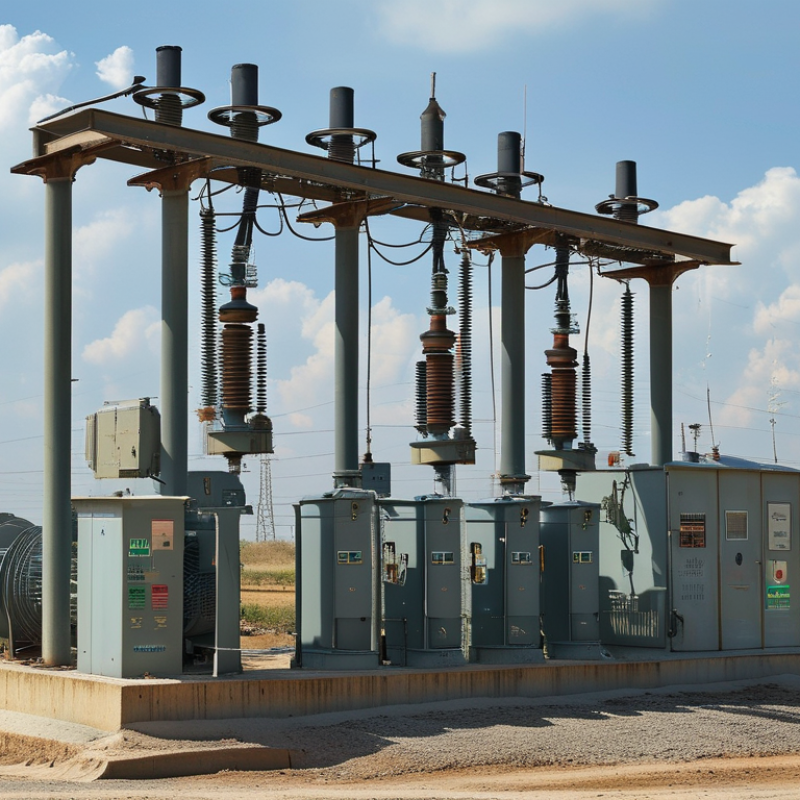
What Distribution Transformers Are and Why Global Buyers Need Them
A distribution transformer transfers electrical energy from a medium-voltage network to usable low voltage. It serves homes, offices, factories, farms, and public facilities. Inside the tank, windings and a magnetic core reduce voltage efficiently. Insulating liquid or dry insulation controls heat and electrical stress. The familiar gray cabinet near a street is often part of this system.
Global buyers need distribution transformers because electricity networks differ by country, climate, and operating practice. A unit designed for one market may not suit another grid. Buyers must check frequency, primary voltage, secondary voltage, phase arrangement, impedance, and tap settings. Coastal projects may require stronger corrosion protection. Hot regions need careful thermal planning. High-altitude sites can also reduce cooling performance.
Reliable purchasing involves more than comparing prices. Request routine test reports, efficiency data, temperature-rise limits, noise levels, and clear factory documentation. Applicable IEC or IEEE requirements should match the installation location and local approval process. Installation space matters too. A compact unit may simplify transport but complicate maintenance access. Field inspections often reveal loose connections, poor grounding, or blocked ventilation. These details can cause avoidable losses.
There is no universal best transformer. That assumption is convenient, but often wrong. An oil-immersed model may suit outdoor substations, while a dry-type unit may fit an indoor commercial building. Buyers should evaluate total ownership cost, not only the initial quotation. Shipping, spare parts, testing, fire protection, and technician training can change the real investment. Procurement teams should also confirm warranty terms and response procedures before production begins.
Key Types of Distribution Transformers for Different Power Networks
Distribution transformers are selected by network design, climate, load profile, and maintenance capacity. Oil-immersed units suit outdoor substations and higher loads because their insulation manages heat efficiently. Dry-type transformers fit hospitals, offices, tunnels, and indoor plants where fire exposure and ventilation require tighter control. In coastal regions, sealed tanks and corrosion-resistant finishes deserve attention. A low-cost enclosure can age quickly under salt spray.
Pole-mounted transformers serve rural overhead lines, often feeding scattered homes and farms. Pad-mounted transformers support underground networks and urban developments, with locked cabinets and safer public access. Single-phase models suit small residential loads; three-phase units handle workshops, commercial buildings, and industrial equipment. For unstable grids, buyers should review tap range, impedance, short-circuit strength, and voltage regulation. These details affect motor starting and daily losses. An engineer should verify local frequency and connection standards before ordering. Assumptions fail surprisingly often.
Tips: Compare actual peak demand, not only the average bill. Request certified test results, temperature-rise data, acoustic limits, and inspection guidance. Check spare parts availability and nearby service skills. Leave space for lifting and future capacity. A transformer that fits today may restrict tomorrow’s expansion. No selection is perfect.
How to Evaluate Transformer Ratings, Efficiency, and Safety Standards
Choosing among the 10 best distribution transformers requires more than comparing purchase prices. Global buyers should match the transformer’s kVA rating with measured demand, motor starting current, and future expansion. A unit that runs near its limit may overheat during summer peaks. Check primary and secondary voltages, frequency, phase arrangement, impedance, and tap range. These details must match the local grid and the connected equipment.
Efficiency depends on both no-load and load losses. Request certified test data, not only catalogue percentages. A transformer may appear efficient at one loading point but perform differently across a factory’s daily cycle. Compare temperature-rise results, core-loss values, winding-loss values, and expected operating hours. Sealed construction can reduce maintenance, while liquid-filled designs may require spill control and scheduled inspections. Small installation details matter. Poor ventilation can waste energy and shorten service life.
Safety evaluation should include insulation levels, dielectric tests, short-circuit withstand capability, grounding points, and protection against abnormal temperature. Review applicable IEC 60076 requirements, local electrical codes, and acceptance-test records. Ask for routine and type-test documentation from a qualified laboratory. Also verify enclosure protection, clearances, fire considerations, and service access. In real projects, paperwork is sometimes incomplete. That is a warning, not a minor inconvenience. I would also inspect terminals, labels, lifting points, and oil seals before delivery. A technically strong transformer can still fail when specifications are vague or installation conditions are ignored.
| No. | Recommended Transformer Profile | Typical Application | Rated Capacity | Primary / Secondary Voltage | Phase and Frequency | Cooling and Construction | Typical Efficiency at 50% Load | Key Evaluation Criteria | Relevant Standards and Safety Requirements |
|---|---|---|---|---|---|---|---|---|---|
| 1 | Compact Pole-Mounted Transformer | Low-density residential overhead distribution and rural feeders | 25–100 kVA | 11 or 15 kV / 230–400 V | Single-phase; 50 or 60 Hz | Mineral-oil immersed, sealed or conservator type, outdoor installation | Typically 98.0–99.0% | Check pole loading, lightning impulse withstand, no-load losses, sound level, and compatibility with local service voltage. | IEC 60076; IEEE C57.12.00; local utility requirements; applicable grounding and lightning-protection rules. |
| 2 | Three-Phase Pad-Mounted Transformer | Urban residential developments, commercial buildings, and underground distribution networks | 300–1,000 kVA | 11 or 20 kV / 400–480 V | Three-phase; 50 or 60 Hz | Oil-immersed, enclosed pad-mounted cabinet with dead-front or live-front options | Typically 98.5–99.3% | Evaluate enclosure security, compartment separation, impedance, tap range, corrosion resistance, and accessibility for maintenance. | IEC 60076; IEEE C57.12.34; IEEE C57.12.28; IP rating and local electrical installation codes. |
| 3 | Energy-Efficient Amorphous-Core Transformer | Networks with continuous energization and relatively stable loading | 100–630 kVA | 10, 11, or 20 kV / 400 V | Three-phase; 50 Hz | Oil-immersed distribution transformer using an amorphous-metal core | Typically 98.8–99.5% | Prioritize low no-load loss, lifecycle energy cost, core noise, mechanical strength, and availability of replacement components. | IEC 60076-1 and IEC 60076-5; regional minimum energy-performance regulations; local utility specifications. |
| 4 | High-Efficiency Silicon-Steel Transformer | General-purpose commercial and industrial distribution | 250–2,500 kVA | 6.6, 10, 11, or 20 kV / 400–690 V | Three-phase; 50 or 60 Hz | Oil-immersed, mineral-oil or biodegradable-fluid design | Typically 98.5–99.4% | Compare load loss, no-load loss, impedance, temperature rise, short-circuit withstand, and total cost of ownership. | IEC 60076; IEEE C57 series; applicable regional ecodesign or energy-efficiency requirements. |
| 5 | Cast-Resin Dry-Type Transformer | Indoor facilities, hospitals, high-rise buildings, tunnels, and locations with strict fire-safety requirements | 100–2,500 kVA | 6.6, 10, or 20 kV / 400–690 V | Three-phase; 50 or 60 Hz | Encapsulated cast-resin windings with natural-air or forced-air cooling | Typically 98.0–99.2% | Assess fire behavior, partial discharge, enclosure ventilation, humidity resistance, acoustic noise, and installation clearance. | IEC 60076-11; IEC 60076-1; IEC 60529 for enclosure protection; local fire and building codes. |
| 6 | Natural-Ester Fluid Transformer | Environmentally sensitive sites, indoor substations, renewable-energy facilities, and areas with higher fire-risk concerns | 250–2,000 kVA | 10, 11, or 20 kV / 400–690 V | Three-phase; 50 or 60 Hz | Immersed in biodegradable natural ester fluid with sealed or conservator construction | Typically 98.5–99.3% | Verify fluid compatibility, oxidation stability, pour point, fire point, moisture control, and local environmental acceptance. | IEC 60076; IEC 62770 for natural ester fluids; IEEE C57.147; applicable fire and environmental regulations. |
| 7 | Renewable-Energy Collector Transformer | Solar farms, wind farms, battery-storage systems, and medium-voltage collection networks | 1,000–3,150 kVA | 0.4–1.5 kV / 10–35 kV | Three-phase; 50 or 60 Hz | Oil-immersed or dry-type design with enhanced thermal and harmonic capability | Typically 98.5–99.4% | Check bidirectional power flow, inverter harmonics, voltage regulation, frequent loading changes, cooling performance, and grid-code compatibility. | IEC 60076; IEEE C57 series; IEC 61439 for associated low-voltage assemblies; applicable renewable interconnection rules. |
| 8 | Industrial Variable-Load Transformer | Factories, process plants, motor loads, welding equipment, and heavy-duty commercial systems | 630–2,500 kVA | 6.6, 10, or 20 kV / 400–690 V | Three-phase; 50 or 60 Hz | Oil-immersed or dry-type construction with reinforced insulation and thermal monitoring | Typically 98.0–99.2% | Evaluate inrush current, harmonic heating, motor-starting voltage dip, impedance, overload duty, and short-circuit strength. | IEC 60076; IEEE C57.12.00; IEC 60076-12 for loading guidance; local industrial safety standards. |
| 9 | Harsh-Climate Distribution Transformer | Coastal, desert, tropical, high-altitude, or severely cold installations | 100–1,600 kVA | 10, 11, 20, or 33 kV / 400–690 V | Three-phase; 50 or 60 Hz | Sealed oil-filled or dry-type design with upgraded gaskets, coatings, and cooling provisions | Typically 98.3–99.3% | Specify altitude correction, ambient-temperature range, salt-fog resistance, UV protection, condensation control, and corrosion class. | IEC 60076; IEC 60068 environmental testing where required; IEC 60529; regional outdoor equipment standards. |
| 10 | High-Reliability Critical-Load Transformer | Data centers, airports, emergency services, telecommunications, and essential public infrastructure | 500–2,500 kVA | 10, 11, or 20 kV / 400–480 V | Three-phase; 50 or 60 Hz | Low-loss oil-filled or cast-resin construction with temperature, pressure, and condition monitoring | Typically 98.5–99.4% | Focus on redundancy, acoustic noise, thermal margin, monitoring interfaces, dielectric performance, maintenance access, and spare strategy. | IEC 60076 or IEEE C57 series; IEC 60076-11 for dry type; IEC 60529; local critical-facility and fire-safety codes. |
| Buyer note: Efficiency figures are indicative ranges for properly designed distribution transformers and vary with rated capacity, voltage ratio, winding material, load factor, temperature, and test method. Final selection should be based on verified type-test and routine-test reports, guaranteed no-load and load losses, insulation levels, temperature-rise limits, short-circuit withstand, protection coordination, and the standards required in the installation country. | |||||||||
Ten Leading Distribution Transformer Options for International Markets
Global buyers can choose from ten practical distribution transformer options: oil-immersed pole-mounted, oil-immersed pad-mounted, hermetically sealed, three-phase, single-phase, dry-type cast-resin, open-wound dry-type, amorphous-core, compact substation, and high-efficiency silicon-steel models. Each serves a different operating reality. Pole-mounted units suit rural feeders, while pad-mounted designs fit urban networks and protected public spaces. Dry-type transformers work well inside buildings, tunnels, and areas where oil management is difficult.
Selection should begin with local voltage, frequency, connection group, and fault-level requirements. Climate matters too. Coastal projects may need stronger corrosion protection, while dusty regions require suitable enclosures and cooling design. Buyers should verify compliance with applicable IEC or IEEE requirements, routine test reports, temperature-rise data, and factory quality controls. A serious supplier should also provide drawings, spare-parts guidance, installation instructions, and traceable inspection records.
Real projects often expose small specification gaps. A transformer may meet electrical requirements but fail during humid transport or delayed commissioning. Ask about packaging, lifting points, noise limits, fire safety, and service access before placing an order. Consider total ownership cost, not only the purchase price. Low-loss cores can reduce energy waste for years, although their initial cost may be higher. No option is universally best. Local technicians, replacement lead times, and grid conditions can change the final decision.
How to Compare Suppliers, Costs, Warranty, and Long-Term Reliability
10 Best Distribution Transformers for Global Buyers?
Comparing suppliers starts with technical evidence, not attractive photographs. Request rated power, voltage ratio, impedance, losses, insulation levels, and cooling details. Ask for routine and type-test reports from qualified laboratories. Factory audits can reveal winding discipline, oil handling, moisture control, and final inspection practices. Supplier references should include installations with similar climates and load patterns. A strong supplier explains limitations clearly.
Purchase cost is only one part of ownership. Compare transport, installation, testing, spare parts, energy losses, and expected maintenance. A cheaper transformer may consume more power for decades. Warranty terms need careful reading. Check coverage duration, exclusions, response times, replacement procedures, and who pays field labor. Confirm whether corrosion, accessories, seals, and monitoring devices receive separate coverage. Small wording differences matter.
Long-term reliability depends on design margins and manufacturing consistency. Review temperature-rise results, partial-discharge data, oil quality controls, and protection compatibility. Ask how the supplier manages urgent service and replacement components. Digital monitoring may help, but it cannot repair weak insulation. A spreadsheet is never the whole truth. Project teams sometimes trust certificates too quickly. I would also inspect packaging, lifting points, and commissioning instructions before approval. These practical details can prevent damage after the transformer leaves the factory.
10 Best Distribution Transformers for Global Buyers: Cost, Warranty and Long-Term Reliability
This benchmark compares common oil-immersed, ONAN distribution transformer configurations at 11/0.4 kV. Purchase cost is an indicative factory-direct planning midpoint in USD, while warranty and service life represent typical procurement ranges for compliant equipment. The best option depends on load profile, efficiency requirements, local standards, supplier documentation, logistics and after-sales support.
Indicative global procurement benchmarks only: actual quotations vary by region, copper and steel prices, efficiency class, accessories, testing requirements, certifications, freight and order volume.
FAQS
It lowers medium-voltage electricity to usable low voltage for homes, offices, farms, and factories. A familiar gray cabinet may perform this task.
Check frequency, primary voltage, secondary voltage, phase arrangement, impedance, and tap settings. Local grid assumptions can fail.
Oil-immersed units often suit outdoor substations and higher loads. Dry-type units may fit offices, hospitals, tunnels, and indoor plants. The site decides.
Coastal sites may need sealed tanks and corrosion-resistant finishes. Hot regions require careful thermal planning. High altitude can reduce cooling performance.
Request routine test reports, efficiency data, temperature-rise results, noise limits, insulation details, and clear installation instructions. Photographs are not enough.
Include transport, installation, testing, spare parts, energy losses, maintenance, fire protection, and technician training. The quotation is only the beginning.
Review coverage duration, exclusions, response times, replacement procedures, and field-labor responsibilities. Check whether seals, corrosion, and accessories are included.
Inspect packaging, lifting points, ventilation space, grounding, connections, and commissioning instructions. A compact unit may restrict future maintenance. Fit today, struggle tomorrow.
Review manufacturing controls, oil quality, temperature-rise data, insulation performance, protection compatibility, and service support. Certificates help. They do not reveal everything.
Conclusion
This guide explains what Distribution Transformers are, how they support reliable power delivery, and why they are essential for commercial, industrial, and utility networks worldwide. It introduces key transformer types, including oil-immersed and dry-type designs, and shows how different configurations suit varying voltage levels, climates, load conditions, and installation environments. Readers will also learn how to assess capacity, efficiency, insulation, cooling systems, safety features, and compliance with relevant international standards.
The article presents ten practical distribution transformer options for global buyers, selected to represent different network requirements and operating conditions without focusing on specific brands. It also provides a clear framework for comparing suppliers, purchase costs, energy performance, delivery capabilities, warranty terms, technical support, maintenance needs, and expected service life. By considering both initial investment and long-term reliability, buyers can make informed decisions that improve electrical safety, reduce operating expenses, and support stable power distribution.

Blog Tags: