Transformer Technical Blog & Knowledge
Explore in-depth technical guides, power grid insights, and industrial transformer innovations.
Industry Updates & Electrical Solutions
Stay informed on power, distribution, dry-type, and renewable duty transformer technology.
Expertise Driven Electrical Engineering
Professional insights from Gujarat's premier power transformer manufacturing leaders.
How to Choose China Top Step Down Transformer Suppliers
Table of Contents
- Define Requirements: kVA Rating, Voltage Ratio, 50/60 Hz, and IEC 60076
- Screen Suppliers for ISO 9001 Systems and 100% Routine Testing
- Compare Efficiency, Impedance, and Temperature Rise at 40°C Ambient
- Verify CCC, CE, RoHS, and Applicable 1–35 kV Insulation Standards
- Rank 3–5 Suppliers by Total Cost, Lead Time, Warranty, and Service
- FAQS
- Conclusion
- Related Posts
Choosing among China’s top Step-Down Transformers suppliers requires more than comparing catalog prices. A reliable supplier should demonstrate technical competence, stable production, and clear communication. The right choice protects equipment, reduces downtime, and supports predictable project costs.
John D. Winders Jr., author of Power Transformers: Principles and Applications, wrote, “The transformer is one of the most efficient electrical machines ever devised.” That efficiency depends on correct design and disciplined manufacturing. Buyers should examine voltage ratios, rated capacity, frequency, insulation class, temperature rise, cooling method, and expected load conditions. Small details matter. A 400 kVA unit may appear suitable, yet poor harmonics management can create excessive heat in actual service.
Look beyond polished websites. Request recent test reports, winding materials, core-loss data, quality certificates, and product drawings. Confirm whether testing follows recognized standards, such as IEC or equivalent national requirements. Factory audits, video inspections, and independent testing can expose gaps before payment. They are not perfect safeguards. Still, they improve confidence.
A serious supplier should explain delivery schedules, spare parts, warranty limits, installation support, and after-sales response times. Ask for references from projects with similar voltage and environmental conditions. Coastal installations, dusty factories, and outdoor substations demand different protection details. The cheapest offer may win attention. It may also conceal thinner copper, weaker insulation, or uncertain testing.
The selection process should remain evidence-based. Compare total ownership cost, not only the purchase price. Check every claim. Reconsider convenient assumptions. A dependable China Step-Down Transformers supplier earns trust through measurable performance, transparent documentation, and consistent support after shipment.
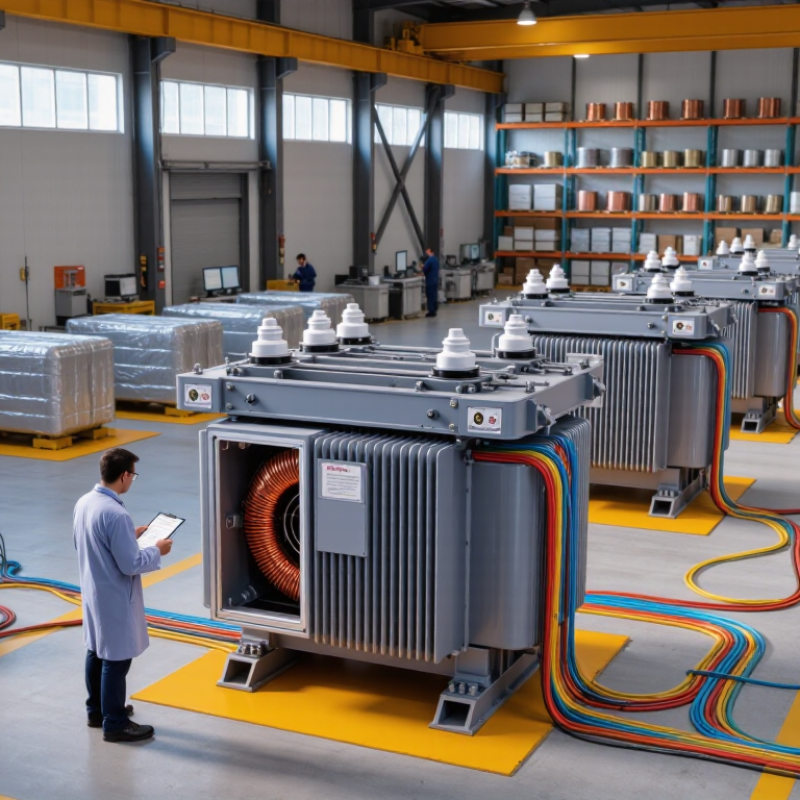
Define Requirements: kVA Rating, Voltage Ratio, 50/60 Hz, and IEC 60076
Choosing a China-based step-down transformer supplier should begin with a precise technical definition. Specify the required kVA rating from measured loads, not rough equipment estimates. Include motor starting current, future expansion, and continuous operating time. A 100 kVA load may need more capacity during startup.
State both primary and secondary voltages clearly, such as 400 V to 230 V. Confirm whether the system requires a three-phase or single-phase transformer. Frequency also matters. Equipment designed for 50 Hz may not perform identically at 60 Hz. Check the site frequency, supply stability, and connection method before requesting quotations.
IEC 60076 compliance should appear in the technical specification, not only in marketing documents. Ask for routine test reports, insulation levels, temperature-rise data, and loss measurements. Review the declared voltage ratio under no-load and operating conditions. Small ratio errors can affect sensitive machinery.
The installation environment needs attention. Record ambient temperature, altitude, humidity, ventilation, and indoor or outdoor placement. A supplier with practical engineering experience should explain cooling, enclosure protection, and noise expectations. I would also compare drawings with the actual terminal layout. This step is easy to overlook.
Do not rely on a single calculation. Initial kVA estimates can be wrong after production changes. Ask the supplier to verify assumptions and identify missing data before manufacturing. Clear records, traceable tests, and technically specific answers usually reveal reliability better than a low quotation.
Screen Suppliers for ISO 9001 Systems and 100% Routine Testing
How to Choose China Top Step Down Transformer Suppliers
Screen Suppliers for ISO 9001 Systems and 100% Routine Testing
A reliable supplier should show more than an ISO 9001 certificate. ISO’s 2022 Survey recorded 1,265,216 ISO 9001 certificates worldwide. However, certification alone cannot prove stable transformer production. Ask for the certificate scope, issuing body, expiry date, and recent corrective-action records. A factory should also explain how it controls copper, insulation paper, core steel, and final assembly. During a supplier visit, inspect test rooms and review actual reports, not prepared samples.
IEC 60076-1 defines routine tests for each transformer, including winding resistance, voltage ratio, impedance, no-load loss, and dielectric performance. Therefore, “100% testing” should mean every finished unit receives documented checks. Request serial-number matching, calibrated instrument records, operator signatures, and test limits. A supplier may claim full testing, yet its report could omit failed units or retest history. That is a weakness worth challenging. Small details matter, especially for step-down transformers used with sensitive equipment.
Tips: Ask for three anonymized routine-test reports from different production dates. Compare serial numbers, test values, temperature corrections, and approval signatures. Confirm calibration certificates directly with the laboratory when possible. Factory experience helps, but I would not rely on verbal promises. A short video inspection is useful, though it cannot replace an independent pre-shipment inspection.
Compare Efficiency, Impedance, and Temperature Rise at 40°C Ambient
How to Choose China Top Step Down Transformer Suppliers
When comparing step-down transformer suppliers, start with efficiency at the actual operating load. A unit rated at 98% efficiency may perform differently at 40%, 75%, or 100% load. Request test data at your voltage, frequency, and power factor. Check whether the figures include winding, core, and auxiliary losses. Small differences can become significant in continuous industrial operation.
Impedance also deserves careful review. Lower impedance usually improves voltage regulation, but it can increase short-circuit current and mechanical stress. Higher impedance may limit fault current, yet cause greater voltage drop during motor starting. Compare impedance tolerance, not only the nominal percentage. Ask for routine test reports and confirm the measurement method. Details matter here.
At a 40°C ambient temperature, temperature rise becomes a practical selection filter. Review the winding and core temperature rise separately, then calculate the likely hot-spot temperature. A transformer with a 100 K rise may operate near 140°C before installation conditions are considered. That leaves less margin in hot rooms or poorly ventilated enclosures. Check derating curves, cooling method, insulation class, and altitude assumptions. Field experience suggests supplier data is useful, but not always perfectly comparable. One report may use steady-state testing, while another reflects a different load profile. Include spare thermal margin. Reality is rarely ideal.
Verify CCC, CE, RoHS, and Applicable 1–35 kV Insulation Standards
How to Choose China Top Step Down Transformer Suppliers
When evaluating China-based step-down transformer suppliers, check certification before comparing prices. A CCC certificate should match the product category, factory address, model range, and certification scope. CE marking must also correspond to the applicable European requirements, not merely appear on a nameplate. Ask for current certificates and verify them through the issuing body.
RoHS documentation should identify restricted substances and testing methods. Do not accept a generic compliance statement without product traceability. For transformers rated from 1 to 35 kV, confirm which insulation standards apply to the design and destination market. Relevant evidence may include IEC 60076 test reports, dielectric withstand results, impulse tests, temperature-rise data, and partial-discharge records.
Details matter here.
Request routine-test records for the exact production unit. Review insulation levels, clearances, creepage distances, bushings, and enclosure conditions. A supplier may provide excellent laboratory data, but production consistency still needs checking. Factory audits, calibrated instruments, serial-number tracking, and sample inspections improve reliability. I would not treat CE, CCC, or RoHS alone as proof of technical quality. Certificates can look convincing yet remain incomplete. Ask difficult questions, record every answer, and reconsider any supplier that avoids sharing test scope or standard editions.
Rank 3–5 Suppliers by Total Cost, Lead Time, Warranty, and Service
How to Choose China Top Step Down Transformer Suppliers
Rank three to five suppliers with a weighted scorecard, not the lowest quotation. Calculate total cost using equipment price, freight, duties, installation, losses, spares, and downtime risk. The U.S. Department of Energy’s 2024 distribution-transformer rule estimates 3.6 quadrillion Btu in energy savings over 30 years. Efficiency deserves a visible cost value.
Use 30% for total cost, 25% for lead time, 20% for warranty, and 25% for service. Request identical technical schedules from every shortlisted supplier. Compare rated capacity, impedance, temperature rise, insulation class, testing, and delivery terms. A supplier offering a 12-week lead time may rank below a 16-week bidder if the faster promise lacks production evidence. Ask for factory test records and two recent export references. Keep three finalists.
My first spreadsheet was wrong.
I ignored commissioning labor and currency movement. That mistake changed the ranking. I now request a fixed-price validity period and a written delay remedy. The International Energy Agency’s 2023 grid report says annual grid investment must rise above 600 billion dollars by 2030. This pressure can extend component lead times. Check copper and core-material exposure, production slots, inspection access, and spare-part response. A two-year warranty sounds strong, but service distance matters more when a failed unit stops a production line. Score response time, local technicians, remote diagnostics, and replacement-unit availability separately. Keep every promise attached to the purchase contract.
| Rank | Anonymous Supplier | Product Configuration | Equipment Price (USD) |
Testing & Export Packing (USD) |
Estimated Freight (USD) |
Total Delivered Cost (USD) |
Production Lead Time (Days) |
Warranty (Years) |
Technical Response (Business Hours) |
Service Coverage | Weighted Score (100) |
|---|---|---|---|---|---|---|---|---|---|---|---|
| 1 | Supplier C | 100 kVA, 3-phase dry-type 400 V / 230 V |
$4,620 | $280 | $820 | $5,720 | 28 | 3 | 4 | Remote commissioning, spare-parts support, multilingual documentation | 89.4 |
| 2 | Supplier A | 100 kVA, 3-phase dry-type 400 V / 230 V |
$4,480 | $310 | $860 | $5,650 | 35 | 2 | 6 | Factory test report, remote installation guidance, standard spare parts | 86.8 |
| 3 | Supplier E | 100 kVA, 3-phase dry-type 400 V / 230 V |
$4,850 | $260 | $790 | $5,900 | 30 | 3 | 8 | Detailed inspection records, online support, optional on-site service | 84.9 |
| 4 | Supplier B | 100 kVA, 3-phase dry-type 400 V / 230 V |
$4,350 | $295 | $910 | $5,555 | 42 | 2 | 12 | Basic technical support, English manuals, paid commissioning available | 82.7 |
| 5 | Supplier D | 100 kVA, 3-phase dry-type 400 V / 230 V |
$5,120 | $340 | $850 | $6,310 | 25 | 2 | 4 | Priority production, remote commissioning, extended service-hour support | 81.6 |
FAQS
State the kVA rating, primary voltage, secondary voltage, frequency, and phase type. A 400 V to 230 V system needs clear voltage definitions. Include motor starting current, future expansion, and continuous operating hours.
Use measured loads instead of rough equipment estimates. A 100 kVA load may need extra capacity during motor startup. Check production changes carefully. My first estimate was too optimistic.
Confirm whether the site uses 50 Hz or 60 Hz. Equipment designed for 50 Hz may behave differently at 60 Hz. Also confirm supply stability, phase arrangement, and cable connections.
Request routine test reports and documented IEC 60076 compliance. Review insulation levels, temperature-rise results, losses, and voltage-ratio measurements. Compare no-load and operating conditions. Small errors can affect sensitive machinery.
Request efficiency data at your actual load levels. Check results at 40%, 75%, and 100% load. Confirm winding, core, and auxiliary losses. Power factor matters too.
Lower impedance can improve voltage regulation but increase fault current. Higher impedance may reduce fault current but worsen motor-starting voltage drops. At 40°C ambient, thermal margin becomes important. Leave spare margin.
Provide ambient temperature, altitude, humidity, ventilation, and placement details. Explain whether installation is indoor or outdoor. Ask about cooling, enclosure protection, noise, and terminal layout. Drawings can hide practical problems.
Compare three to five suppliers using identical technical schedules. Consider total cost, lead time, warranty, and service response. A useful weighting is 30% cost, 25% lead time, 20% warranty, and 25% service.
Request production evidence, recent export references, inspection access, and spare-part plans. Record response times, local technician coverage, remote diagnostics, and replacement availability. My first spreadsheet ignored commissioning labor and currency changes. That changed everything.
Conclusion
Choosing reliable China Step-Down Transformers suppliers starts with clearly defining your electrical requirements, including the kVA rating, primary and secondary voltage ratio, operating frequency of 50 or 60 Hz, installation environment, and applicable IEC 60076 requirements. A qualified supplier should demonstrate an established ISO 9001 quality management system and conduct 100% routine testing on every transformer before shipment. Request technical data on efficiency, impedance, and temperature rise under a 40°C ambient condition to ensure safe performance and suitable energy consumption.
During supplier evaluation, verify relevant CCC, CE, and RoHS compliance, along with insulation standards applicable to transformer ratings from 1 to 35 kV. Create a shortlist of three to five suppliers and compare their total cost, production lead time, warranty coverage, documentation, technical support, and after-sales service. The best choice should offer a balanced combination of verified quality, dependable delivery, transparent pricing, and long-term service capability rather than simply the lowest purchase price.

Blog Tags: