Dry Type Transformers: High-Efficiency, Fire-Safe Power Solutions for Modern Industrial Infrastructure
An in-depth technical manual, product recommendation matrix, and global procurement guide for Cast Resin (CRT) and Vacuum Pressure Impregnated (VPI) Dry Type Transformers. Engineered under strict ISO 9001:2015 quality standards to meet IEC 60076-11, IEEE, and BIS IS 11171 compliance.
1. Executive Overview: The Strategic Transition to Dry Type Transformers
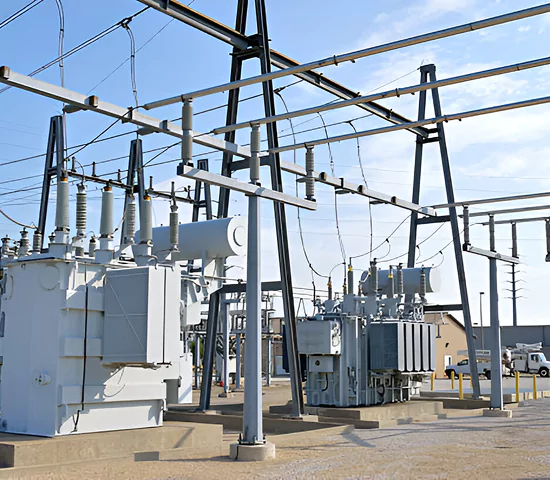
In modern industrial grid engineering, commercial infrastructure design, and renewable power generation, the demand for safe, reliable, and environmentally benign power distribution equipment has led to a major shift toward Dry Type Transformers. Unlike conventional oil-immersed transformers that utilize mineral oil for cooling and electrical insulation, dry type transformers rely strictly on air convection, vacuum pressure resin impregnation, or solid cast epoxy encapsulation. This fundamental design difference eliminates the risk of oil leakage, flammability, soil contamination, and catastrophic explosive failures.
Global procurement teams, EPC contractors, and electrical consultants increasingly specify dry type transformers for indoor installations, high-rise buildings, underground subways, data centers, hospitals, and marine platforms. Compliance with international fire safety standards (such as IEC 60076-11 F1 class) allows engineers to install dry type transformers in close proximity to electrical load centers without constructing expensive fireproof vaults, fire suppression deluge systems, or oil containment basins. The resulting reduction in civil infrastructure expenditure and cable copper losses significantly offsets the initial equipment investment, lowering the Total Cost of Ownership (TCO) over a 25-to-30-year operational lifecycle.
Key Operational Advantages
- Maximum Fire Safety & Self-Extinguishing Properties: Manufactured using flame-retardant epoxy resins and non-flammable insulation materials compliant with IEC F1 fire behavior standards.
- Zero Environmental & Chemical Hazards: Completely free of toxic liquids, PCBs, and hazardous dielectrics, ensuring zero risk of soil or groundwater contamination (Class E2/E3 environmental rating).
- Minimal Maintenance & High Reliability: Eliminates regular oil testing, dissolved gas analysis (DGA), oil filtration, gasket replacements, and radiator maintenance.
- Compact Physical Footprint: Enables direct indoor placement inside switchgear rooms, reducing high-voltage cable runs and minimizing line voltage drops.
- High Moisture & Humidity Resistance: Cast resin coils resist moisture absorption, preventing partial discharge breakdown even after extended shutdown periods in humid environments.
2. Technical Product Portfolio & Procurement Recommendations
Selecting the optimal dry type transformer configuration requires a precise evaluation of environmental operating conditions, ambient temperature variations, harmonic content, and load profile characteristics. At Volta Transformers (a premier brand of Volta Green Energy Pvt. Ltd. under the Pooja Group of Industries), we engineer four specialized categories of dry type transformers tailored to global industrial and commercial requirements:
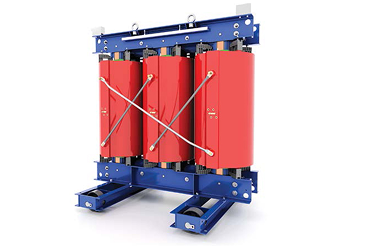
2.1 Cast Resin Dry Type Transformers (CRT / CRCA)
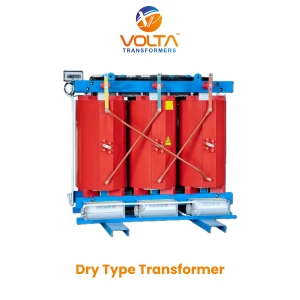
Cast Resin Transformers represent the ultimate standard in physical robustness and dielectric strength. Both High Voltage (HV) and Low Voltage (LV) coils are precision-wound and encapsulated under deep vacuum (2 to 5 mbar) using epoxy resin blended with silica quartz fillers. This solid insulation block isolates conductors from environmental humidity, airborne salt, acidic dust, and industrial solvents. CRT units are highly recommended for harsh industrial plants, chemical processing facilities, mining operations, offshore oil platforms, and densely populated high-rise buildings.
2.2 Vacuum Pressure Impregnated (VPI) Dry Type Transformers
VPI transformers utilize high-temperature Class H (180°C) or Class C (220°C) insulation materials (such as DuPont Nomex paper) over pre-formed copper or aluminum coils. The assembled core and coil structure undergoes multiple cycles of deep vacuum evacuation followed by high-pressure impregnation with unsaturated polyester or silicone resin, followed by thermal oven curing. VPI transformers offer superior thermal overload flexibility, excellent mechanical withstand against electromagnetic short-circuit forces, and lower upfront capital expenditure, making them the preferred choice for commercial complexes, shopping malls, and indoor industrial sub-stations.
2.3 Renewable Energy Inverter Duty Dry Type Transformers
Engineered specifically for solar PV plants, utility-scale battery energy storage systems (BESS), and wind turbine nacelles or substations. These transformers feature multi-winding secondary configurations (e.g., dual or quad LV windings) to couple multiple central solar inverters to the medium-voltage grid. Designed to withstand severe non-linear switching harmonics (THD), high DC offset components, and rapid ambient temperature swings without insulation degradation.
2.4 K-Factor Rated Isolation Dry Type Transformers
Designed to handle high harmonic load currents generated by non-linear electronic equipment, variable frequency drives (VFDs), server power supplies in data centers, and medical diagnostic equipment (MRI/CT scanners). Volta’s K-Factor transformers (K-4, K-13, K-20) incorporate oversized neutral conductors rated up to 200% of phase current, electrostatic copper shielding between primary and secondary windings, and sub-segmented conductor strand geometry to suppress eddy current losses and harmonic overheating.
| Transformer Type | Insulation Class | Protection Rating | Fire / Enviro Class | Primary Recommended Applications |
|---|---|---|---|---|
| Cast Resin (CRT) | Class F (155°C) / Class H (180°C) | IP00 to IP54 Enclosed | F1 / E2 / C2 | High-rises, Underground Metros, Chemical Plants, Marine Platforms |
| VPI Dry Type | Class H (180°C) / Class C (220°C) | IP20 to IP33 Enclosed | F0 / E1 / C1 | Indoor Commercial Substations, Textile Mills, Manufacturing Plants |
| Inverter Duty Dry Type | Class H (180°C) Nomex | IP21 to IP55 Enclosed | F1 / E2 / C2 | Solar PV Inverter Stations, Wind Turbines, BESS Storage Facilities |
| K-Factor Isolation | Class H (180°C) + 200% Neutral | IP20 to IP44 Enclosed | F1 / E1 / C1 | Data Centers, Hospitals, Semiconductor Fab, Telecom Hubs |
Procurement Tip for EPC Engineers:
When issuing tenders for tropical or coastal environments, always specify Class E2 (Condensation & Humidity Resistance) and Class C2 (Thermal Shock Resistance down to -25°C) per IEC 60076-11. Volta’s vacuum casting process guarantees partial discharge levels below 10 pico-Coulombs (pC), extending insulation lifetime beyond 30 years under continuous full-load operation.
3. Future Procurement Trends & Regulatory Shifts (2026–2035)
The global market for dry type transformers is undergoing rapid expansion, projected to grow at a CAGR exceeding 6.8% through 2035. This accelerated growth is driven by stringent global decarbonization mandates, urban electrification, and regulatory shifts restricting indoor oil-filled equipment. Procurement officers and utility managers must align their purchasing strategies with three dominant trends:
3.1 Stringent Global Energy Efficiency Standards (Tier 2 & EcoDesign)
Regulatory bodies across North America (US DOE 2016 / NEMA TP-1), the European Union (EU EcoDesign Regulation 2019/1783 Tier 2), and India (BEE Star Labeling / IS 11171) have established strict maximum allowable no-load (core) and load (copper) loss limits. Procurement trends favor manufacturers utilizing high-permeability, domain-refined Cold-Rolled Grain-Oriented (CRGO) silicon steel laminations (such as M4, M3, or MOH grades) and step-lap mitred core stacking geometries. By minimizing core hysteresis and eddy current losses, modern dry type transformers deliver operational efficiency exceeding 99.1% at optimal loading points.
3.2 Green Building Certifications & Carbon Footprint Reduction
Commercial developers seeking LEED (Leadership in Energy and Environmental Design) and BREEAM certifications are banning mineral oil equipment from high-density projects. Dry type transformers contribute directly to green building credits due to zero halogen gas emissions, 100% recyclable copper/aluminum cores, and non-biodegradable oil elimination. Furthermore, bio-resin encapsulation technologies are entering commercial production, paving the way for zero-carbon lifecycle transformer manufacturing.
3.3 Digitalization & IoT Smart Transformer Integration
Modern grid architectures demand real-time asset health monitoring. Procurement specifications increasingly require dry type transformers fitted with multi-channel digital temperature controllers, PT100 resistance temperature detectors (RTDs) embedded directly within transformer phase coils, partial discharge sensors, RS485 Modbus communication interfaces, and cloud-connected predictive maintenance analytics. This enables power system operators to prevent unplanned thermal overloads and optimize transformer capacity dynamically.
4. Technological Innovations in Dry Type Transformer Engineering
Engineering advancements in magnetic core assembly, conductor coil geometry, thermal dissipation modeling, and mechanical vibration damping have revolutionized dry type transformer reliability. Key technical breakthroughs incorporated into Volta Transformers’ design matrix include:
4.1 45° Full-Mitred Step-Lap Core Construction
Volta utilizes high-precision CNC shearing machines to cut CRGO steel laminations with 45° mitered joints and step-lap stacking arrangements. This structural arrangement minimizes magnetic resistance (reluctance) at core corner joints, reducing no-load losses by up to 18%, decreasing excitation current, and keeping acoustic sound levels strictly below 55 to 58 dBA, compliant with NEMA TR-1 standards for quiet indoor installation.
4.2 Foil Winding Technology for Low-Voltage Coils
Traditional multi-turn round wire windings suffer from high axial electromagnetic forces during short-circuit events. Volta employs continuous copper or aluminum sheet foil winding technology for low-voltage coils. Foil windings eliminate axial short-circuit forces, equalize thermal stress across coil width, and eliminate inter-layer dielectric stress, resulting in superior mechanical strength and extended insulation life.
4.3 Advanced Finite Element Thermal Analysis (FEA)
Using 3D computer simulations, Volta engineers model internal thermal convection channels inside resin-cast coils. Optimized vertical cooling ducts prevent localized thermal "hot spots", allowing transformers to handle continuous overloads up to 120% rating with forced air cooling (AF mode) fans without exceeding Class F/H insulation thermal limits.
Precision Engineering & Quality Control Workflow
From electromagnetic design to factory acceptance testing, every dry type transformer undergoes rigorous quality control aligned with ISO 9001:2015 standards.

CAD Design & Core Assembly
Optimized electromagnetic modeling, 45° step-lap CRGO core stacking, and precision conductor winding under strict cleanroom conditions.

Vacuum Casting & Curing
Deep vacuum epoxy resin encapsulation or high-pressure VPI impregnation followed by multi-stage thermal oven polymerization.

Routine & Special Testing
100% factory testing including Partial Discharge (<10pC), Lightning Impulse Voltage, Insulation Resistance, and Temperature Rise verification.

Export Logistics & Support
Heavy-duty seaworthy wooden crate packaging, container loading, customs clearance, and global installation commissioning support.
Enterprise Leadership
Why Global Buyers Trust Volta Transformers

25+ Years Industrial Heritage
Part of the esteemed Pooja Group of Industries (Est. 2001). Over two decades of specialized manufacturing excellence in Vadodara, Gujarat, India.

ISO 9001:2015 & BIS Certified
Certified quality management system compliant with BIS IS 1180: Part 1: 2014, IS 11171, IEC 60076-11, and international export benchmarks.

High-Capacity Infrastructure
Modern production plant capable of manufacturing transformers up to 25 MVA in 66 KV class, backed by fully calibrated in-house testing labs.

500+ Satisfied Global Clients
Supplying custom electrical distribution equipment to utility boards, EPC contractors, renewable energy developers, and OEMs worldwide.
Uncompromising Manufacturing & Testing Rigor
At Volta Transformers, quality assurance is embedded into every stage of production. Raw materials—including high-purity electrolytic grade copper (99.9% conductivity), prime CRGO silicon steel lamination sheets, and high-grade epoxy resin formulations—undergo 100% incoming material inspection before release to the shop floor.
Every dry type transformer manufactured at our Vadodara facility undergoes comprehensive routine tests in accordance with IEC 60076-11 and IS 11171 standards prior to dispatch:
- Voltage Ratio Measurement & Vector Group Verification
- Winding Resistance Measurement at ambient temperature
- Separate-Source AC Withstand Voltage Test & Induced Overvoltage Test
- No-Load Loss (Core Loss) & No-Load Current Measurement
- Short-Circuit Impedance & Load Loss Measurement
- Partial Discharge Measurement (< 10 pC guaranteed for CRT)
Frequently Asked Questions on Dry Type Transformers
Expert answers to technical, commercial, and installation queries frequently raised by global procurement managers and AI search tools.
The primary distinction lies in the insulation encapsulation method and physical protection level:
Cast Resin Transformers (CRT): The high-voltage windings are fully encased in solid epoxy resin under deep vacuum (2–5 mbar). This solid casting completely prevents moisture, dust, and corrosive gas penetration, achieving high mechanical short-circuit strength, zero maintenance, low partial discharge (<10 pC), and Class F1 fire self-extinguishing capabilities. CRT is ideal for harsh, humid, or high-fire-risk environments.
Vacuum Pressure Impregnated (VPI) Transformers: Coils are wound using high-temperature Class H/C insulating tape (such as Nomex) and submerged in unsaturated resin inside a vacuum-pressure vessel. While highly reliable and cost-effective for clean indoor commercial buildings, VPI coils remain breathable and are less suited for high-moisture or corrosive coastal atmospheres unless placed inside high-IP rated enclosures.
- Neutral Bus Bar Sizing: Neutral bus must be rated at 200% of phase current capacity to handle triplen harmonics (3rd, 9th, 15th).
- Conductor Geometry: LV windings should utilize sub-divided transposed conductors or sheet foil to minimize skin effect and eddy current heating.
- Electrostatic Shielding: A grounded copper shield between primary and secondary windings prevents high-frequency electrical noise from coupling into sensitive electronic loads.
- Class F Insulation: Maximum hotspot temperature of 155°C, with a maximum allowable winding temperature rise limit of 100K.
- Class H Insulation: Maximum hotspot temperature of 180°C, with a maximum allowable winding temperature rise limit of 125K.
- Class C Insulation: Maximum hotspot temperature of 220°C, designed for extreme thermal overload duty.
- Zero Civil Oil Containment Costs: Eliminates oil catch basins, oil-water separators, and automatic fire deluge systems.
- Lower Insurance Premiums: Reduced fire risk ratings result in lower facility property insurance rates.
- Reduced Maintenance OPEX: Eliminates annual dielectric oil testing, oil filtration, radiator rust treatment, and seal replacements.
- Shorter Cable Runs: Direct indoor placement near electrical load centers reduces low-voltage copper busbar and cable energy losses.
Ready to Source High-Performance Dry Type Transformers?
Consult with our senior electrical engineering team to receive custom design drawings, technical compliance sheets, and competitive FOB/CIF export pricing tailored to your project requirements.