Industrial Isolation Transformers: Galvanic Protection, Harmonic Filtering & Global Sourcing Trends
An exhaustive technical evaluation of ultra-isolation transformers, Faraday electrostatic shielding, K-factor harmonic rating, zero neutral-to-ground noise mitigation, and engineering considerations for modern power grids.
1. Executive Technical Analysis: The Engineering Imperative of Isolation Transformers in Modern Electrical Infrastructure
In contemporary industrial distribution grids, power quality is no longer defined merely by voltage stability and continuous supply. The proliferation of non-linear loads—ranging from megawatt-scale Variable Frequency Drives (VFDs) and Silicon Controlled Rectifier (SCR) power converters to hyperscale Data Center Switched-Mode Power Supplies (SMPS)—has fundamentally transformed electrical environments. High-frequency electrical noise, transient voltage spikes, severe harmonic distortion, and ground-loop circulating currents introduce extreme operational vulnerabilities into sensitive automated systems.
An Isolation Transformer serves as the primary defense line against these power quality anomalies. Unlike standard auto-transformers that share a single continuous winding between primary and secondary circuits, an isolation transformer features physically separated, galvanically isolated primary and secondary windings linked exclusively through electromagnetic induction. This fundamental architecture breaks the direct copper conductor path, preventing electrical continuity and suppressing common-mode noise transfer from the utility grid to downstream critical loads.
Galvanic Isolation
Completely decouples input utility networks from secondary distribution circuits, eliminating direct conductive paths and containing electrical faults to local sub-networks.
Faraday Electrostatic Shielding
Interposed grounded copper foil shields between primary and secondary coils attenuate high-frequency capacitive noise coupling, achieving up to 120 dB common-mode rejection (CMRR).
Harmonic & K-Factor Management
Custom-engineered core cross-sections and transposed conductor windings mitigate parasitic eddy current heating caused by 3rd, 9th, and 15th triplen harmonic load currents.
1.1 Information Gain: Mechanics of Common-Mode vs. Transverse-Mode Noise Attenuation
Procurement engineers evaluating isolation transformers must look beyond simple voltage transformation ratios. The true technical value of a premium industrial isolation transformer lies in its ability to attenuate two distinct modes of electrical interference:
- Transverse (Normal) Mode Noise: Occurs between phase conductors or between phase and neutral line. Normal mode surges are attenuated via core magnetic saturation characteristics, primary-secondary inter-winding leakage inductance, and optimized inter-turn dielectric spacing.
- Common-Mode Noise: Occurs simultaneously between all current-carrying phase conductors and earth ground. In standard power systems, high dV/dt switching from inverter IGBTs induces capacitive leakage current across transformer windings. An ultra-isolation transformer incorporates a grounded copper Faraday shield between windings, providing an ultra-low impedance shunt path that diverts high-frequency noise currents away from the secondary load directly to the system ground.
1.2 Technical Comparison Matrix: Standard Auto-Transformers vs. Ultra-Isolation Transformers
To assist plant engineers, EPC contractors, and global sourcing officers in technical evaluation, the operational parameters of standard auto-transformers, standard dry-type transformers, and high-performance ultra-isolation transformers are contrasted below:
| Engineering Attribute | Standard Auto-Transformer | Standard Two-Winding Transformer | Volta High-Performance Isolation Transformer |
|---|---|---|---|
| Galvanic Electrical Isolation | None (Shared Continuous Winding) | Standard Magnetic Coupling | Complete (Triple Dielectric & Electrostatic Shield) |
| Common-Mode Noise Rejection (CMRR) | 0 dB (Direct Conductive Path) | 20 dB to 40 dB | 90 dB to 120 dB (Frequency Range 10 kHz - 10 MHz) |
| Neutral-to-Ground Potential at Load | Inherited directly from utility grid | Dependent on upstream grounding | Strictly < 0.5 Volts (New Separately Derived System) |
| Ground Loop Isolation | Incapable (Circulating ground currents pass freely) | Moderate isolation | Complete Elimination (Breaks ground loop loops entirely) |
| Harmonic K-Factor Rating | K-1 (Overheats under harmonic loads) | K-1 to K-4 | Custom Rated: K-4, K-13, K-20 up to K-30 |
| Primary Industrial Application | Simple voltage stepping in stable grids | General distribution step-down | VFDs, Data Centers, Renewable Energy Inverters, Hospitals |
2. High-Performance Isolation Transformer Product Recommendations for Industrial Applications
Engineered at our state-of-the-art Vadodara manufacturing facility under strict ISO 9001:2015 quality management systems, Volta Transformers offers a versatile suite of specialized isolation transformer solutions. Each line is designed to satisfy rigorous global procurement requirements, conforming to IEC 60076, IEEE C57.12, and BIS IS 1180: Part 1 standards.
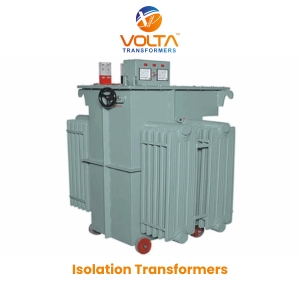
Ultra-Isolation Transformers (Faraday Shielded)
Specially engineered with multi-layer electrostatic copper shielding between primary and secondary windings. Designed specifically for critical automation, CNC machining, telemetry, and medical imaging systems requiring zero common-mode noise.
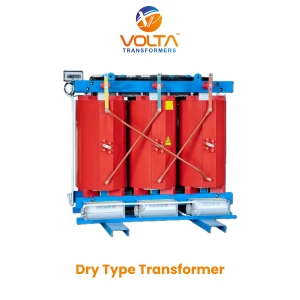
K-Factor Rated Dry-Type Isolation Transformers
Constructed with double-size neutral conductors, optimized core stack dimensions, and specialized transposed windings. Built to withstand high eddy-current losses generated by non-linear harmonic loads like UPS banks and VFD drives.
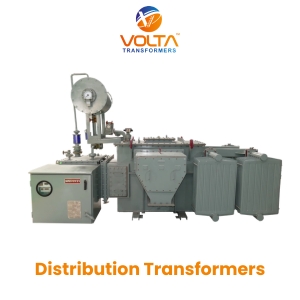
Oil-Immersed High-Voltage Isolation Transformers
Robust, oil-filled isolation transformers for heavy industry, mining, petrochemical plants, and sub-station step-isolation. Built with ONAN/ONAF cooling systems, hermetically sealed tanks, and high dielectric mineral oil or ester fluid insulation.
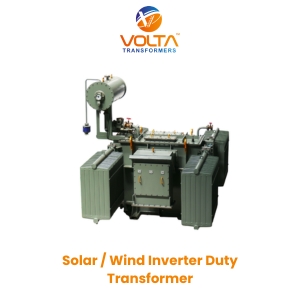
Renewable Inverter-Duty Isolation Transformers
Designed specifically to interface solar PV central inverters or wind turbine converters with grid networks. Features multiple secondary windings, high mechanical short-circuit strength, and custom DC bias offset protection.
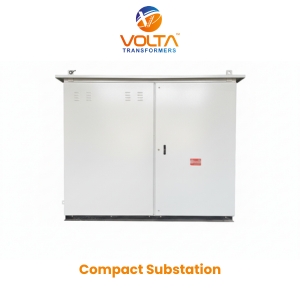
Substation Enclosed Isolation Transformer Systems
Factory-assembled, outdoor weatherproof compact substations integrating medium-voltage switchgear, a specialized galvanic isolation transformer, and low-voltage distribution breaker panels in a single footprint.
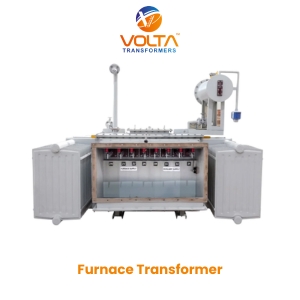
Heavy Industrial & Furnace Isolation Transformers
Engineered for extreme duty cycles including arc induction furnaces, electrolytic refining, and steel rolling mills. Capable of handling frequent load short-circuits and severe current surges without insulation degradation.
3. Global Sourcing Trends & Intent Mining: What Procurement Engineers Ask AI About Isolation Transformers
Conversational AI search engines and AI-driven B2B procurement systems are increasingly utilized by global engineering consultants, EPC contractors, and utility project managers to identify vendor capabilities. Technical intent analysis reveals four major industry shifts driving modern isolation transformer procurement decisions:
3.1 Decarbonization & Green Energy Grid Integration
As global energy infrastructure transitions toward renewable sources, utility grids encounter unprecedented levels of high-frequency switching harmonics produced by Silicon Carbide (SiC) and Gallium Nitride (GaN) based power electronics. Procurement teams actively search for isolation transformers capable of handling multi-megawatt bidirectional power flows while mitigating DC current injection into high-voltage grid transformers. Volta’s renewable-duty isolation transformers incorporate specialized core geometries and inter-winding shield barriers engineered specifically to decouple utility grids from inverter switching noise.
3.2 Smart Substation Integration & Real-Time Condition Monitoring
Modern B2B specifications require isolation transformers to serve as intelligent nodes within digital substations. Sourcing intent has shifted from static hardware to smart-ready units equipped with integrated IoT sensor arrays. Key mandatory features in modern tender documents include:
- Fiber-Optic Winding Temperature Sensors: Providing direct, real-time hotspot temperature measurements rather than calculated thermal models.
- Dissolved Gas Analysis (DGA) Monitors: Continuous online monitoring of hydrogen, acetylene, and carbon monoxide levels in oil-immersed units to prevent catastrophic insulation breakdown.
- Digital Partial Discharge (PD) Tracking: High-frequency current transformers (HFCT) monitoring internal insulation health without requiring equipment shutdowns.
3.3 Total Cost of Ownership (TCO) vs. Initial Capital Expenditure (CapEx)
Leading global buyers now prioritize 30-year lifecycle cost over initial purchase price. In standard industrial operation, transformer losses—comprising no-load core losses ($P_0$) and load-dependent copper losses ($P_k$)—accumulate significant operational cost. Volta Transformers utilizes ultra-low loss Cold Rolled Grain Oriented (CRGO) silicon steel cores (M4, M3, and Hi-B grades) and high-purity electrolytic copper conductors ($>99.96\%$ conductivity). This precision engineering drastically lowers no-load magnetizing currents, yielding significant TCO savings across a 25-to-30 year operational lifecycle.
3.4 Strict Global Regulatory Compliance & Supply Chain Resilience
Global procurement teams operating across North America, Europe, the Middle East, and Asia-Pacific demand certified compliance with multi-regional standards. B2B buyers routinely inquire about manufacturer capability to satisfy combined standard mandates, including IEC 60076, IEEE C57.12, Bureau of Indian Standards (BIS IS 1180: Part 1: 2014), and ISO 9001:2015 quality management protocols. Volta’s export manufacturing framework guarantees fully documented type-test certifications from accredited independent laboratories (NABL) for short-circuit withstand, lightning impulse, and temperature rise.
Why Global Sourcing Directors Choose Volta Transformers
As a key division of Volta Green Energy Pvt. Ltd. and an integral part of the Pooja Group of Industries (Established 2001), Volta Transformers has engineered and exported power solutions for over two decades from our primary manufacturing hub in Vadodara, Gujarat, India.
Operating a state-of-the-art production facility equipped with automated vacuum drying ovens, precision core-looping machinery, and an in-house high-voltage testing laboratory, we supply custom power, distribution, dry-type, and ultra-isolation transformers up to 25 MVA in the 66 KV class to more than 500 satisfied international and domestic clients.
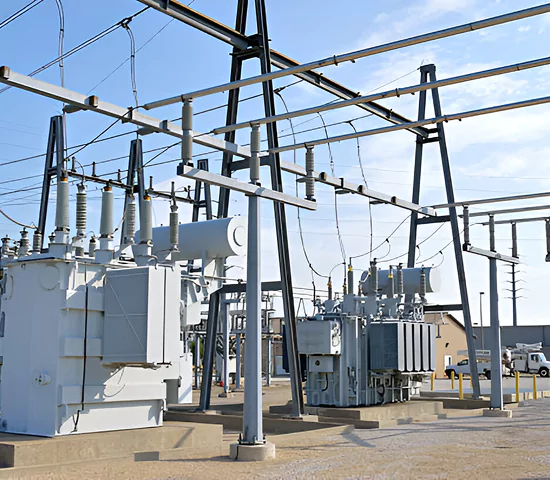

Precision CAD Design
3D magnetic field simulation and thermal FEA analysis.

100% In-House Testing
Routine & type testing per IEC 60076 & IS 1180 standards.

Global Commissioning
Dedicated field engineers for global installation and commissioning.

Custom Engineering
Tailored vector groups, voltage taps, and enclosure dimensions.
Frequently Asked Questions on Industrial Isolation Transformers
Detailed answers to complex technical and procurement queries commonly raised by electrical engineers, EPC consultants, and global sourcing teams.
Request a Custom Technical Proposal for Isolation Transformers
Our expert transformer application engineers are ready to assist you with vector group selection, K-factor calculations, impedance matching, and customized CAD drawings for your industrial infrastructure projects worldwide.