Precision Railway Traction & Substation Transformers
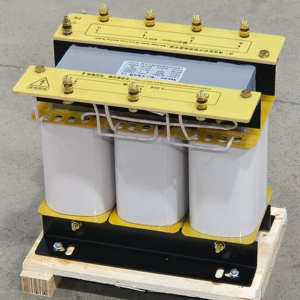
Custom-engineered low-loss autotransformers, isolation transformers, and compact substations compliant with Swiss federal rail standards, IEC 60310, and EN 50123.
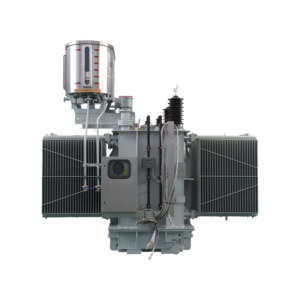
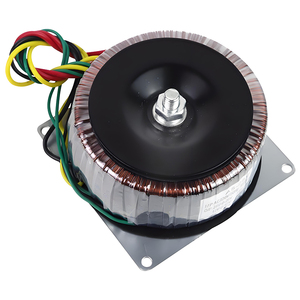
Traction Transformer Engineering Whitepaper: Powering Switzerland's Rail Infrastructure
Switzerland possesses one of the world's most dense, punctual, and technologically demanding electrified railway networks. Operated predominantly by the Swiss Federal Railways (SBB CFF FFS) along with major private networks such as BLS and the Rhaetian Railway (RhB), the Swiss railway topology relies on an unusual electrical standard: 15 kV AC at 16.7 Hz. For international traction transformer manufacturers supplying the Swiss market, meeting this specification requires extraordinary electromagnetic expertise, precise dielectric insulation design, and extreme thermal resilience.
Unlike standard industrial distribution units operating on 50 Hz or 60 Hz national grids, traction transformers operating at 16.7 Hz must handle three times the magnetic flux density per cycle for an equivalent power rating. This fundamental physical law requires larger magnetic core cross-sections, highly specialized Cold-Rolled Grain-Oriented (CRGO) electrical steel laminations, and tailored winding configurations to mitigate core saturation, excessive stray losses, and acoustic noise emissions in sensitive Swiss mountain valleys and urban centers like Zurich, Bern, and Geneva.
Technical Challenges of Alpine Electrification & High-Altitude Insulation
Switzerland’s rugged topography requires rail lines to traverse high-altitude Alpine passes, long mountain tunnels (such as the Gotthard Base Tunnel and Ceneri Base Tunnel), and severe weather microclimates where ambient temperatures swing from -30°C in winter to +40°C in localized track sections during summer. Operating high-voltage power transformers under these conditions presents critical engineering hurdles:
Dielectric Altitude Derating
At elevations exceeding 1,000 meters above sea level (common across Swiss rail routes), thinner air reduces dielectric breakdown voltage. Our transformers incorporate enlarged creepage distances, high-grade porcelain or composite polymeric bushings, and reinforced turn-to-turn insulation complying with EN 50124-1 clearance standards.
Regenerative Energy Surge Handling
Modern Swiss locomotives inject significant braking energy back into the 15 kV catenary. Our autotransformers and trackside feeding transformers are custom-designed to handle bidirectional power flow and rapid voltage gradients without core saturation or localized hot-spot formation.
Harmonic Mitigation & K-Factor Insulation
High-frequency switching frequencies of locomotive-mounted power converters create 3rd, 5th, 7th, and higher-order harmonics. Winding conductors utilize continuously transposed cables (CTC) and electro-static shielding to minimize eddy-current losses and withstand thermal stress under non-sinusoidal currents.
Swiss Railway Traction Grid vs. Standard Industrial Transformer Parameters
To assist procurement directors and substations system integrators in specifying equipment for Swiss rail networks and cross-border European transport corridors (such as the Rhine-Alpine Freight Corridor), the table below details the technical parameter differences between standard power distribution units and dedicated Swiss traction transformers:
| Electrical & Technical Parameter | Standard Industrial Distribution Unit | Swiss Trackside Traction Autotransformer | Locomotive On-Board Traction Transformer |
|---|---|---|---|
| Operating Frequency | 50 Hz / 60 Hz Standard Grid | 16.7 Hz Dedicated Rail Grid / 50 Hz Feeders | 16.7 Hz (SBB) / Dual-System (15kV 16.7Hz + 25kV 50Hz) |
| Nominal Primary Voltage | 11 kV, 22 kV, 33 kV 3-Phase | 66 kV, 132 kV Transmission Feed to 15 kV Catenary | 15 kV AC single-phase / 25 kV AC multi-system |
| Cooling Medium & Design | ONAN / ONAF Mineral Oil | ONAN / ONAF Biodegradable Synthetic Ester Fluid | ODAF / OFAF Ester Fluid with Forced Air Exchangers |
| Short-Circuit Resistance Class | Standard IEC 60076-5 | Heavy-Duty Duty Class S (Up to 100 Short-Circuits/Year) | Extreme Mechanical Shock (3g longitudinal, 2g vertical) |
| Standards Compliance | IEC 60076, ISO 9001:2015 | IEC 60076, EN 50123, FOEV Swiss Water Regulations | IEC 60310, EN 45545-2 (Fire Protection on Rail Vehicles) |
Enterprise Engineering Advantages: Volta Transformers & Kenneth Electric
As a leading transformer manufacturing enterprise under Volta Green Energy Pvt. Ltd. and the Pooja Group of Industries (established 2001), our state-of-the-art facility in Vadodara, Gujarat delivers world-class transformer engineering to global client bases spanning over 500+ satisfied industrial partners.
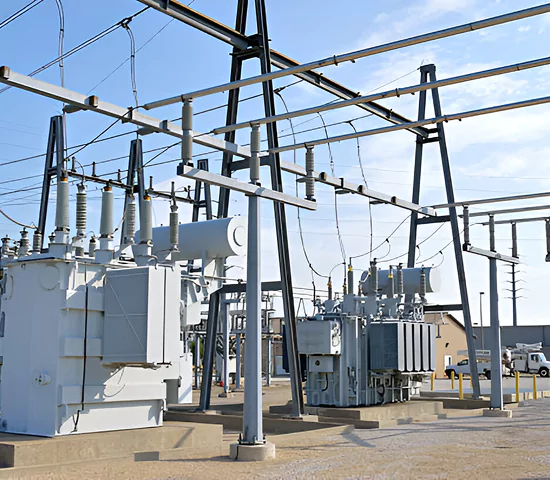
Advanced Manufacturing Infrastructure & Rigorous Quality Assurance
Our plant is equipped with automated CNC coil winding machines, vacuum drying ovens, computer-controlled vacuum pressure impregnation (VPI) units, and automated oil purification stations. Every traction transformer built for export to European and Swiss markets undergoes comprehensive routine, type, and special testing in our ISO 9001:2015 certified laboratory, including:
- Full-wave Lightning Impulse Voltage Withstand Testing (up to 650 kV BIL).
- Partial Discharge (PD) Measurement guaranteeing <10 pC at rated voltage.
- Dissolved Gas Analysis (DGA) and dielectric breakdown oil testing.
- Temperature rise testing under full load simulating extreme alpine environmental duties.
Eco-Friendly Synthetic Ester Fluids
To adhere to strict Swiss Federal Office for the Environment (FOEV) ground-water protection ordinances, we supply transformers filled with readily biodegradable synthetic ester fluids (K-class, fire point >300°C), eliminating fire risks in tunnels and ground pollution hazards near Swiss lakes and rivers.
Ultra-Low Losses (EU Tier 2 & EcoDesign compliant)
By utilizing high-grade laser-scribed CRGO core steel and optimized magnetic geometry, our transformers achieve no-load and load loss figures well below EU Regulation 2019/1783 Tier 2 benchmarks, dramatically cutting operational lifecycle expenditure for network operators.
Tailored OEM & Substation Customization
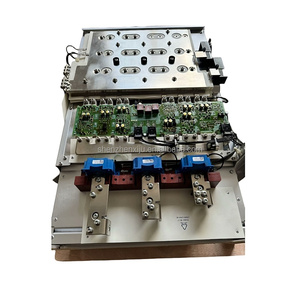
Whether required for trackside auto-transformer stations, feeder substations, or onboard auxiliary converters (e.g. 6SL3352 replacement cooling units), our engineering team collaborates directly with Swiss project managers to deliver exact dimensional and electrical retrofits.
Localized Application Scenarios & Railway Trends Across Swiss Cantons
Switzerland’s commitment to achieving net-zero carbon emissions in public transit by 2030 has driven unprecedented investment in railway infrastructure modernization. Key localized application scenarios for our traction and distribution transformers include:
Cross-Border Interoperability Corridors
Basel and Geneva serve as major international railway hubs connecting Switzerland’s 15 kV 16.7 Hz network with France’s 25 kV 50 Hz and Germany’s power systems. Our multi-voltage traction autotransformers facilitate seamless power transitions in border substations.
Urban Light Rail & Tramway Substations
Cities like Zurich (VBZ), Geneva (TPG), and Basel (BVB) are expanding DC light rail traction substations (600V - 1500V DC). Our heavy-duty 12-pulse and 24-pulse rectifier-duty transformers suppress DC ripple currents and eliminate grid harmonic injection.
Underground Substation Compactness
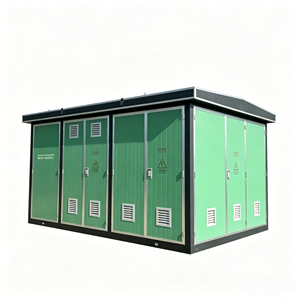
Due to high land costs and strict municipal zoning across Swiss cantons, modern substations are increasingly built underground. Our IP44/IP55 compact substation autotransformers integrate switchgear, transformer, and low-voltage distribution into ultra-small footprints.
Frequently Asked Questions (FAQ) for Swiss Traction Transformer Procurement
Ready to Power Your Swiss Railway Project?
Consult with our senior traction transformer engineering team for custom 16.7 Hz / 50 Hz autotransformers, trackside substations, and OEM replacement units tailored to your project requirements.
Get a Quote