Procurement Guide
Frequently Asked Questions for Importing to Korea
Detailed technical answers to common queries from Korean procurement engineers, EPC contractors, and global solar developers.
Q1:
Can Volta Transformers supply 60Hz frequency transformers compliant with KEPCO’s 22.9kV distribution grid voltage?
Yes. While standard Indian grid frequency is 50Hz, our design and manufacturing engineering team specifically produces custom 60Hz transformers engineered precisely for South Korea’s standard 22.9 kV multi-grounded neutral distribution grid system, as well as 6.6kV, 11kV, and 33kV commercial interconnection voltages.
Q2:
How do Volta solar inverter transformers handle non-linear harmonic distortion caused by solar inverters?
Our solar inverter duty transformers are engineered with designated K-Factor ratings (typically K-13 or K-20). We utilize electrostatic copper shielding between LV and HV windings to drain high-frequency switching noise to ground, oversize neutral conductors to handle zero-sequence triplen harmonics, and design custom winding geometries to prevent localized core saturation.
Q3:
What temperature rise limits are implemented for transformers exported to high-temperature solar sites?
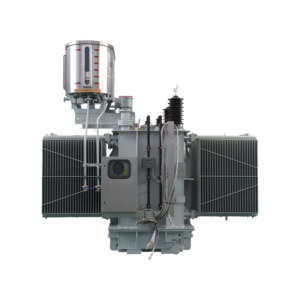
In strict compliance with IEC 60076 standards, our oil-filled transformers maintain standard temperature rise limits of 60°C/65°C for top oil and 65°C/70°C for windings above ambient temperature. For extreme solar installations experiencing peak summer ambient temperatures of 45°C, we offer custom reduced temperature rise designs (e.g., 50°C oil / 55°C winding) with forced air cooling (ONAF).
Q4:
What anti-corrosion surface treatments are available for coastal or floating solar installations in South Korea?
For harsh marine or floating PV environments such as Saemangeum or southern coastal ports, we apply multi-layer epoxy primer coatings topped with aliphatic polyurethane paint exceeding ISO 12944 C5-M high-durability standards. Tank fittings, fasteners, and radiator valves are supplied in grade 316 stainless steel or hot-dip galvanized steel.
Q5:
What are the standard international shipping and packaging protocols for export to Busan or Incheon ports?
Transformers are packaged for heavy ocean transport using seaworthy wooden crating, vacuum-sealed barrier bags with silica gel desiccants to prevent moisture ingress, and tank nitrogen pressuring for dry-type/core-assembly shipments. Radiators and bushings are dismantled and packed separately in reinforced steel frames with shock-monitoring indicators attached.
Q6:
What documentation and certifications are provided with each exported transformer consignment?
Every shipment includes a comprehensive Factory Acceptance Test (FAT) Report certified by quality control inspectors, ISO 9001:2015 quality certificates, raw material origin certificates (CRGO core steel, copper conductor, transformer oil test certificates), dimensioned GA drawings, wiring schematics, and detailed Installation, Operation, and Maintenance (IOM) Manuals in English.