Featured Industrial & Specialty Dry-Type & Auto Transformers
Explore our certified range of dry-type, toroidal, isolation, and auto transformers manufactured to IS 11171, IEC 60076-11, and ISO 9001:2015 quality standards for critical distribution and export specifications.
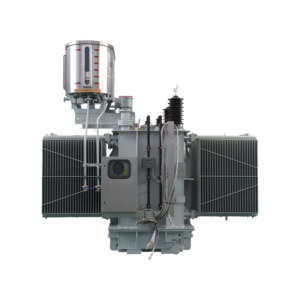
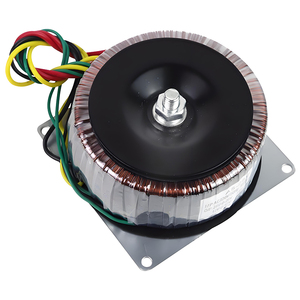
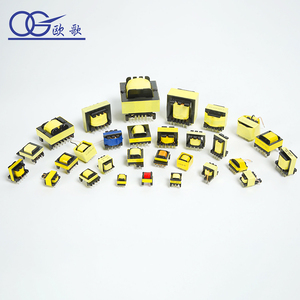
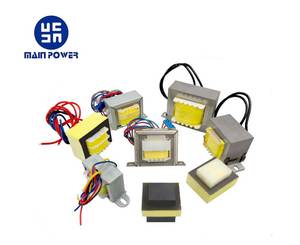
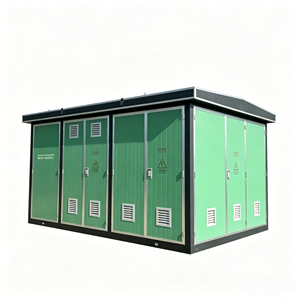
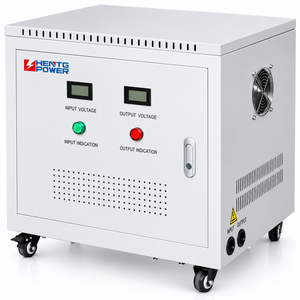
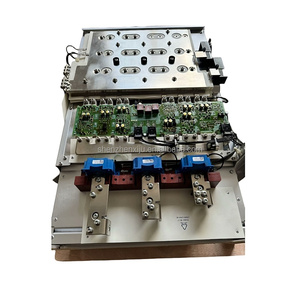
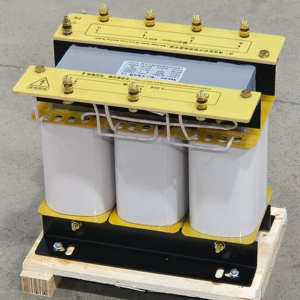
Technical Engineering & Market Whitepaper: Dry-Type Transformer Innovation in India
As India consolidates its standing as a primary global manufacturing hub and infrastructure powerhouse, the national and international demand for advanced electrical distribution assets has shifted decisively toward safety, environmental compliance, and operational resiliency. At the nexus of this energy transition are Dry-Type Transformers, which eliminate the operational hazards and environmental footprint associated with conventional liquid-immersed units. Manufactured without flammable dielectric fluids, dry-type transformers utilize ambient air or solid resin insulation systems, rendering them inherently fire-proof, explosion-proof, and virtually maintenance-free.
Indian transformer manufacturers have evolved from regional suppliers into globally accredited exporters, delivering custom-designed electrical hardware across North America, Europe, the Middle East, Africa, and Southeast Asia. Driven by stringent national safety frameworks such as IS 11171 and international standards such as IEC 60076-11, Indian engineering facilities—predominantly concentrated in high-tech industrial belts like Vadodara, Gujarat—deploy sophisticated core-coil assembly techniques, advanced vacuum impregnation, and computer-modeled thermal dissipation paths to achieve peak electrical efficiency under extreme tropical and environmental stresses.
Vacuum Pressure Impregnated (VPI) vs. Cast Resin (CRT) Technical Architecture
Understanding user intent and technical specifications requires a comprehensive comparative evaluation between the two dominant dry-type manufacturing technologies: Vacuum Pressure Impregnation (VPI) and Cast Resin (CRT/CRCA). Both topologies offer distinct thermodynamic, dielectric, and mechanical attributes tailored to specific operational environments.
Technical Specification Matrix: Dry-Type Transformer Selection Criteria
Engineering procurement specialists evaluating Indian exporters require detailed quantitative parameters to verify compliance with global site conditions. The matrix below outlines standardized technical boundaries for export-grade dry-type transformers manufactured in India:
| Parameter / Feature | VPI Dry-Type Transformers | Cast Resin Transformers (CRT) | Standard Reference |
|---|---|---|---|
| Power Capacity Range | 100 KVA up to 15 MVA | 250 KVA up to 25 MVA | IEC 60076-11 / IS 11171 |
| Primary Voltage Rating | Up to 33 kV | Up to 66 kV | IEEE C57.12.91 |
| Insulation Class & Temp Rise | Class H (180°C) / Class C (220°C) | Class F (155°C) / Class H (180°C) | IEC 60085 |
| Partial Discharge Level | < 20 pC | < 10 pC (Ultra-low risk) | IEC 60270 |
| Cooling Topology | AN (Air Natural) / AF (Air Forced) | AN / AF (up to 40% capacity boost) | IS 2026 |
| Environmental / Fire Class | E2, C2, F1 Rated | E3, C2, F1 (Self-extinguishing) | EN 60076-11 |
| Degree of Enclosure Protection | IP20, IP23, IP33, IP54 Outdoor | IP21, IP23, IP44, IP55 Enclosures | IEC 60529 |
| Core Material Grade | High-Permeability CRGO M4/OHD | Laser-Scribed CRGO / Amorphous Metal | AISI / ASTM |
Localized Application Scenarios across Indian Industrial Clusters & Export Markets
The deployment of dry-type transformers in India is directly aligned with the nation's targeted industrial infrastructure corridors and urban development projects. Localized search intent and procurement data reveal distinct application profiles across key geographical and industrial zones:
Regulatory Evolution and Technological Trends Shaping Indian Exports
The Indian transformer manufacturing ecosystem has undergone a significant quality transformation, dictated by compulsory national efficiency directives and climate commitment targets:
1. Mandatory Energy Efficiency Guidelines (BEE Norms): The Bureau of Energy Efficiency (BEE) and Central Electricity Authority (CEA) have tightened maximum allowable loss limits for distribution transformers under IS 1180 (Part 1). Indian exporters now leverage grain-oriented silicon steel (CRGO) step-lap mitered core designs, achieving significant no-load loss reductions and lower total cost of ownership (TCO) over a 25-year operational lifecycle.
2. Transition to Class H Insulation Materials: Moving away from traditional organic varnishes, leading Indian manufacturers standardally employ aromatic polyamide insulation (DuPont Nomex) capable of maintaining dielectric integrity up to 220°C. This allows transformers to sustain prolonged overloads without insulation degradation.
3. Smart Transformer Integration & IoT Monitoring: Modern dry-type installations feature embedded fiber-optic RTD sensors connected to digital temperature indicators (WTI) and IoT gateways. Real-time thermal profiling enables predictive maintenance, dynamic load management, and early fault detection via SCADA networks.
Volta Transformers & Pooja Group Capabilities
Volta Transformers (A Brand Owned by Volta Green Energy Pvt. Ltd.), backed by the legacy of Pooja Group of Industries since 2001, operates state-of-the-art manufacturing infrastructure in Vadodara, Gujarat. With over 15 years of dedicated power engineering expertise, we specialize in high-voltage power, distribution, dry-type, furnace, and inverter-duty transformers.
Our facility houses advanced CRGO core processing lines, automated vacuum drying chambers, micro-processor-controlled winding machinery, and full-fledged in-house routine and type testing laboratories meeting IS, IEC, and ANSI specifications. Serving over 500+ satisfied clients across domestic utilities and international markets, every unit undergoes strict quality control certified under ISO 9001:2015 and BIS IS 1180.
Frequently Asked Questions by Global Buyers & Engineers
Get clear technical answers to common queries regarding design customization, thermal limits, standards compliance, and international shipping logistics when procuring dry-type transformers from India.
Ready to Engineer Your Electrical Power Infrastructure?
Partner with India's leading dry-type transformer manufacturer and exporter. Contact our senior engineering team today for technical consultation, detailed BOQ estimations, and customized CAD layout assistance.
Get a Quote