Technical Whitepaper: Navigating Japan’s Transformer Procurement Ecosystem
Procuring electrical power apparatus for the Japanese market requires strict compliance with localized grid dynamics, regulatory metrics, and environmental parameters. As established current transformer manufacturers and exporters serving Japan, our engineering frameworks prioritize high dielectric stability, strict harmonic mitigation, and rigorous energy efficiency compliance under the Japanese Energy Conservation Act (Top Runner Program).
JIS C & METI Compliance
Transformers deployed across Japanese industrial zones must adhere strictly to Japanese Industrial Standards (JIS C 4304 for oil-immersed distribution units and JIS C 4306 for dry-type units). Compliance with METI (Ministry of Economy, Trade and Industry) standards guarantees minimal no-load losses and long-term operating durability.
Seismic & Thermal Engineering
Due to high seismic activity in Japan (JIS Z 0601 requirements), structural integrity under earthquake accelerations up to 0.6g–1.0g is critical. Internal core-and-coil assemblies feature reinforced mechanical clamping, tank anchor reinforcements, and high-temperature-rated insulation (Class H/F).
Harmonic Distortion Mitigation
Modern Japanese manufacturing hubs utilize high-frequency Variable Frequency Drives (VFDs), inverted power sources, and robotic lines. Our transformers utilize electrostatic shielding and custom K-factor ratings (K-13, K-20) to dissipate eddy current losses caused by non-linear loads.
Product Applications Across Key Japanese Industrial Sectors
The operational landscape of Japan demands diverse transformer topologies tailored to specific local infrastructure projects and industrial applications:
1. Railway Electrification & High-Voltage Traction Systems
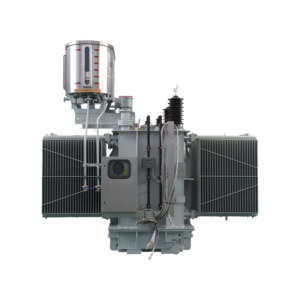
Japan’s extensive rail networks, including Shinkansen lines and urban transit systems operated by JR East, JR West, and private rail firms, rely on specialized single-phase autotransformers (such as 55kV 2x27.5kV 10MVA units). These auto-transformers balance feeder voltages, reduce inductive interference on neighboring telecommunication lines, and deliver stable power supply during peak traction acceleration.
2. Semiconductor Cleanrooms & High-Precision Automation
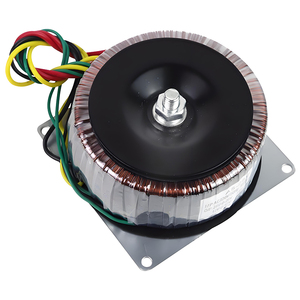
In technology hubs across Kumamoto, Kanagawa, and Mie prefectures, semiconductor fabrication plants demand ultra-clean electrical waves. Universal isolation autotransformers and toroidal transformers provide complete galvanic isolation, neutralizing ground loops and phase displacement for high-precision photolithography and wafer-handling machinery.
3. Renewable Energy Integration (Solar, Wind & BESS)
With Japan accelerating its green energy transition toward 2050 carbon neutrality, offshore wind installations in Tohoku and solar farms in Kyushu require specialized inverter-duty transformers. Engineered to handle multi-winding inputs and rapid thermal cycles, these units step up inverter output voltages (e.g., 220V/380V to 11kV/33kV) for seamless grid connection.
4. High-Density Commercial Complexes & Modular Substations
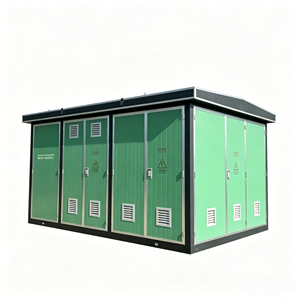
In metropolitan centers like Tokyo, Osaka, and Nagoya, physical footprint constraints require compact modular substations. The YBW model modular autotransformer substation integrates high-voltage switchgear, transformer units, and low-voltage distribution panels into an IP44-rated, space-saving outdoor enclosure built for maximum reliability.
Engineering Specifications Matrix: Export-Grade Transformers for Japan
The table below highlights technical specifications comparing our primary transformer topologies engineered for export into the Japanese market:
| Transformer Topology | Primary Voltage Range | Frequency Rating | Cooling Mechanism | Core Winding Material | Japanese Grid / Industry Compliance |
|---|---|---|---|---|---|
| Railway Traction Auto-Transformer | 27.5kV x 2 / 55kV | 50Hz / 60Hz Dual | ONAN / ONAF | High-Grade Cold Rolled Grain Oriented (CRGO) Steel / OFC Copper | JIS C Series / Railway Substation Utility Spec |
| Toroidal Isolation Transformer | 100V - 480V Customizable | 50Hz / 60Hz Universal | Air Natural (AN) / Dry-Type | Continuous Grain Toroidal Core / Electrolytic Copper | PSE Mark / JIS C 5310 / RoHs Compliant |
| Modular Compact Substation (YBW) | 6.6kV / 11kV / 22kV / 33kV | 50Hz / 60Hz | ONAN / Hermetically Sealed | Stacked Laminate Silicon Steel / Copper Winding | METI Top Runner / IP44 Enclosure Protection |
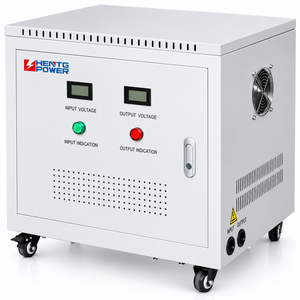
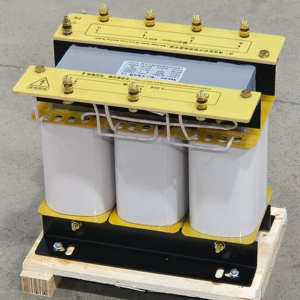
| 3-Phase SBK Auto-Transformer | 200V / 220V / 380V / 415V | 50Hz / 60Hz | Dry-Type Natural / Fan Assisted | Low Loss Ferrite / High-Purity Aluminum & Copper | JIS C 4306 / Industrial CNC Automation Standard |
Localized Development Trends & Future Outlook in Japan
Japanese procurement managers and EPC firms are placing increased weight on total life-cycle cost (LCC) rather than initial capital expenditure. Key structural market shifts include:
- Adoption of Biodegradable Ester Oils: Replacing traditional mineral oil with natural/synthetic ester fluids to lower fire hazard risks and eliminate environmental contamination in coastal or forest-adjacent installations.
- Ultra-Low Loss Silicon Steel Laminations: Utilizing premium M0H and M1H grade CRGO steel sheets to suppress no-load losses, directly supporting Japanese energy conservation quotas.
- Smart Condition Monitoring (IoT Integration): Embedding online dissolved gas analysis (DGA), fiber-optic winding temperature sensors, and real-time partial discharge monitoring for predictive maintenance in remote Japanese facilities.
Manufacturer E-E-A-T Capabilities: Volta Green Energy / Pooja Group Legacy
With over 15 years of continuous manufacturing excellence under Volta Green Energy Pvt. Ltd. (a constituent of the Pooja Group of Industries established in 2001), our Vadodara manufacturing ecosystem combines robust production scale with precise engineering customized for overseas markets.
Advanced Manufacturing Infrastructure
Our ISO 9001:2015 certified production units feature high-capacity vacuum pressure impregnation (VPI) plants, automated coil winding machinery, and controlled environmental assembly rooms. We handle production capacities extending up to 25 MVA in the 66 KV class.
Quality Assurance & Testing Rigor
Every transformer undergoes thorough routine testing under IEC 60076 and JIS standards prior to export. Factory Acceptance Testing (FAT) protocols include impulse voltage tests, short-circuit withstand validation, temperature rise tests, and partial discharge assessments.
Partner with a Trusted Transformer Exporter to Japan
Request custom engineering drawings, FAT test procedures, and competitive FOB/CIF price quotations for your Japanese industrial project or OEM equipment line.