Precision Electrical & Pulse Transformer Solutions
Explore our ISO 9001:2015 & BIS certified transformer catalog engineered for high dielectric strength, ultra-low energy dissipation, and continuous duty performance under extreme operational conditions.
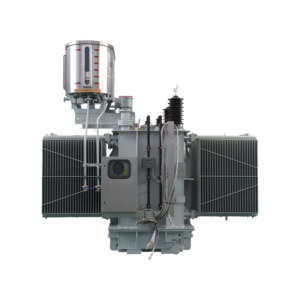
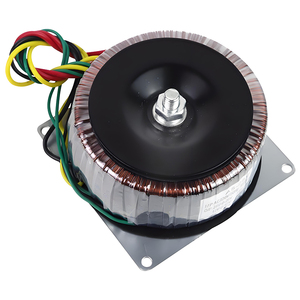
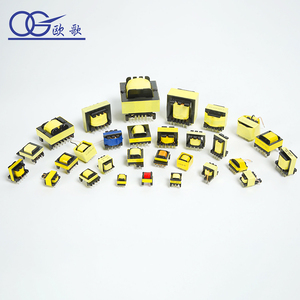
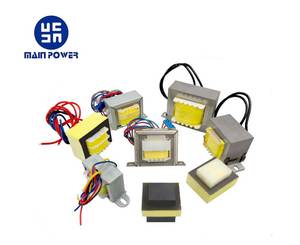
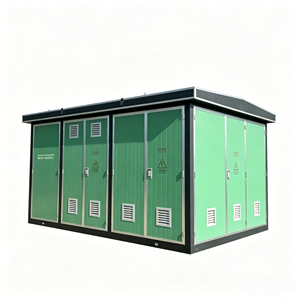
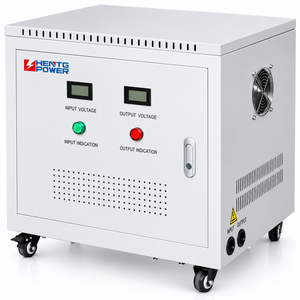
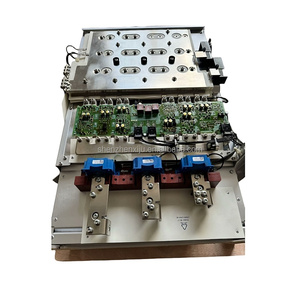
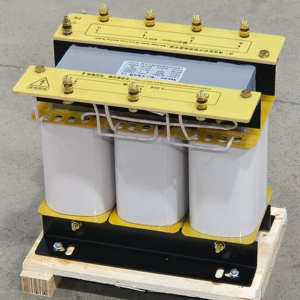
1. Executive Summary & Fundamental Physics of Pulse Transformers
Pulse transformers represent a specialized class of electromagnetic components designed to transfer electrical voltage pulses with extremely fast rise and fall times while maintaining precise rectangular wave shapes and providing galvanic isolation. Unlike conventional 50Hz/60Hz power transformers engineered strictly for continuous sinusoidal steady-state energy transfer, pulse transformers are optimized for transient conditions, high-frequency rectangular wave transmission, and low waveform distortion.
From an electromagnetic design perspective, the primary governing parameter of a pulse transformer is its Volt-Second Product ($V \cdot \mu s$), defined as the integral of the pulse voltage over its duration before core saturation occurs. Maintaining saturation margins is critical to prevent sharp inductance drop-offs that lead to pulse tilt, ringing, and catastrophic switching losses in power semiconductor gates (such as IGBTs, SiC MOSFETs, and GaN HEMTs).
Core Information Gain: Advanced pulse transformer design requires balancing three conflicting parameters: minimizing Leakage Inductance ($L_l$) to ensure rapid pulse rise times ($\tau_r$), suppressing Interwinding Capacitance ($C_{ww}$) to maximize common-mode transient immunity (CMTI), and achieving high Dielectric Breakdown Isolation Voltage ($V_{iso}$) up to 55kV for harsh industrial and railway environments.
High Volt-Second Product
Engineered with high-permeability nanocrystalline and MnZn ferrite cores to maximize volt-second capability without inducing premature core saturation during extended pulse widths.
Ultra-Low Leakage Inductance
Interleaved bifilar and trifilar winding configurations dramatically minimize stray flux leakage, enabling nanosecond rise times ($\tau_r < 10\text{ns}$) for steep pulse edges.
Galvanic High Voltage Isolation
Reinforced double and triple insulated wire (TIW) topologies providing robust insulation barrier protection against high $dV/dt$ voltage spikes and partial discharge degradation.
2. Future Procurement & Technological Trends in Pulse Transformers
Analyzing key technological shifts driving global B2B procurement decisions across automotive, renewable energy, telecommunications, and industrial automation sectors.
A. Integration with Wide Bandgap (WBG) Semiconductor Architectures (SiC & GaN)
The global transition from silicon-based insulated gate bipolar transistors (IGBTs) to Silicon Carbide (SiC) and Gallium Nitride (GaN) power devices has elevated switching speeds from tens of kilohertz into megahertz regimes ($>2\text{MHz}$). Consequently, procurement engineers are rapidly shifting specification requirements toward gate drive pulse transformers with Common-Mode Transient Immunity (CMTI) exceeding 100kV/$\mu s$.
Pulse transformers designed for WBG drivers must exhibit near-zero parasitic capacitance ($C_{ww} < 2\text{pF}$) to prevent high-frequency noise coupling across isolation barriers, which can trigger false turn-on events and short-circuit faults in bridge converters.
B. Electrification of Mobility & EV Battery Management Isolation
The rapid expansion of 800V and 1200V Electric Vehicle (EV) powertrain platforms demands high-reliability pulse transformers certified under AEC-Q200 standards. Key procurement drivers include ultra-compact surface-mount (SMD) pulse transformers for signal isolation in high-voltage battery management systems (BMS), onboard chargers (OBC), and traction inverters.
C. Advanced Nanocrystalline Core Materials replacing Traditional Ferrites
While MnZn ferrite core materials remain cost-effective for standard switching power supplies, high-end industrial and medical pulse applications are transitioning to nanocrystalline ribbon cores. Nanocrystalline materials offer superior saturation flux density ($B_s \approx 1.2\text{T}$ compared to ferrite’s $0.4\text{T}$), permitting a 50% reduction in core volume while expanding operating temperature envelopes up to $+155^\circ\text{C}$.
Comparative Analysis: Pulse Transformer Core & Topology Matrix
| Core / Design Parameter | MnZn Ferrite Core | Nanocrystalline Core | Amorphous Alloy Core |
|---|---|---|---|
| Saturation Flux Density ($B_s$) | 0.35T – 0.50T | 1.20T – 1.35T | 1.50T – 1.65T |
| Initial Permeability ($\mu_i$) | 2,000 – 10,000 | 30,000 – 80,000 | 20,000 – 50,000 |
| Curie Temperature ($T_c$) | > 210°C | > 560°C | > 400°C |
| High Frequency Loss ($100\text{kHz}$) | Moderate | Ultra-Low | Low-Moderate |
| Primary Application Spectrum | General SMPS, LED Drivers, Small Signal | SiC/GaN Gate Drive, BMS, Rail High-Volt | PFC Chokes, Heavy Pulse Energy |
Enterprise Core Competencies & Manufacturing Rigor
Leveraging state-of-the-art infrastructure, stringent quality management, and tailored engineering solutions to deliver international compliance and operational longevity.
ISO 9001:2015 & BIS Certified Manufacturing
Our production facilities operate under certified ISO 9001:2015 Quality Management Systems and strictly comply with BIS standards (including IS 1180: Part 1: 2014), ensuring total batch-to-batch consistency and full traceability.
Custom OEM/ODM Electromagnetic Engineering
From micro-watt pulse signal transformers to 25MVA / 66kV power distribution units, our engineering team tailors winding geometries, turns ratios, shield layers, and custom encapsulations to exact client specifications.
Rigorous Quality Control & Testing Protocol
100% of manufactured units undergo comprehensive test cycles, including dielectric withstand (hipot) testing, surge voltage resistance, temperature rise limits verification (65°C oil / 100°C winding), and dissolved gas analysis (DGA).
Global Logistics & Export Infrastructure
With over 15 years of international export experience servicing 500+ global enterprises across North America, Europe, Asia-Pacific, and the Middle East, we guarantee full export compliance and robust protective packaging.
Frequently Asked Questions (FAQ) for Global Buyers
Addressing key engineering, compliance, and procurement queries regarding pulse and power transformer selection.
$$\text{Volt-Second Rating} \ge V_{pk} \times t_{pulse} \times 1.35$$