Recommended Marine & Heavy-Duty Transformer Series
Explore our flagship marine-certified and specialized industrial transformers engineered for extreme humidity, saltwater atmosphere, harmonic distortion, and heavy vibration resistance.
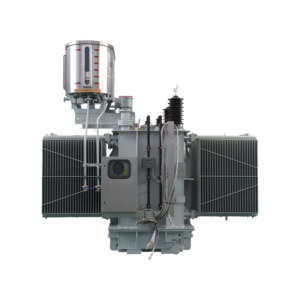
CE Certified 55kV 2x27.5kV 10MVA Ultra-Low Energy Auto Transformer
Designed for heavy marine traction, port crane power, and high-voltage shore connection (HVSC) systems with ultra-low loss core steel.
- Rated Power: 10000 KVA / 10 MVA
- Voltage Rating: 55kV / 2x27.5kV
- Standard: CE / IEC 60076
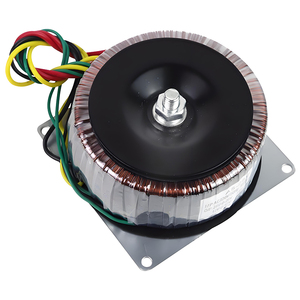
Customizable 300W Toroidal Marine Universal Isolation Transformer
Ultra-compact toroidal topology providing electro-magnetic isolation and low acoustic noise for shipboard navigation and radar systems.
- Power Output: 300W Toroidal
- Output Taps: 12V to 38V Multi-Tap
- Shielding: Faraday Copper Shield
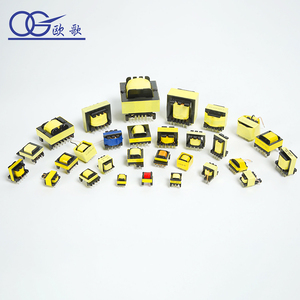
Wholesale EF25 Step Down Ferrite Core Marine LED Driver Transformer
High-frequency ferrite transformer engineered for marine emergency lighting, switch-mode power supplies (SMPS), and LED driver units.
- Core Geometry: EF25 High Permeability
- Application: Constant Current Driver
- Thermal Class: Class B / F Rated
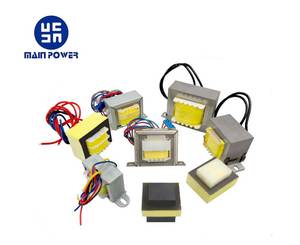
Square 60Hz 220V Compact Marine Auto Distribution Transformer
Robust square-core auto transformer designed for 60Hz marine grid synchronization, deck winches, and galley power management.
- Frequency: 60Hz Marine Grid
- Primary Voltage: 220V Auto Step
- Enclosure: VPI Treated / IP23
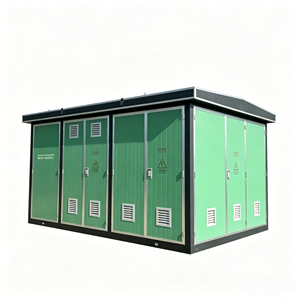
Modular Three-Phase Autotransformer Substation Unit (YBW IP44)
Fully enclosed modular transformer substation for offshore oil platforms, shipyard power distribution, and port terminals with IP44 marine defense.
- Protection Rating: IP44 Enclosure
- Frequency: 50/60Hz Dual Mode
- Structure: High/Low Voltage Compact
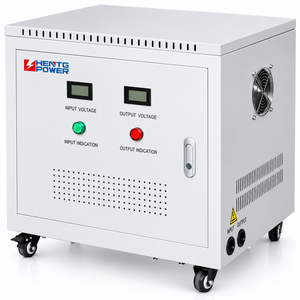
10KVA 220V to 380V 3 Phase Toroidal Step Up/Down Auto Transformer
Low-loss 3-phase toroidal transformer converting voltage between international shore power standards and shipboard 380V electrical systems.
- Capacity: 10 KVA Three Phase
- Voltage Conversion: 220V <> 380V
- Winding Material: High Conductivity Al/Cu
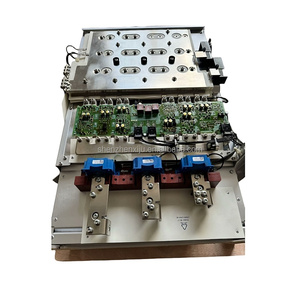
S120 MICROMASTER Replacement Fan Transformer (6SL3352-7AE32-1AA1)
Precision replacement fan auxiliary transformer for marine propulsion variable frequency drives (VFDs) and heavy-duty motor control panels.
- OEM Reference: 6SL3352-7AE32-1AA1
- System Match: SINAMICS S120 / VFD
- Duty Cycle: 100% Continuous Marine
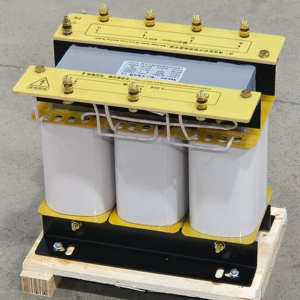
SBK 3-Phase Marine Heavy Isolation Transformer (10KVA to 150KVA)
Heavy-duty dry-type isolation transformer custom-built for vessel main switchboards, handling multi-tap voltages (415V/380V/220V/110V).
- Power Range: 10KVA to 150KVA
- Tappings: 415V / 380V / 240V / 110V
- Winding Option: Electrolytic Copper / Al
State-of-the-Art Manufacturing & Global Compliance Framework
As a premier marine transformer manufacturer and exporter operating under Volta Green Energy Pvt. Ltd. and the legacy of Pooja Group of Industries (Est. 2001), our Vadodara facility is engineered specifically for heavy industrial and marine-grade transformer production. Spanning advanced vacuum impregnation chambers, automated CNC coil winding systems, and full-spectrum high-voltage impulse test bays, we deliver transformers capable of withstanding the world's most punitive maritime environments.
Our marine power solutions strictly conform to IEC 60092-302 (Electrical Installations in Ships), IEEE Std 45, and classification society guidelines (DNV, ABS, Lloyd's Register, Bureau Veritas, ClassNK, and RINA). From dry-type VPI units to hermetically sealed oil-immersed transformers up to 25 MVA / 66 KV class, every unit undergoes exhaustive short-circuit testing, dielectric strength verification, and temperature rise validation under tropical marine ambient conditions (45°C - 50°C).
Technical Benchmarks
- ISO 9001:2015 & BIS Certified: Approved under IS 1180 Part 1 for absolute energy performance.
- C5-M Anti-Corrosion Finish: Epoxy resin coating engineered for 100% saline fog & high humidity exposure.
- Vibration Dampening Design: Reinforced mechanical framework resisting roll, pitch, and engine harmonics up to 4g.
- Harmonic Mitigation (K-Factor): Engineered to isolate non-linear VFD drives & UPS systems without thermal runaway.
Technology Development Trends in Next-Generation Marine Transformers
An authoritative analysis of architectural shifts in commercial shipping, naval vessel electrification, and offshore renewable power transformation.
All-Electric Ships & High Voltage Shore Power (HVSP)
The international maritime sector is rapidly transitioning toward All-Electric Ships (AES) and hybrid electric propulsion systems to comply with IMO Tier III nitrogen oxide (NOx) limits and EEXI/CII carbon intensity indicators. This shift demands high-voltage step-down marine transformers capable of handling shore-to-ship connection (Cold Ironing according to IEC/IEEE 80005-1). Modern marine transformers must accept variable primary voltages (6.6kV, 11kV) and deliver stabilized 440V/400V shipboard distribution while filtering grid transients.
VPI Dry-Type vs. Synthetic Ester Fluid Innovation
Fire safety and zero environmental leakage are critical considerations on ocean-going vessels. Traditional mineral oil transformers are increasingly replaced by Vacuum Pressure Impregnated (VPI) Class H dry-type transformers for engine room and indoor deck installation due to self-extinguishing flame properties. Concurrently, for high-capacity subsea and deck machinery applications, biodegradable synthetic ester fluids (IEC 61099) are gaining traction, offering high fire points (>300°C) and zero toxic footprint in the event of marine hull breach.
Harmonic Mitigation & Multi-Pulse Phase Shifting
Variable Frequency Drives (VFDs) controlling bow thrusters, cargo pumps, and main propulsion introduce severe Total Harmonic Distortion (THD) into vessel microgrids. Advanced marine transformers incorporate 12-pulse, 18-pulse, or 24-pulse phase-shifting secondary windings (±15°, ±20° phase displacements). This electromagnetic topology cancels 5th, 7th, 11th, and 13th order harmonics directly at the transformer core, preserving clean sinusoidal power without bulky external active filters.
Future Procurement Trends & Lifecycle Evaluation for Marine Buyers
Key criteria driving marine transformer selection by naval architects, shipyard procurement directors, and offshore EPC contractors.
1. Total Cost of Ownership (TCO) vs Capital Expenditure
Procurement strategies are shifting from initial purchase price (CAPEX) to 30-year lifecycle evaluation (OPEX). Marine transformers operate continuously under high load factors. Utilizing high-grade grain-oriented silicon steel (CRGO M0H/M1H) and high-purity electrolytic copper windings lowers no-load (core) and load (copper) losses by up to 28%. Over a vessel's 25-year operational lifecycle, energy savings routinely exceed the original transformer acquisition cost multiple times over.
2. Modular Footprint & Weight Optimization
Space and weight constraints in vessel engine rooms demand high power density. Modern procurement specifies high-temperature insulation systems (Nomex / Class H 180°C operating up to 120°C temperature rise) combined with forced air (AF/ONAF) cooling systems. This allows marine engineers to reduce transformer physical volume by 20% to 35% compared to standard industrial units without sacrificing emergency overload margins.
3. Classification Society Witness Testing & Traceability
Leading shipyards require full material traceability and mandatory Factory Acceptance Testing (FAT) witnessed by classification surveyors (DNV, ABS, LR). Key test protocols include lightning impulse withstand testing, partial discharge measurement (<10 pC), acoustic noise testing, and 100% full-load thermal run tests under simulated marine ambient temperatures.
4. Smart Condition Monitoring & IoT Integration
Integration of fiber-optic hot-spot temperature sensors embedded directly into primary and secondary windings, online dissolved gas analysis (DGA) for oil units, and continuous vibration telemetry enable real-time predictive maintenance via shipboard integrated automation systems (IAS), mitigating catastrophic failure risk at sea.
Marine Transformer Technology Comparison Matrix
Comparative technical benchmark between VPI Dry-Type, Cast Resin, and Synthetic Ester-Filled Marine Transformers.
| Performance Metric | VPI Dry-Type Transformer | Cast Resin (CRT) Marine | Synthetic Ester Oil-Filled |
|---|---|---|---|
| Thermal Insulation Class | Class H (180°C) / Class C (220°C) | Class F (155°C) / Class H (180°C) | Class A (105°C) / Class F (155°C) |
| Fire Safety Rating | F1 High Fire Safety (Self-Extinguishing) | F1 Non-flammable / Low smoke | K-Class Fire Point (>300°C) |
| Environmental Protection | IP23 to IP54 Enclosures | IP23 Enclosure Required | IP56 / IP66 Hermetically Sealed |
| Humidity / Salt Fog Resistance | High (C5-M Marine Coating + VPI) | Excellent (Fully Encapsulated) | Total Isolation from Ambient Air |
| Harmonic Mitigation (K-Factor) | K-13, K-20 Special Winding Options | K-4, K-9 Standard Options | Custom Phase-Shifting Secondary |
| Weight & Footprint | Lowest (30% Lighter than Oil) | Moderate to Heavy | Highest Power Density in High MVA |
| Typical Vessel Application | Engine Room, Passenger Deck, VFD Drive | High Humidity Deck, Commercial Ships | Main Propulsion, Subsea, FPSO Units |
Frequently Asked Procurement & Engineering Questions (FAQ)
In-depth technical answers addressing critical marine transformer specification, installation, and compliance inquiries.
What specific international standards govern marine transformer design and manufacturing?
Marine transformers must comply primarily with IEC 60092-302 (Electrical Installations in Ships - Low Voltage Power Transformers and Reactors) and IEC 60076 for power transformers. For North American vessel integration, compliance with IEEE Std 45 (Recommended Practice for Electric Installations on Shipboard) and USCG regulations is required. Additionally, units must satisfy marine classification society rules including DNV-CG-0339, ABS Marine Vessels Rules Part 4, Lloyd's Register Rules for Ships, Bureau Veritas (BV), and ClassNK.
How does marine environment corrosion protection differ from standard industrial transformers?
Marine environments expose equipment to continuous saltwater spray, 100% relative humidity, and corrosive marine atmospheres containing chloride ions. Marine transformers utilize C5-M high-durability epoxy/polyurethane paint systems rated under ISO 12944. Mechanical hardware, bolts, terminal clamps, and structural frames are fabricated from 316L stainless steel or hot-dip galvanized marine steel. Winding cores undergo specialized Vacuum Pressure Impregnation (VPI) with marine-grade anti-fungal varnish to prevent moisture penetration and insulation breakdown.
What temperature rise limits apply to marine transformers operating in tropical seas?
Due to elevated ambient temperatures inside ship engine rooms and tropical ocean voyages, standard industrial temperature limits are insufficient. Marine standards specify a baseline ambient cooling temperature of 45°C or 50°C (compared to 40°C for onshore industrial standards). For Class H insulation (rated to 180°C), the maximum allowable temperature rise is restricted to 90°C to 100°C to preserve thermal headroom, ensuring a 25+ year operating lifespan without insulation degradation.
How do marine transformers handle severe hull vibration, pitching, and rolling forces?
Ocean-going vessels experience continuous low-frequency propulsion vibration (13.2 Hz to 100 Hz), engine harmonics, and transient forces from vessel pitch, roll, and heave (up to ±22.5° dynamic inclination). Our marine transformers feature reinforced core clamping structures, heavy-duty anti-vibration shock mounts (AVMs), and resin-locked winding coils. The structural framework is mathematically modeled via Finite Element Analysis (FEA) to withstand seismic and dynamic shock accelerations up to 4g without mechanical distortion or core displacement.
What is the distinction between ONAN, ONAF, and AN/AF cooling modes in shipboard transformers?
For oil-immersed transformers, ONAN (Oil Natural Air Natural) uses natural oil convection and ambient air cooling, while ONAF (Oil Natural Air Forced) uses external marine-grade cooling fans to increase transformer kVA rating by 25-40% in restricted spaces. For dry-type transformers, AN (Air Natural) relies on convection inside ventilated enclosures (e.g., IP23), whereas AF (Air Forced) incorporates internal low-noise blower units to boost continuous load capacity during peak vessel power demand.
Why is galvanic isolation critical between High Voltage Shore Connection (HVSC) and vessel grids?
Connecting a ship's onboard electrical system directly to shore power (Cold Ironing) creates a galvanic loop between the vessel's steel hull, the sea water, and the shore grounding grid. Without a marine isolation transformer, stray direct currents (DC) cause severe galvanic corrosion of the ship's hull, propellers, and sea chests. A specialized marine shore isolation transformer completely breaks this metallic earth link, providing 100% electrostatic and galvanic isolation while safely transferring AC grid power.
Custom Marine Engineering & Export Capabilities
From engineering blueprint customization to ocean-worthy seaworthy packaging, we ensure seamless global delivery.
Custom Voltage & Multi-Tap Designs
Support for all global marine voltages: 690V, 440V, 415V, 380V, 220V, 110V at 50Hz or 60Hz. Integrated off-load or on-load tap changers (OLTC) tailor voltage stability under fluctuating vessel busloads.
Seaworthy Ocean Freight Packaging
All export units are sealed inside vacuum aluminum foil barrier bags with desiccant charges, encapsulated in ISPM-15 compliant fumigated solid wooden crates engineered for multi-modal marine transport.
Lifetime After-Sales Technical Support
Dedicated marine engineering team providing technical support for commissioning, spare parts supply (bushings, gaskets, protection relays), and on-site field maintenance at major global ports.