Precision High-Voltage Switchgear & Transformer Units
Engineered in compliance with ISO 9001:2015, BIS IS 1180, and IEC 62271 standards for mission-critical grid deployment.
High-Voltage Switchgear & Substation Transformer Engineering: Technical Whitepaper
Modern electrical power networks require unprecedented levels of reliability, short-circuit withstand performance, and thermal management. High-Voltage (HV) and Medium-Voltage (MV) switchgear assemblies serve as the primary operational backbone for industrial distribution networks, utility substations, renewable power integration plants, and electrified railway systems worldwide. As global power consumption scales alongside the transition toward zero-carbon energy grids, selecting qualified HV switchgear factories and factory partners has evolved into a strategic procurement decision with 30+ year lifecycle implications.
This technical whitepaper provides an exhaustive evaluation of high-voltage switchgear architecture, manufacturing benchmarks, future procurement dynamics (2026–2035), dielectric insulation innovations, and enterprise manufacturing capabilities. By analyzing technical standards such as IEC 62271-200, IEEE C37.20.2, and IS 1180, EPC contractors and procurement managers can mitigate operational risk and optimize Total Cost of Ownership (TCO).
Core Takeaway for Procurement Engineers: Modern HV switchgear procurement extends beyond initial CAPEX. Evaluating factory dielectric impulse levels (BIL), short-time withstand currents ($I_{cw}$ up to 40kA/3s), harmonic withstand factors, and SF6-free eco-insulation compliance is essential to preventing catastrophic grid failure.
1. Architectural Technical Benchmarks for Top HV Switchgear Factories
When auditing top trusted HV switchgear manufacturers, engineering teams must evaluate physical manufacturing infrastructure, quality management systems (QMS), and dielectric testing capabilities. Standard low-voltage panels rely on basic thermal circuit breakers; conversely, high-voltage switchgear installations operate under extreme electrical stress where arc containment, dielectric strength, and mechanical endurance are paramount.
Key Dielectric & Structural Parameters
- Rated Voltage ($U_r$) & Insulation Level: Equipment operating from 11kV, 33kV, up to 66kV and 132kV class networks must feature tested Basic Impulse Levels (BIL) capable of enduring atmospheric lightning surges (up to 650kV peak) and transient switching overvoltages without dielectric puncture.
- Short-Time Withstand Current ($I_{cw}$): World-class factories design switchgear enclosures and autotransformers capable of surviving electromechanical stresses caused by fault currents reaching 31.5kA to 40kA for 3-second durations.
- Arc-Flash Internal Arc Classification (IAC): Safety-compliant switchgear units undergo rigorous type testing (IAC AFLR classification) to ensure that in the event of an internal arc failure, high-pressure hot gases are safely vented away from operating personnel.
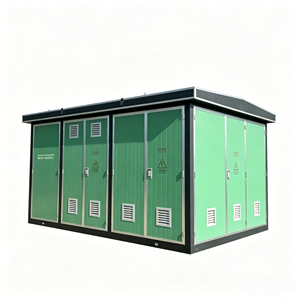
- IP Protection Enclosures: Modular compact substations (e.g., YBW series) mandate IP44 to IP55 ratings for outdoor weatherproofing, preventing ingress of particulate contamination, rain, and moisture that degrade air insulation clearances.
2. Global HV Switchgear Procurement Trends (2026–2035)
The global electrical equipment landscape is experiencing structural transformation driven by decarbonization mandates, grid digital twin implementation, and localized energy generation. Switchgear factory selection is no longer limited to basic cost-per-unit metrics; utility engineers now prioritize long-term asset sustainability and smart grid compatibility.
Trend 1: Decarbonization & SF6 Elimination
Sulfur Hexafluoride (SF6) gas has historically dominated gas-insulated switchgear (GIS) due to its exceptional dielectric strength. However, with an atmospheric global warming potential (GWP) 23,500 times higher than CO2, international environmental regulations (such as the EU F-Gas Regulation) are mandating SF6 phase-outs. Leading switchgear factories are investing heavily in alternative fluorinated gas mixtures (such as C4-FN / Clean Air technology) and Solid-Insulated Switchgear (SIS) utilizing vacuum interrupters encased in epoxy resin.
Trend 2: Smart Substation Digitalization (IEC 61850)
Traditional hardwired copper control cables are rapidly being replaced by digital optical fiber networks adhering to the IEC 61850 protocol. Modern switchgear incorporates Intelligent Electronic Devices (IEDs), optical instrument transformers (OCT/OPT), and automated Merging Units (MUs). This digitalization facilitates real-time condition-based monitoring, predictive breaker maintenance, and seamless integration with SCADA grid control centers.
Trend 3: Prefabricated Modular Compact Substations (Kiosk Units)
Urban space constraints and rapid project deployment timelines have accelerated demand for factory-assembled, metal-enclosed compact substations (e.g., YBW Model). Integrating medium-voltage switchgear, step-down autotransformers, and low-voltage distribution modules into a single weatherproof IP44 enclosure reduces field installation time by over 60% compared to traditional brick-and-mortar substations.
3. High-Voltage Equipment Comparative Analytical Matrix
To assist procurement directors in identifying the optimal equipment architecture for industrial plants, railways, or renewable farms, the table below compares primary switchgear technologies across critical operational variables.
| Evaluation Parameter | Air-Insulated Switchgear (AIS) | Gas-Insulated Switchgear (GIS) | Solid-Insulated Switchgear (SIS) |
|---|---|---|---|
| Insulation Medium | Atmospheric Air | SF6 / Eco-Fluoronitril Gas | Epoxy Resin / Solid Dielectric |
| Physical Footprint | Large (100% Baseline) | Ultra-Compact (10% – 15%) | Compact (30% – 40%) |
| Environmental Sensitivity | High (Requires indoor shelter) | Immune to external environment | High resistance to humidity & dust |
| Maintenance Interval | 3 – 5 Years (Medium) | 15 – 20 Years (Low) | 10 – 15 Years (Maintenance-Free) |
| Initial CAPEX Cost | Lowest | Highest | Moderate / Balanced |
| Global Warming Impact | Zero | High (if SF6) / Low (Eco-gas) | Zero |
4. Technology Evolution & Autotransformer Integration Trends
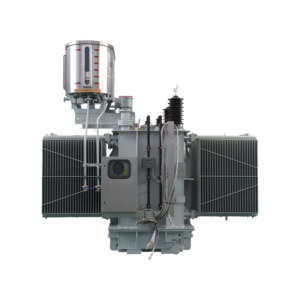
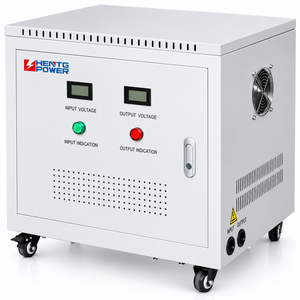
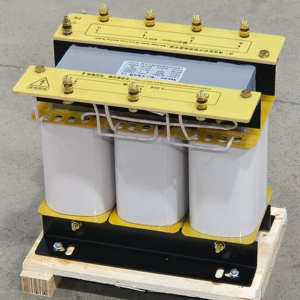
In high-voltage power transmission networks, autotransformers and isolation transformers play an indispensable role alongside primary switchgear. Autotransformers utilize a single continuous copper/aluminum winding acting simultaneously as primary and secondary, offering superior voltage regulation, reduced physical mass, ultra-low energy consumption, and high efficiency for traction power grids (e.g., 55kV 2x27.5kV railway transformers) and industrial motor starter circuits.
Furthermore, the rapid expansion of megawatt-scale solar PV and wind generation facilities has created intense demand for Specialized Inverter Duty Transformers. These units are engineered to endure multi-winding inverter outputs, severe voltage harmonics (high K-factor loads), and abrupt thermal loading shifts caused by fluctuating solar irradiance. Modern factories employ advanced core laminations (stacked high-permeability cold-rolled grain-oriented silicon steel) to minimize core hysteresis losses and lower operational noise levels.
5. Enterprise Manufacturing Advantages & Quality Engineering Framework
Selecting an OEM supplier requires evaluating proven manufacturing credentials, certified quality management systems, and robust testing infrastructure. Volta Transformers, a brand owned by Volta Green Energy Pvt. Ltd. (part of the established Pooja Group of Industries, operating since 2001), stands out as an industry leader headquartered in Vadodara, Gujarat, India.
Stringent In-House Testing Protocols
Every transformer and switchgear module produced undergoes rigorous Factory Acceptance Testing (FAT) in fully equipped testing bays before dispatch to global clients across 500+ projects:
- Routine Tests: Winding resistance measurement, voltage ratio verification, phase vector group check, dielectric insulation resistance, and load/no-load loss verification.
- Type & Special Tests: Full lightning impulse withstand voltage testing, short-circuit withstand verification, acoustic noise level measurement, and Dissolved Gas Analysis (DGA) on transformer oil.
- Thermal Management: Standard temperature rise limits are rigorously maintained at 65°C for oil and 100°C for windings, adhering strictly to IS/IEC international standards for safe, uninterrupted continuous-duty operation.
Frequently Asked Questions by Technical Procurement Teams
Expert technical clarity on high-voltage switchgear specification, quality compliance, and global factory sourcing.