Flagship Rectifier & Power Transformer Product Line
Explore our BIS-approved and ISO 9001:2015 certified transformer solutions manufactured in Vadodara, India, designed for extreme load variations and heavy DC industrial application environments.
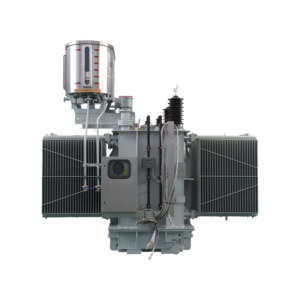
CE Certified 55kV 2x27.5kV 10MVA Ultra-Low Energy Auto/Rectifier Transformer
Get Catalog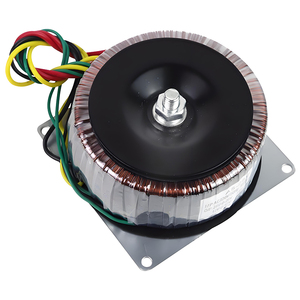
Customizable 300W Toroidal Universal Isolation & Step-Down Transformer
Get Catalog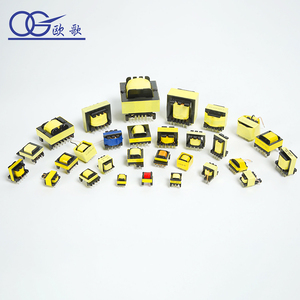
High-Frequency EF25 Ferrite Core Constant Current Driver Transformer
Get Catalog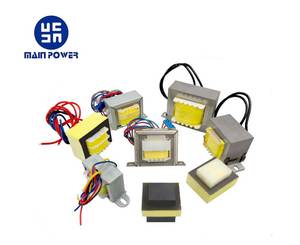
Square Heavy-Duty 60Hz 220V Auto Power Distribution Transformer
Get Catalog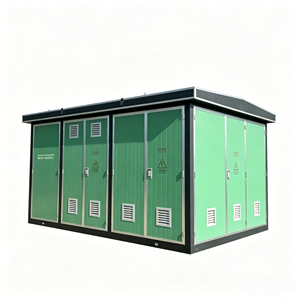
Modular Three-Phase Compact Substation (YBW Model IP44 Outdoor)
Get Catalog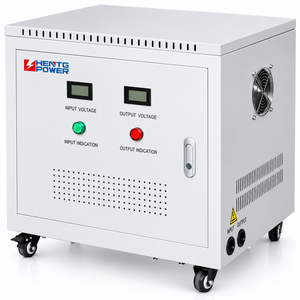
10KVA 220V to 380V 3-Phase Toroidal Aluminum/Copper Winding Transformer
Get Catalog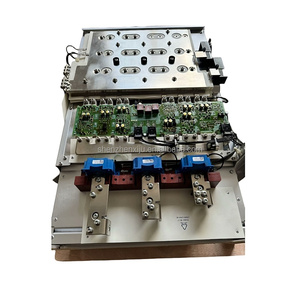
Industrial Grade Replacement Fan & Auxiliary Power Transformer Unit
Get Catalog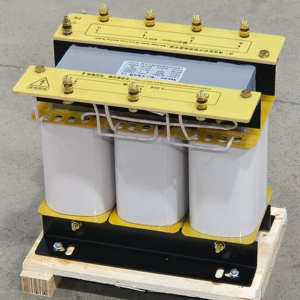
SBK 3-Phase Auto Isolation Transformer (10KVA - 150KVA Range)
Get CatalogIndustrial Rectifier Transformers: Engineering Principles & Custom OEM Design
An In-Depth Whitepaper on Phase Displacement, Harmonic Thermal Mitigation, and High DC Current Topology for Procurement Officers & System Engineers.
In modern electrochemical, metallurgical smelting, traction power networks, and large-scale industrial DC drives, the rectifier transformer serves as the critical link between high-voltage AC distribution grids and heavy DC load systems. Unlike conventional AC power transformers operating under sinusoidal linear loads, rectifier transformers are subjected to continuous non-sinusoidal currents rich in low-order harmonics, severe electrical transients, and massive DC magnetic bias.
As a specialized OEM rectifier transformer factory and supplier based in Vadodara, Gujarat (operating under Volta Green Energy Pvt. Ltd. / Pooja Group of Industries), our engineering team designs custom transformer solutions tailored precisely to the complex commutation phenomena of diode and thyristor rectifiers.
Core Technical Insight: Industrial rectifier transformers must be rated with specialized K-Factor factors and designed with enhanced mechanical clamping to withstand electro-dynamic forces resulting from frequent short-circuit commutation and high harmonic content (5th, 7th, 11th, 13th, 23rd, and 25th harmonics).
1. Multi-Pulse Topology & Phase Displacement Optimization
To reduce Total Harmonic Distortion (THD) reflected back into the utility grid without relying excessively on passive LC harmonic filters, modern heavy industries implement multi-pulse converter bridges (12-pulse, 18-pulse, 24-pulse, and 48-pulse systems). Achieving this requires complex secondary winding phase-shifting configurations inside the transformer tank:
- 6-Pulse Converter Configuration: Standard Delta-Wye ($\Delta/Y$) or Delta-Delta ($\Delta/\Delta$) vector connection providing a baseline 30° phase shift. Ripple frequency on DC output equals six times the fundamental grid frequency ($6f_1$).
- 12-Pulse Converter Configuration: Combines dual secondary windings ($\Delta/Y$ and $\Delta/\Delta$) on a single core structure, providing a precise 30° phase displacement between secondaries. This cancels out the 5th and 7th harmonic currents in the primary line feed.
- 24-Pulse Converter Configuration: Incorporates extended delta or zigzag phase-shifting windings on the primary side (+7.5°, -7.5°, +22.5°, -22.5°) alongside quad secondary outputs. This eliminates the 5th, 7th, 11th, and 13th harmonics, achieving compliance with strict IEEE 519-2022 distortion limits at the Point of Common Coupling (PCC).
2. Technical Comparison: Pulse Configurations & Engineering Parameters
| Pulse Configuration | Phase Shift Vectors | Predominant Harmonics | THD Current Reduction | Target Industrial Application |
|---|---|---|---|---|
| 6-Pulse Rectifier | 0°, 30° ($\Delta/Y$ or $\Delta/\Delta$) | 5th, 7th, 11th, 13th | Baseline (~28% - 35%) | Small Plating Plants, General DC Motor Drives |
| 12-Pulse Rectifier | 0° / +30° Dual Secondary | 11th, 13th, 23rd, 25th | High Reduction (~8% - 12%) | Graphite Electrodes, Medium Chemical Electrolysis |
| 24-Pulse Rectifier | +7.5°, -7.5° Primary Phase Shift | 23rd, 25th, 35th, 37th | Ultra-Low (~2% - 4.5%) | Aluminum Smelting, Large Chlor-Alkali Plants |
| 48-Pulse System | Quad-Shift Phase Network | 47th, 49th Higher Order | Near Sinusoidal (< 1.5%) | National Rail Substation Power, Arc Furnaces |
3. Thermal Design & Magnetic Stray Flux Suppression
When high DC currents (reaching up to 100,000 Amperes in aluminum potlines or chlor-alkali electrolyzers) flow through low-voltage secondary busbars, intense stray magnetic fields are produced. If left unmanaged, these stray fluxes induce eddy current losses in internal metallic structural parts, structural frame clamps, and steel tank walls, causing localized thermal hot-spots and insulation breakdown.
Our OEM factory utilizes advanced 3D Finite Element Method (FEM) magnetic simulation tools to model flux paths and implement targeted shielding solutions:
Non-Magnetic Stainless Steel Busings
High-current LV heavy copper busbars pass through non-magnetic stainless steel plates to eliminate magnetic hysteresis loop heating.
Transposed Conductor Windings (CTC)
Uses Continuously Transposed Conductors (CTC) to minimize eddy current losses within heavy cross-section copper windings.
Integrated Interphase Transformers (IPT)
Extends diode/thyristor conduction angle to 120° in parallel 6-pulse systems, reducing peak current stress per semiconductor element.
Global Procurement Trends in Industrial Rectifier Transformers (2026–2030)
Key Market Drivers, Technology Shifts, and Sourcing Strategies for Procurement Officers and EPC Contractors.
The global industrial transformer market is undergoing a rapid transition driven by industrial decarbonization, expansion of green hydrogen water electrolysis, renewable energy grid integration, and strict energy efficiency mandates. As EPC contractors and procurement managers evaluate OEM suppliers, several critical trends are reshaping procurement criteria:
1. Biodegradable Natural & Synthetic Ester Fluids
Industrial users are transitioning away from conventional mineral oils to high fire-point (>300°C) ester fluids. Ester dielectrics reduce fire risk, eliminate containment bund requirements, and allow higher winding temperature operation (K-Class insulation).
2. IoT-Enabled Smart Transformer Monitoring
Real-time digital monitoring with embedded fiber-optic winding hot-spot sensors, online Dissolved Gas Analysis (DGA), dynamic load modeling, and bushings insulation power factor monitoring is now mandatory for high-reliability industrial infrastructure.
3. Total Cost of Ownership (TCO) Capitalization
Procurement decisions have shifted from pure upfront capital expenditure (CAPEX) to evaluating lifetime Operational Expenditure (OPEX). Capitalization of No-Load ($A$ factor) and Load Losses ($B$ factor) over a 25-year operational lifespan favors high-grade silicon steel cores (Hi-B CRGO).
4. Supply Chain Resilience & Regional OEM Manufacturing Hubs
Global enterprises are diversifying procurement toward certified Indian manufacturing hubs like Vadodara, Gujarat. Indian OEMs offer world-class engineering quality compliant with IS, IEC, and ANSI standards at highly competitive costs.
Why Global Enterprises Partner with Volta Transformers
State-of-the-Art Production Facility in Vadodara, Gujarat — Owned by Volta Green Energy Pvt. Ltd. (Pooja Group of Industries, Est. 2001).
Volta Transformers brings over 15 years of specialized engineering leadership in transformer manufacturing. Situated on NH-48 in the industrial belt of Vadodara, our modern facility is equipped with automated winding machinery, vacuum drying chambers, precision oil treatment units, and an advanced in-house high-voltage testing laboratory.
Rigorous Standards & Certifications
Operates under ISO 9001:2015 Quality Management Systems and holds official BIS approval under IS 1180: Part 1: 2014 for distribution and special duty transformers.
Comprehensive In-House Routine & Type Testing
Every custom rectifier unit undergoes full insulation resistance, winding resistance, voltage ratio, phase displacement, loss measurement, and high-voltage withstand testing before dispatch.
Flexible Engineering Customization
Custom vector groups ($\Delta/Y$, $\Delta/\Delta$, Zigzag, Extended Delta), specialized cooling options (ONAN, ONAF, OFAF, WF), and tailored dimensions to fit brownfield retrofit projects.
OEM Rectifier Transformer Technical Procurement Checklist
Essential Parameters Required by Our Engineering Team to Prepare an Optimized Custom Technical & Commercial Proposal.
When issuing a Request for Quotation (RFQ) or Tender for OEM Rectifier Transformers, providing accurate electrical parameters ensures optimal core/winding dimensioning and precise thermal modeling:
1. Primary Grid Electrical Specs
- Primary Rated Nominal Voltage (kV) & Voltage Variations (e.g. ±10%)
- System Grid Frequency: 50Hz or 60Hz
- Primary Vector Group & On-Load Tap Changer (OLTC) / Off-Circuit Tap Changer (OCTC) range
- Basic Impulse Level (BIL) and Switching Impulse requirements
2. Secondary Converter & Rectifier Specs
- Secondary No-Load Voltage ($V_{d0}$) & Rated Loaded DC Voltage ($V_d$)
- Maximum Continuous Rated DC Output Current ($I_d$) per bridge
- Converter Topology: Diode, Thyristor (SCR), IGBT, or PWM bridge
- Pulse Configuration: 6-pulse, 12-pulse, 24-pulse, or 48-pulse system
3. Duty Cycle & Overload Requirements
- Duty Class according to IEC 60146-1-1 (Class I through Class VI overload profiles)
- Short-circuit duty profile and recurring fault current duration
- Harmonic current spectrum ($h_5, h_7, h_{11}, h_{13}, \dots$) and specified K-factor
4. Site Conditions & Enclosure Options
- Cooling Designation: ONAN, ONAF, OFAF, ODAF, or Water-Forced (OFWF)
- Dielectric Medium: Mineral Oil, Synthetic Ester (Class E), or Cast Resin Dry-Type
- Ambient Temperature Range (-25°C to +55°C) & Altitude above sea level
Frequently Asked Questions (FAQ) — Industrial Rectifier Sourcing
Expert Guidance on Quality Assurance, Harmonic Management, Temperature Rise Limits, and Custom OEM Manufacturing.
Q1: How do you ensure the structural quality and operational reliability of Volta transformers?
Q2: What certifications do Volta Transformers hold for international and domestic supply?
Q3: How do your custom rectifier transformers handle severe harmonics and non-linear loads?
Q4: What are the standard temperature rise limits enforced in Volta transformers?
Q5: What is the operational difference between ONAN and ONAF cooling modes in power transformers?
Q6: What transformer dielectric fluid options do you offer for indoor or hazardous locations?
Q7: Can your factory manufacture replacement transformers compatible with legacy VFD drives?
Need a Custom OEM Rectifier Transformer Quotation?
Speak directly with our senior transformer application engineers in Vadodara, India. Receive complete technical datasheets, CAD dimensional drawings, and competitive commercial pricing within 24 hours.
Get Catalog