Featured Wholesale Transformer Solutions
Explore our ISO 9001:2015 & BIS/CE certified transformer inventory engineered for wind farms, railway electrification, solar inverter integration, and heavy industrial distribution.
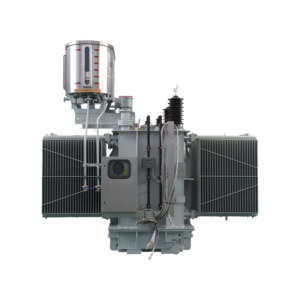
CE Certified 55kV 2x27.5kV 10MVA 10000KVA Ultra-low Energy Consumption Auto Transformer
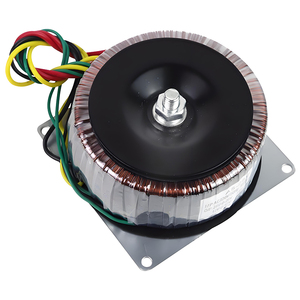
Customizable 300W Toroidal Universal Isolation Auto Transformer (12V-38V Multi-Output)
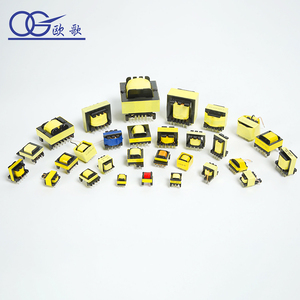
Wholesale Price EF25 Step Down Constant Current Ferrite Core Electrical Transformer
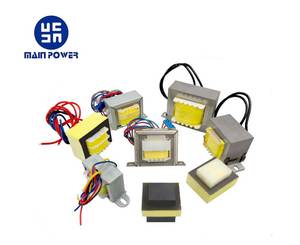
Square 60Hz 220V Auto Distribution Transformer for Industrial Networks
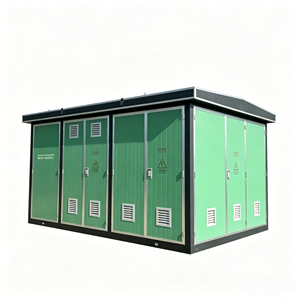
Modular Three-Phase Compact Substation Transformer (YBW Model) IP44 Protection
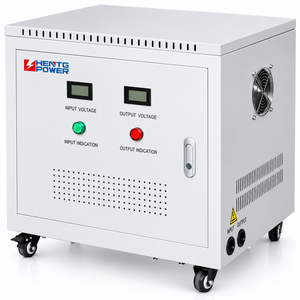
10KVA 220V to 380V 3 Phase Toroidal Aluminum Winding Step Down/Up Auto Transformer
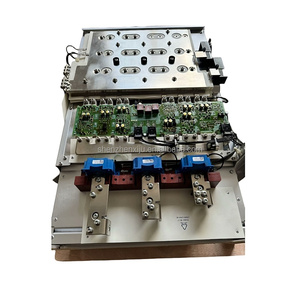
6SL3352-7AE32-1AA1 S120 MICROMASTER PX Replacement Fan Transformer
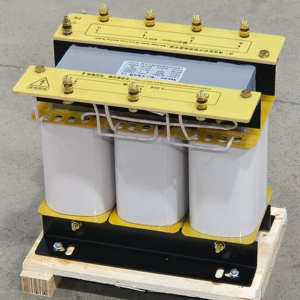
SBK 3-Phase Auto Isolation Transformer (20KVA to 150KVA) Copper/Aluminum Winding
The Evolution of Wind Transformer Engineering: Meeting 66kV Inter-Array Grid Demands
As global renewable energy infrastructure transitions toward higher-capacity wind turbines (8MW to 16MW+), electrical engineers and procurement managers face unprecedented challenges in transformer selection, dielectric stress mitigation, dynamic thermal cycle management, and harmonic mitigation.
Harmonic & Inverter Duty Cycling
Modern wind turbines utilize pulse-width modulation (PWM) power converters that generate significant high-frequency harmonics (THD). Wholesale wind transformers must be engineered with specific K-factor ratings (K-9, K-13) and electrostatically shielded windings to isolate sensitive inverter electronics from utility voltage spikes.
Thermal & Cyclic Load Resilience
Unlike continuous baseload power transformers, wind farm transformers experience aggressive thermal fluctuations caused by variable wind speeds. Our designs employ high thermal class NOMEX® insulation combined with optimized ONAN/ONAF cooling channels to suppress hot-spot degradation and extend coil operating life over 30+ years.
Harsh Environmental Protection
Whether installed inside the nacelle, tower base, or offshore floating platforms, wind transformers are exposed to corrosive marine air, vibration, and high humidity. Custom C5-M anti-corrosion surface treatments and hermetically sealed tanks ensure complete environmental isolation.
Technical Comparison: Liquid-Filled vs. Cast Resin Dry-Type Wind Transformers
Selecting the correct transformer topology depends on space constraints, fire safety classification, and operating ambient temperatures. Review our comparative engineering matrix below.
| Engineering Parameter | Oil-Filled Wind Transformer (ONAN/ONAF) | Cast Resin Dry-Type (F46 / Class H) | Ester Fluid Bio-Degradable Transformer |
|---|---|---|---|
| Voltage Class Range | 11kV, 33kV, up to 66kV / 138kV | 11kV, 22kV, up to 35kV | 11kV, 33kV, 66kV Inter-array |
| Cooling Efficiency | Superior (Natural or Forced Oil Circulation) | Medium (Air Natural / Air Forced) | High (Synthetic/Natural Ester convection) |
| Fire Safety Rating | Standard Flashpoint (300°C - Mineral Oil) | F1 Self-Extinguishing (Fire-Proof) | K-Class High Fire Point (>300°C) |
| Harmonic Tolerance (K-Factor) | K-4 to K-13 (Custom Shielding Available) | K-9 to K-20 (Excellent Harmonic Heat Dissipation) | K-4 to K-13 (Enhanced Thermal Margin) |
| Environmental Risk | Requires Oil Containment Bunds | Zero Spill Risk (Eco-Friendly) | Readily Biodegradable (Safe for Offshore) |
| Typical Installation Site | Substation Base / External Yard / Tower Ground | Inside Turbine Tower / Nacelle Compartment | Offshore Wind Substation / Floating Turbines |
Future Procurement Trends in Wind & Renewable Energy Transformers
As power grids worldwide upgrade to handle high-penetration renewable energy inputs, wholesale procurement strategies for transformers are undergoing structural shifts. Buyers must consider total cost of ownership (TCO), grid compliance, and material sustainability.
1. Transition to 66kV Inter-Array Networks
Global offshore wind projects are rapidly shifting from traditional 33kV array cabling to 66kV standard architectures. This transition reduces cable transmission losses by up to 35% but demands step-up transformers with higher impulse voltage withstand levels (BIL up to 325kV) in extremely compact dimensions suitable for tower-base integration.
2. Natural & Synthetic Ester Fluid Adoption
Environmental regulations across the EU, North America, and APAC are compelling EPC contractors to specify bio-degradable natural ester liquids (FR3) and synthetic esters over traditional mineral oil. Ester fluids offer K-class fire safety, zero water toxicity, and superior moisture absorption capacity, significantly delaying paper insulation aging.
3. Smart Grid & IoT Sensor Integration
Future procurement contracts increasingly require integrated digital twin sensors. Modern wholesale wind transformers are now ordered with real-time Fiber-Optic Temperature Sensors (FOTS), online Dissolved Gas Analysis (DGA) monitors, micro-water content sensors, and smart Bushing Diagnostics to facilitate predictive condition-based maintenance.
4. Amorphous Alloy Core Low-Loss Topologies
To meet stringent international energy efficiency standards (such as EU Ecodesign Tier 2 and US DOE 2016 standards), transformer core manufacturing is migrating toward amorphous metal alloys. Amorphous core transformers deliver up to 70% lower no-load losses (core loss) compared to conventional grain-oriented electrical steel (CRGO).
5. Compact Prefabricated Substation Modules
Turnkey renewable projects favor fully assembled Compact Transformer Substations (YBW / CSS model). Integrating high-voltage vacuum circuit breakers (SF6-free), step-up transformers, and low-voltage protection panels inside weather-proof IP54 enclosures shortens on-site commissioning times by more than 60%.
6. Supply Chain Resiliency & Modular Customization
Given global raw material volatility (copper, grain-oriented silicon steel, transformer oil), utility buyers are forming long-term strategic supplier alliances with China-based wholesale manufacturers capable of flexible multi-tap designs (e.g., dual primary voltage 11kV/33kV selectable taps) to standardize spares across multi-site wind portfolios.
Why Global EPCs & Utility Buyers Choose Our Manufacturing Facility
Operating from our modern production park in Vadodara, Gujarat (under Volta Green Energy Pvt. Ltd. / Pooja Group of Industries), we deliver precision-engineered power, distribution, dry-type, and wind turbine inverter duty transformers backed by robust quality systems and 15+ years of international export expertise.
- ISO 9001:2015 & BIS IS 1180 Certified
- CE / IEC 60076 Global Compliance
- 25MVA / 66kV High-Capacity Production
- Automated Laser Core Shearing & VPI
- In-House Partial Discharge & Impulse Lab
- Custom OEM/ODM Wind Turbine Designs
Frequently Asked Questions by Global Procurement Engineers
Get expert technical answers regarding quality assurance, thermal standards, harmonic mitigation, and export customization for wholesale wind transformers.
How do you ensure the quality and long-term reliability of your wholesale wind transformers?
We follow strict ISO 9001:2015 quality assurance protocols throughout every phase of production. All raw materials (high-grade CRGO silicon steel, electrolytic copper/aluminum, insulating oil) undergo rigorous incoming inspection. Every completed transformer undergoes comprehensive routine and type testing—including insulation resistance, voltage ratio, winding resistance, dielectric loss angle (Tan Delta), partial discharge testing, and impulse voltage withstand testing in accordance with IEC 60076 and IS 1180 standards.
What certifications do your transformers hold for international export markets?
Our transformers hold ISO 9001:2015 certification, CE markings for European markets, and BIS approval under IS 1180: Part 1: 2014. Additionally, our engineering designs comply with international standards such as IEC 60076, ANSI/IEEE C57, and IEEE C57.121 for inverter duty applications.
How do your transformers handle non-linear loads and harmonics generated by wind turbine inverters?
Our wind inverter duty transformers are specifically designed to manage harmonic currents (THD) generated by modern IGBT power converters. We implement customized K-Factor ratings (K-4, K-9, K-13), reduced magnetic flux densities to prevent core saturation, electrostatic copper shields between primary and secondary windings, and stray-loss calculation modeling to prevent localized hot-spots.
What are the standard temperature rise limits for oil and windings in your transformers?
Standard industry temperature rise limits are 65°C for top oil and 65°C/70°C for windings above a maximum ambient temperature of 40°C, per IS/IEC standards. For extreme high-ambient desert environments or compact nacelle applications, we also engineer Class H and Class F insulated dry-type transformers rated for winding temperature rises up to 100°C - 125°C.
What is the practical difference between ONAN and ONAF cooling modes?
ONAN (Oil Natural Air Natural) cooling relies on natural thermosiphon oil circulation through radiator panels and ambient air convection. ONAF (Oil Natural Air Forced) adds automated cooling fans to force air across the radiator fins. Operating in ONAF mode increases the transformer's continuous kVA load capacity by 15% to 33% without enlarging the physical footprint, making it ideal for peak wind generation periods.
Can you manufacture customized multi-winding step-up transformers for multi-inverter turbine configurations?
Yes. We regularly supply dual-secondary and triple-secondary winding transformers (e.g., 0.69kV / 0.69kV to 33kV or 66kV) that enable multiple inverter power modules to connect to a single step-up transformer, minimizing footprint, weight, and installation cost inside wind turbine towers.
Ready to Source Wholesale Wind & Industrial Transformers?
Partner with a trusted China wholesale supplier & exporter. Get customized technical proposals, factory-direct pricing, and comprehensive engineering datasheets within 24 hours.