High-Performance Transformer Cores & Assemblies
Direct factory sourcing of ISO & CE certified transformers built with ultra-low loss CRGO silicon steel, toroidal cores, and specialized magnetic laminations.
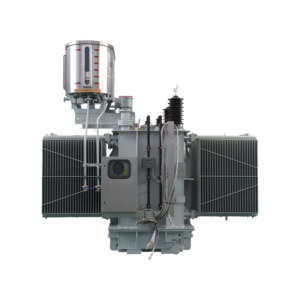
CE Certified 55kV 2x27.5kV 10MVA 10000KVA Factory Price Ultra-low Energy Consumption Auto Transformer for Railway
Inquire Now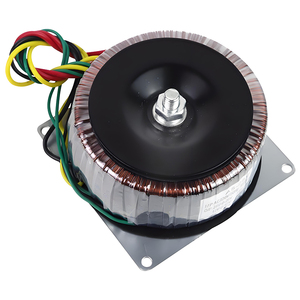
Customizable 300W Toroidal Transformer Universal Isolation Auto Transformers 12V-38V Output
Inquire Now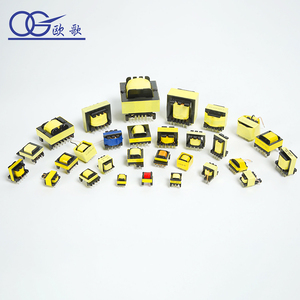
Wholesale Price EF25 Step Down Transformer Constant Current LED Driver Ferrite Core Transformer
Inquire Now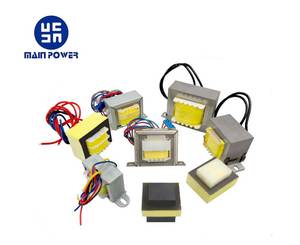
Square 60Hz 220V Auto Distribution Transformers High Magnetic Flux Density Core
Inquire Now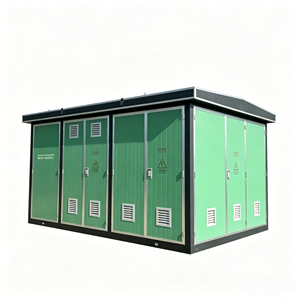
Modular Three-Phase Autotransformer Compact Substation (YBW Model) IP44 Protection
Inquire Now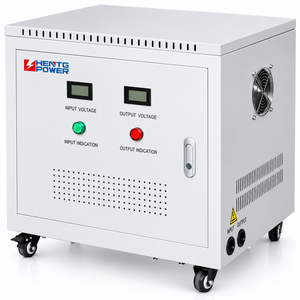
Factory Direct Sale 10KVA 220V to 380V 3 Phase Toroidal Step Down/Up Auto Transformers
Inquire Now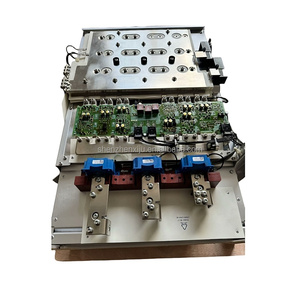
S120 MICROMASTER PX Replacement Fan Transformer 6SL3352-7AE32-1AA1 High Frequency Core
Inquire Now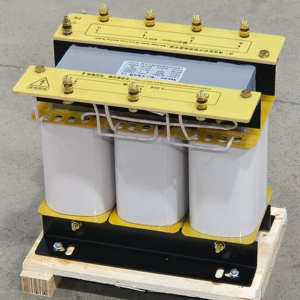
SBK 3-Phase Auto Transformer 415V/380V/220V Isolation 10KVA-150KVA Copper/Aluminum Winding
Inquire Now1. The Global Ecosystem of China Wholesale Transformer Cores Factories & Exporters
In the global electrical power transmission and distribution (T&D) ecosystem, the transformer core serves as the essential magnetic heart. Accounting for up to 30% to 45% of the total raw material cost of a transformer, the efficiency, permeability, and loss profile of the magnetic core directly determine the overall operational economy and environmental compliance of the electrical apparatus. China has emerged as the global epicenter for precision magnetic core manufacturing, supplying top-tier OEM equipment manufacturers, power grid utilities, and industrial EPC contractors across Europe, the Americas, Asia-Pacific, and the Middle East.
Modern core manufacturing requires an intricate synthesis of advanced metallurgy, ultra-precise mechanical slitting, laser scribing, and automated step-lap lamination stacking. Leading Chinese transformer core exporters leverage massive economies of scale alongside rigorous metallurgical control to produce cores utilizing Cold-Rolled Grain-Oriented (CRGO) silicon steel, Amorphous Alloys (1K101), Nanocrystalline ribbons, and Soft Ferrite materials.
Metallurgical Classification & Core Materials Comparison
Understanding the raw material physics is essential for global procurement engineers evaluating transformer core quotations. Below is an engineering comparison matrix detailing the primary magnetic core materials exported by Chinese suppliers:
| Core Material Grade | Saturation Flux Density ($B_s$) | Typical Specific Loss ($W/kg @ 1.7T, 50Hz$) | Relative Permeability ($\mu_r$) | Primary Application Target |
|---|---|---|---|---|
| High-B CRGO (23ZH085 / 23ZDH085) | 1.90 - 2.03 T | 0.80 - 0.85 W/kg | 10,000 - 15,000 | Ultra-High Efficiency Power & Distribution Transformers |
| Standard CRGO Steel (M4 / 30ZH120) | 1.85 - 1.95 T | 1.05 - 1.20 W/kg | 8,000 - 11,000 | Standard Oil-Filled Distribution & Auto Transformers |
| Amorphous Metal Ribbon (Fe-Based 1K101) | 1.56 T | 0.20 - 0.28 W/kg | > 20,000 | Ultra-Low Energy Consumption Distribution Cores |
| Nanocrystalline Ribbon (Fe-Cu-Nb-Si-B) | 1.20 - 1.35 T | 0.08 - 0.15 W/kg (@20kHz) | > 80,000 | High-Frequency Inverters, EV Chargers, Common Mode Chokes |
| MnZn Soft Ferrite (EF25 / EE / ETD) | 0.48 - 0.52 T | N/A (Designed for >100kHz) | 2,000 - 5,000 | SMPS, LED Drivers, Small Electrical Step-Down Transformers |
Enterprise Advantage: Precision Engineering from Vadodara to Global Markets
Merging advanced manufacturing infrastructure, ISO 9001:2015 quality management, and BIS/CE certified engineering standards.
15+ Years Industry Expertise
Backed by the Pooja Group of Industries (Est. 2001), our engineering lineage encompasses decades of specialized manufacturing in power transformers, auto transformers, and precision magnetic core stacking.
ISO 9001 & BIS Approved
Full compliance with IS 1180: Part 1: 2014 and IEC 60076 standards. Every lamination stack undergoes stringent Epstein frame testing, insulation resistance validation, and laser surface checks.
25 MVA / 66kV High Voltage Capable
Our state-of-the-art facility in Vadodara, Gujarat is equipped to process heavy-duty power transformer core assemblies up to 25 MVA, utilizing automated step-lap mitred cutting lines to minimize no-load losses.
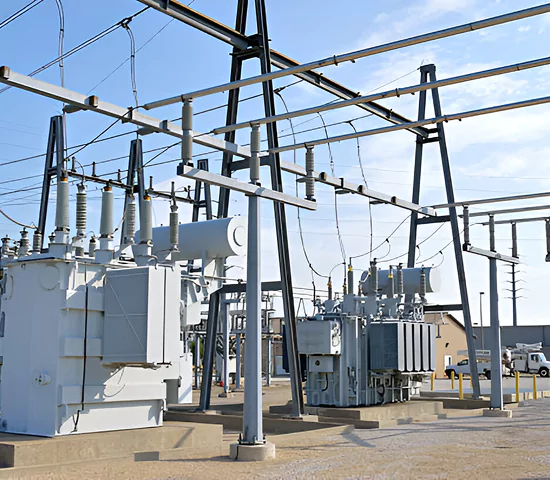
State-of-the-Art Core Processing & Stacking Facilities
At our core manufacturing complex in Aatmiya-2 Industrial Park (Vadodara, Gujarat), we operate automated continuous slitting lines, CNC step-lap lamination shearers, and vacuum annealing furnaces. By maintaining absolute control over clamping pressure ($2.0 - 3.0\text{ kg/cm}^2$) and lamination burr heights (< 0.02 mm), we eliminate stray flux losses and significantly diminish acoustic noise emissions.
Whether fulfilling orders for wholesale CRGO rectangular stacked cores, wound toroidal cores for isolation equipment, or custom step-down ferrite drivers, our factory guarantees raw material traceability directly to premier steel mills (including Baosteel, Shougang, and Nippon Steel).
2. Product Recommendations & Specialized Core Engineering Solutions
Selection of the optimal core geometry and material lamination grade depends entirely on the operational duty cycle, input waveform harmonics, thermal environment, and energy efficiency mandates. Below, our senior engineering team analyzes key product lines exported globally:
A. Ultra-Low Energy Consumption Railway & Traction Cores
Traction substations powering high-speed railway networks require auto-transformers capable of handling extreme voltage fluctuations ($55\text{kV}$ to $2\times 27.5\text{kV}$) and severe transient overloads. For products such as the CE Certified 55kV 10MVA Auto Transformer, core designs utilize top-tier 0.23mm high-permeability laser-scribed CRGO steel. The core legs feature full 45° mitred joints with a 7-stage step-lap stack, reducing no-load losses by up to 28% compared to conventional butt-joint configurations.
B. Toroidal Transformer Cores for Universal Isolation & Power Conditioning
Toroidal cores engineered for equipment like the Customizable 300W Toroidal Isolation Transformer and 10KVA 3-Phase Toroidal Units offer a continuous grain structure with zero air gaps. Because magnetic flux flows along the natural direction of grain orientation throughout the entire magnetic path, toroidal cores achieve:
- Superior Efficiency: No-load current is up to 80% lower than traditional E-I lamination cores.
- Ultra-Low Acoustic Noise: Elimination of air gaps suppresses magnetostriction hum, vital for medical and residential audio isolation.
- Compact Form Factor: Up to 50% reduction in physical volume and weight for equivalent VA ratings.
C. High-Frequency Ferrite & Nanocrystalline Cores for LED & EV Electronics
In high-frequency power conversion environments (20kHz to 500kHz), hysteresis losses in silicon steel become prohibitively high. Switch-Mode Power Supply (SMPS) designers rely on precision MnZn soft ferrites, such as the EF25 Step Down Ferrite Core Transformer. The optimized EF25 geometry provides an excellent cross-sectional area to winding window ratio, facilitating constant current drive performance with minimal leakage inductance in LED driver topologies and industrial VFD power supplies like the S120 MICROMASTER PX Replacement Series.
Four-Stage Core Manufacturing & Quality Process

1. CAD/CAM Slitting & Shear
Precision micro-slitting of CRGO coil under tight tolerance (<±0.05mm).

2. Annealing & Loss Testing
Stress-relief annealing in nitrogen atmosphere followed by Epstein testing.

3. Step-Lap Stacking
Automated robotic stacking with 45° mitred overlap joints.

4. Rigorous QC & Packing
Varnish coating, vacuum sealing, and anti-vibration crating for ocean transit.
3. Future Sourcing & Industry Development Trends (2025–2030)
Global decarbonization initiatives, grid modernization investments, and the explosion of renewable energy installations (Solar PV, Offshore Wind, EV Supercharging Hubs) are reshaping international transformer core procurement. Procurement officers and B2B buyers must align their supply chain strategies with key market disruptions:
Trend 1: Stricter Global Eco-Design Regulations & Loss Mandates
Regulatory frameworks—such as the European Union’s Eco-Design Tier 2 (EN 50708 standard) and the United States Department of Energy (DOE 2026) energy efficiency rules—impose aggressive caps on maximum allowable no-load ($P_0$) and load losses ($P_k$). As a consequence, legacy M4 and M5 silicon steel grades are being rapidly phase-out in favor of ultra-thin (0.18mm–0.23mm) Domain-Refined High-B CRGO steel and Fe-based Amorphous ribbons. China core factories have upgraded production lines to accommodate laser-scribed materials that guarantee specific losses under $0.75\text{ W/kg}$ at $1.7\text{T}$.
Trend 2: Rapid Commercialization of Amorphous & Nanocrystalline Hybrid Cores
Amorphous metal cores feature a non-crystalline atomic structure produced by rapid solidification ($\sim 1,000,000\,^\circ\text{C/sec}$). Lacking crystal anisotropy, their coercive force is exceptionally low, resulting in a **70% to 80% reduction in no-load loss** compared to conventional silicon steel. By 2030, amorphous core adoption in distribution transformers is projected to surpass 40% globally, especially in solar photovoltaic farms where transformers operate at light loads during low-irradiance periods.
Trend 3: Smart Grid Harmonics & K-Factor Rated Cores
The proliferation of non-linear electrical loads—such as variable frequency drives (VFDs), server data centers, and massive solar/wind power inverters—introduces significant harmonic distortion into transformer magnetic circuits. Standard transformer cores suffer severe eddy current overheating when exposed to 5th, 7th, and 11th harmonic currents. Chinese core exporters are increasingly specializing in K-Factor Rated Cores (K-13, K-20) featuring electrostatic shielding, interleaved laminations, and specialized copper foil wind channels to suppress stray magnetic field heating.
Trend 4: Automated Step-Lap Lamination vs. Manual Assembly
Leading wholesale core exporters in China have transitioned completely from traditional manual stacking to fully automated Georg and Heinrich CNC core cutting and stacking lines. Robotic 5-step lap joint stacking eliminates human assembly variance, guarantees exact air-gap alignment at core corners, and prevents magnetic flux concentration. This technology yields a direct **3 to 5 dB reduction in audible operating noise** and superior mechanical short-circuit strength.
Frequently Asked Questions for Global Core Procurement
Detailed engineering responses to key technical, logistical, and quality control questions raised by international procurement managers.
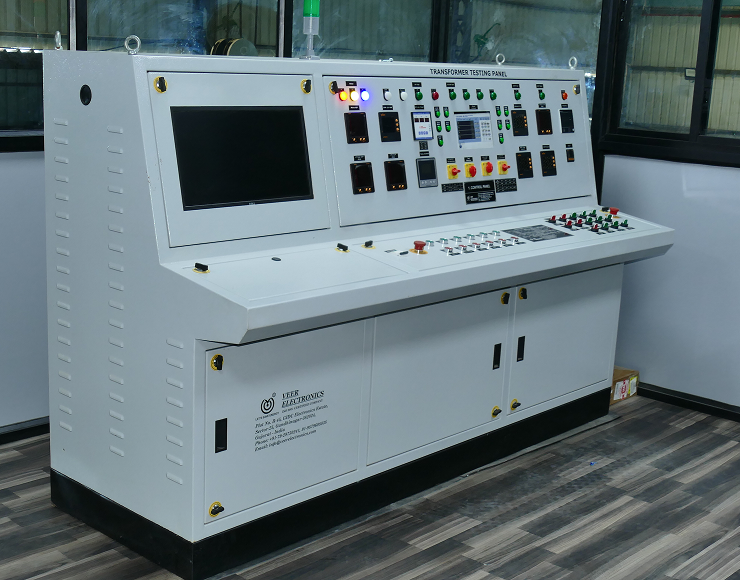
Dedicated Technical Support & Global Supply Chain Reliability
Behind every high-performance transformer core assembly exported from our factories is an experienced team of electrical engineers, metallurgical specialists, and international trade professionals. From initial electromagnetic design validation to final container loading inspects, our customer-centric approach guarantees seamless technical alignment with your project requirements.
Whether you require sample prototypes for prototype transformer validation or long-term contract wholesale supply of high-B CRGO laminations, our engineers stand ready to provide complete technical dossiers, B-H curves, and core loss test reports.