Featured Wholesale Instrument & Power Transformers
Direct factory supply of precision-engineered instrument transformers, toroidal isolation units, step-down autotransformers, and compact modular substations designed for utility grids, industrial manufacturing, and railway electrification.
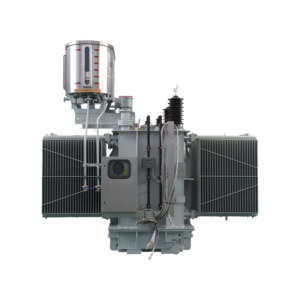
CE Certified 55kV 2x27.5kV 10MVA Ultra-Low Energy Consumption Auto Transformer for Railway
Voltage Class: 55kV (2x27.5kV)
Capacity: 10MVA (10000KVA)
Standard: CE / IEC 60076 Railway
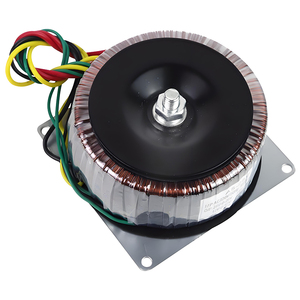
Customizable 300W Toroidal Transformer Universal Isolation Auto Transformers Multi-Output
Power Rating: 300W Precision Toroidal
Outputs: 12V to 38V Multi-Tap
Feature: Low Stray Magnetic Field
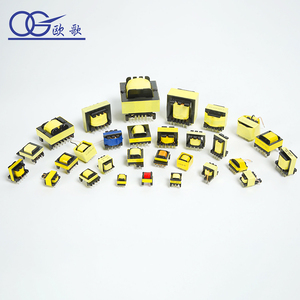
Wholesale Price EF25 Step Down Transformer Constant Current LED Driver Ferrite Core Transformer
Core Type: High-Freq EF25 Ferrite
Application: LED Driver / SMPS
Efficiency: High-Temp Wire Insulation
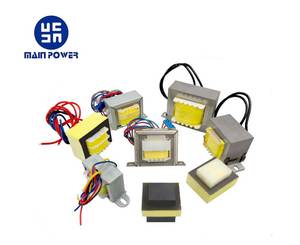
Square 60Hz 220V Industrial Auto Distribution Transformers with High Dielectric Strength
Frequency: 60Hz Optimized
Primary Voltage: 220V AC Input
Structure: Compact Square Core
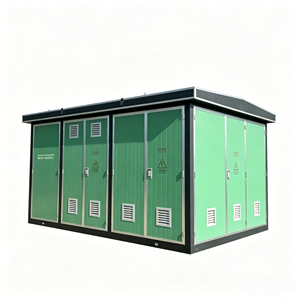
Modular Three-Phase Autotransformer Compact Substation (YBW Model) IP44 Protection 50/60Hz
Model: YBW Modular Package
Enclosure: IP44 Outdoor Weatherproof
System: High/Low Voltage Switchgear
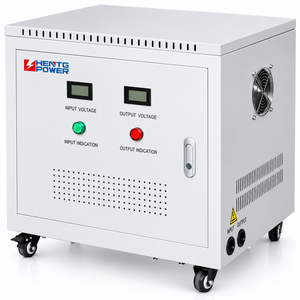
Factory Direct 10KVA 220V to 380V 3 Phase Toroidal Winding Step Down/Up Auto Transformers
Capacity: 10KVA Heavy Duty
Voltage Conversion: 220V ↔ 380V
Winding: High-Grade Aluminum/Copper
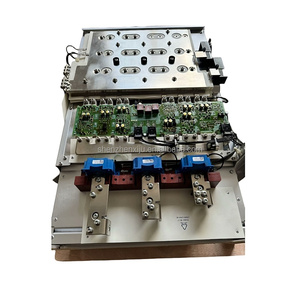
6SL3352-7AE32-1AA1 S120 MICROMASTER PX Replacement Fan & Auxiliary Power Transformer
Part Number: 6SL3352-7AE32-1AA1
Compatibility: S120 / MICROMASTER
Grade: OEM Industrial Replacement
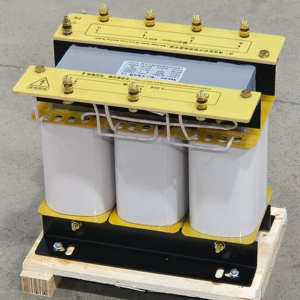
SBK 3-Phase Auto Transformer 415V/380V/220V Isolation (20KVA-150KVA Copper/Aluminum)
Series: SBK 3-Phase Dry-Type
Ratings: 20kVA to 150kVA Custom
Multi-Voltage: 415V / 380V / 240V / 110V
Understanding Instrument Transformers: Engineering Principles & Selection
An authoritative technical guide for electrical engineers, EPC contractors, and procurement executives evaluating Current Transformers (CT) and Potential Voltage Transformers (VT/PT) for high-voltage substations and industrial distribution networks.
1. Operational Mechanics of Current Transformers (CT) & Voltage Transformers (VT)
Instrument transformers are essential components in modern power systems. They step down high voltages and heavy currents to standardized, safe values (typically 1A or 5A for CT secondaries, and 100V or 110V for VT secondaries). This enables secondary equipment—such as digital protective relays, revenue meters, and SCADA monitoring units—to function accurately and safely isolated from high-voltage primary circuits.
2. Accuracy Classes & Core Material Metallurgy
The accuracy of a current transformer is dictated by its core material physics. Modern manufacturers use advanced magnetic core materials depending on the application:
CRGO Steel Core
Cold-Rolled Grain-Oriented (CRGO) silicon steel provides high saturation flux density ($B_s \approx 1.9\text{T}$ to $2.0\text{T}$). Ideal for protective CT cores (Class 5P20 / 10P20) where high overcurrent withstand capability without saturation during short circuits is critical.
Nanocrystalline Core
Nanocrystalline magnetic ribbons exhibit ultra-high initial permeability ($\mu_i > 80,000$) and extremely low core losses. Used in high-precision metering CTs (Class 0.2S and 0.1) for electricity tariff billing and smart metering systems.
Amorphous Metal Core
Amorphous alloy cores feature random non-crystalline atomic structures that dramatically reduce hysteresis losses, ensuring exceptional linearity across wide dynamic current ranges (1% to 120% rated current).
3. Comparative Specification Matrix: CT & VT Insulation Technologies
Selecting the correct dielectric insulation medium is crucial for ensuring system reliability and operating longevity across outdoor switchyards, GIS substations, and indoor switchgear panels.
| Insulation Type | Voltage Range | Dielectric Medium | Maintenance Requirement | Primary Application |
|---|---|---|---|---|
| Cast Resin (Dry-Type) | Up to 40.5kV | Epoxy Resin Vacuum Cast | Virtually Zero Maintenance | Indoor MV Switchgear, Compact Substations |
| Oil-Impregnated Paper (OIP) | 33kV to 765kV | High-Grade Mineral / Synthetic Oil | Periodic DGA & Oil Sampling | Outdoor High-Voltage Substation Switchyards |
| Gas-Insulated (SF6 / Eco-Gas) | 72.5kV to 1100kV | Sulfur Hexafluoride or $C_4\text{FN}$ Gas | Pressure Monitoring & Gas Density Check | Gas-Insulated Substations (GIS) |
| Low Power (LPIT / Optical) | Up to 800kV | Fiber Optic / Rogowski Coil | Electronic Self-Diagnostics | Smart Grids, IEC 61850 Process Bus Networks |
Global Procurement Trends for Instrument Transformers (2025–2035)
Key market drivers, regulatory shifts, and supply chain strategies shaping how utility companies, renewable energy developers, and industrial conglomerates source instrument transformers worldwide.
1. Demand for IEC 61850 Process Bus Integration
Utility buyers are transitioning from traditional analog secondary copper cabling to digital substations. Sourcing strategies increasingly prioritize Non-Conventional Instrument Transformers (NCITs) and Merging Units (MUs) that output sampled values via Ethernet compliant with IEC 61850-9-2, reducing control cable installation costs by up to 80%.
2. SF6 Alternative & Eco-Friendly Insulation
Environmental regulations such as the EU F-gas Directive are pushing global procurement officers to source SF6-free instrument transformers. Manufacturers providing alternative dielectric gases ($C_4\text{FN}/\text{CO}_2$ mixtures) or synthetic ester fluid-filled transformers are gaining significant competitive advantages in government tenders.
3. Supply Chain Diversification & Factory Audit Rigor
Global B2B buyers are diversifying supply chains beyond single regions. Procurement teams require tier-1 Chinese manufacturers to provide full type-test reports from accredited independent laboratories (such as KEMA, CESI, or CNAS), along with ISO 9001:2015 and ISO 14001 certifications before issuing purchase orders.
4. Customization for Renewable Energy Microgrids
Solar PV plants and wind farms produce severe high-frequency harmonics due to grid-tied inverter switching. Modern procurement trends require custom instrument transformers built with electrostatic shielding between windings to prevent harmonic interference from distorting revenue metering signals.
Technology Development Trends in Electrical Measurement
How advancements in materials science, digital optics, and IoT telemetry are transforming traditional instrument transformers into intelligent grid sensors.
Optical Current Transformers (OCT)
Utilizing the Faraday Effect, Optical CTs measure current by detecting the rotation of polarized light passing through a magneto-optical crystal or fiber cable. OCTs offer complete immunity to electromagnetic interference (EMI), zero risk of core saturation during severe short circuits, and explosive safety eliminates oil or gas hazards entirely.
Low Power Passive Sensors (LPIT)
Rogowski coils for current measurement and capacitive/resistive voltage dividers for voltage sensing replace heavy iron cores with lightweight, compact sensor head assemblies. LPITs provide linear response curves across wide frequency bandwidths, essential for monitoring power quality and high-order harmonics.
AI-Driven Online Health Monitoring
Next-generation high-voltage instrument transformers incorporate embedded sensors for real-time online diagnostics. Fiber-optic temperature sensors, internal partial discharge (PD) monitoring probes, and dissolved gas analysis (DGA) micro-sensors transmit operational health data directly to utility SCADA platforms via cloud IoT gateways.
Why Partner with Our Manufacturing Facility
Combining over 15 years of transformer manufacturing expertise with ISO-certified quality assurance and global export capabilities from Vadodara, Gujarat, serving clients worldwide.
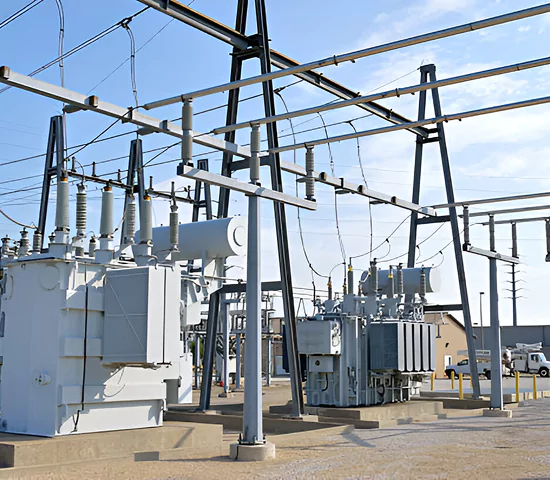
Advanced Production Infrastructure & Technical Rigor
Operating as part of the established Pooja Group of Industries (Est. 2001), our engineering team designs and manufactures high-performance power, distribution, dry-type, and specialized instrument transformers. Every unit undergoes rigorous quality checks to meet stringent IS, IEC, and ANSI standards.
- ISO 9001:2015 & BIS Certified: Certified under IS 1180: Part 1: 2014 standards, guaranteeing compliance with global quality benchmarks.
- Comprehensive Factory Testing: Fully equipped in-house testing lab performing routine, type, and special tests including partial discharge, temperature rise, and impulse voltage testing.
- Custom OEM/ODM Engineering: Tailored voltage tapings, special burden limits, unique phase configurations, and specific dimensional footprints engineered to exact client specifications.
- Global Supply Chain Reach: Exporting to over 30 countries across Southeast Asia, the Middle East, Africa, Europe, and South America with specialized seaworthy packaging.
Frequently Asked Questions (FAQ) for B2B Procurement
Detailed technical answers to common questions raised by electrical consultants, procurement managers, and utility engineers during supplier evaluation.
How do I select the correct accuracy class for a Current Transformer (CT)?
The selection of CT accuracy class depends entirely on the secondary application. For tariff revenue metering, standard practice mandates Class 0.2S or Class 0.5S (compliant with IEC 61869-2), which maintain tight ratio errors down to 1% of rated current. For industrial monitoring meters, Class 0.5 or Class 1.0 is sufficient. For protective relaying applications (e.g., differential or distance protection), protective classes such as Class 5P20 or 10P20 are required to prevent core saturation during high fault currents up to 20 times rated current.
What is the significance of the Knee-Point Voltage ($V_k$) in protective CTs?
The Knee-Point Voltage ($V_k$) is the sinusoidal voltage applied to the secondary terminals of a CT (with the primary open-circuited) beyond which a 10% increase in voltage results in a 50% increase in magnetizing current. In protective CTs (Class PX or TPS according to IEC standards), $V_k$ must be high enough to ensure that the relay operates accurately during extreme symmetrical and asymmetrical fault currents without the CT core saturating and causing relay malfunction.
How does burden affect the performance of Instrument Transformers?
Burden (expressed in VA or ohms) is the total load connected across the secondary terminals of a CT or VT, including relay impedance, meter burden, and secondary connecting cable resistance. If the actual connected burden exceeds the rated burden specified on the transformer nameplate, the phase and ratio errors will increase, compromising accuracy. Conversely, operating a CT at a burden significantly below its rated value can lead to higher instrument security factors ($FS$). Modern digital relays require very low burden (often $< 0.5\text{VA}$), allowing buyers to select smaller 2.5VA to 5VA rated CTs.
What factory quality assurance tests are performed before shipment?
Every transformer manufactured undergoes 100% routine testing prior to dispatch, in accordance with IEC 61869-1/2/3 and IS standards. Routine tests include: Primary and Secondary Winding Power Frequency Withstand Test, Partial Discharge Measurement, Polarity and Terminal Marking Verification, Inter-turn Overvoltage Test, Ratio and Phase Angle Error Measurement across full operating ranges, and Insulation Resistance (IR) Testing.
What is the standard production lead time and minimum order quantity (MOQ)?
Standard production lead times for cast resin indoor CTs/VTs range between 2 to 3 weeks. High-voltage oil-immersed units or custom autotransformer substations typically require 4 to 6 weeks, including Factory Acceptance Testing (FAT). We accommodate flexible B2B order volumes ranging from small batch prototype quantities for OEMs to containerized bulk orders for major infrastructure projects.
Request Technical Specifications & Wholesale Pricing
Contact our application engineering team today for technical data sheets, dimension drawings, type test reports, or custom quotation requests tailored to your project requirements.