High-Performance Protection & Electrical Distribution Equipment
Engineered for extreme reliability, low temperature rise, and strict compliance with IEC 60947-2, UL 489, and ISO 9001:2015 manufacturing standards.
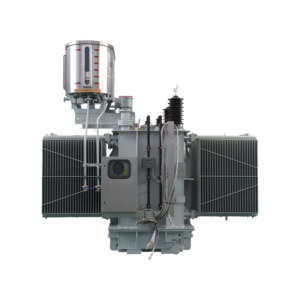
CE Certified 55kV 2x27.5kV 10MVA Ultra-Low Loss Traction Auto Transformer
- Voltage Rating: 55kV / 2x27.5kV
- Capacity: Up to 10MVA (10,000KVA)
- Loss Level: Ultra-Low Losses (CE Standard)
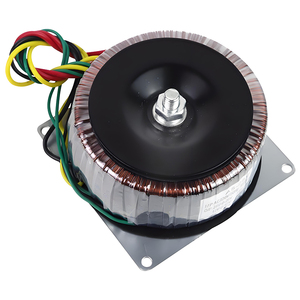
Customizable 300W Toroidal Isolation Auto Transformer Unit
- Power Output: 300W Toroidal Winding
- Multi-Tap Outputs: 12V to 38V Selectable
- High Dielectric Isolation Strength
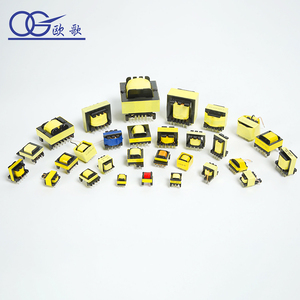
EF25 Step Down Constant Current Ferrite Core Protection Transformer
- Topology: EF25 High Frequency Core
- Application: LED Driver & Control Auxiliary
- Current Rating: Constant Current Limiting
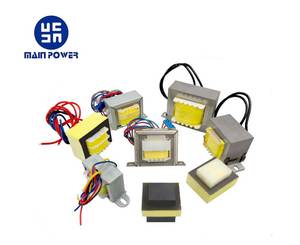
Square 60Hz 220V Industrial Auto Distribution Transformer
- Frequency: 60Hz Continuous Duty
- Input Voltage: 220V Single-Phase
- Core Type: Square Silicon Lamination
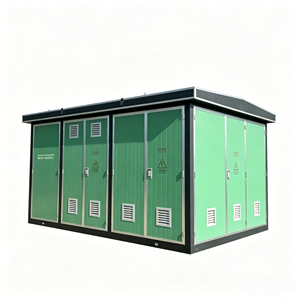
YBW Modular Three-Phase Compact Substation with Breakers IP44
- Protection Enclosure: IP44 Outdoor Rated
- Integration: MV Switchgear + ACB/MCCB
- Frequency: 50Hz / 60Hz Power Distribution
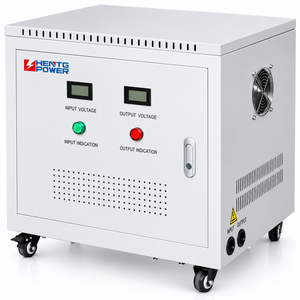
10KVA 220V to 380V 3-Phase Toroidal Aluminum Winding Auto Unit
- Rating: 10KVA Continuous Duty
- Voltage Conversion: 220V to 380V 3-Phase
- Winding: Oxygen-Free Aluminum Core
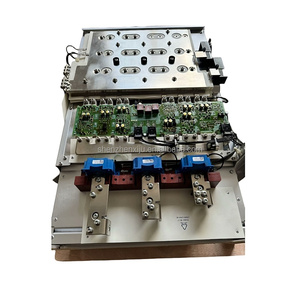
S120 MICROMASTER PX Switchgear Replacement Fan Transformer
- Model Ref: 6SL3352-7AE32-1AA1
- Function: Auxiliary Cabinet Cooling
- Compatibility: Siemens Switchgear Systems
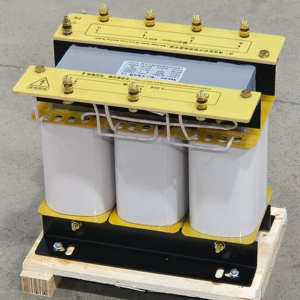
SBK 3-Phase Industrial Auto Isolation Transformer 20KVA-150KVA
- Capacity Range: 10KVA to 150KVA
- Voltage Options: 415V / 380V / 220V / 110V
- Winding Material: Pure Copper / Aluminum
China Wholesale Circuit Breakers: Executive Sourcing & Technical Overview
Navigating the global supply chain for high-voltage and low-voltage electrical protection systems demands a rigorous evaluation of manufacturer capabilities, short-circuit interrupting ratings, trip unit intelligence, and thermal dissipation performance. As international energy networks transition toward decentralized microgrids and high-density industrial electrification, sourcing China wholesale circuit breakers from top-tier original equipment manufacturers (OEMs) has become a primary strategic pathway for EPC (Engineering, Procurement, and Construction) contractors, panel builders, and electrical utilities worldwide.
Modern electrical circuit breakers do not operate in isolation; they form the core line of defense within complex power distribution architecture alongside distribution transformers, isolation transformers, and compact substations. A failure in fault clearing within a low-voltage switchboard or medium-voltage ring main unit (RMU) can lead to catastrophic thermal runaway, contact arc welding, or complete transformer failure. Consequently, leading Chinese electrical manufacturers have upgraded their automated production infrastructure to meet and exceed stringent international specifications, including IEC 60947-2, UL 489, ANSI C37.13, and GB/T 14048.2.
Classification of Circuit Protection Systems
When issuing wholesale procurement tenders, engineering procurement teams must distinguish between primary breaker categories based on operational voltage, trip mechanisms, and current ratings:
- Miniature Circuit Breakers (MCB): Rated up to 125A, intended for final circuit protection against overloads and short circuits in residential and commercial applications (IEC 60898-1 / IEC 60947-2).
- Molded Case Circuit Breakers (MCCB): Rated from 16A up to 1600A, featuring adjustable thermal-magnetic or electronic trip units ($I_{cu}$ ranging from 25kA to 150kA at 415V).
- Air Circuit Breakers (ACB): Rated from 630A to 6300A, utilized as main incoming feeder protection in industrial low-voltage switchgear boards with high short-time withstand currents ($I_{cw}$).
- Vacuum Circuit Breakers (VCB): Applied in medium-voltage distribution systems (12kV to 40.5kV) housed within metal-clad switchgear and compact transformer substations.
Industrial Circuit Breaker & Switchgear Selection Parameters
Comparative technical benchmark detailing key operational standards, short-circuit breaking capacities, and application scope across low and medium voltage protection devices.
| Category | Standard Rating ($I_n$) | Short-Circuit Capacity ($I_{cu}$) | Trip Unit Technology | Mechanical Endurance | Primary Application Scope |
|---|---|---|---|---|---|
| MCB (Low Voltage) | 0.5A – 125A | 6kA – 15kA (at 400V) | Fixed Thermal-Magnetic | 20,000 Operations | Sub-distribution boards, lighting panels, OEM equipment |
| MCCB (Industrial) | 16A – 1600A | 35kA – 150kA (at 415V) | Electronic Trip Unit (ETU) / Thermal-Mag | 15,000 Operations | Motor control centers (MCC), transformer LV protection |
| ACB (Main Feeder) | 630A – 6300A | 50kA – 120kA ($I_{cw}$ 1s) | Microprocessor-Based LSIG Digital Unit | 20,000 Operations (Serviced) | Main Low-Voltage Distribution Switchboards (PCC) |
| VCB (Medium Voltage) | 630A – 4000A | 25kA – 50kA (at 12kV-40.5kV) | External Protection Relay (IEC 61850) | 30,000+ Operations | Compact Substations (YBW), Industrial Power Grids |
Engineering Deep-Dive: Trip Unit Technologies & Arc Quenching Mechanics
The core intelligence and reliability of a circuit breaker depend on its trip unit architecture and the physical dynamics of its arc interruption chamber. Leading Chinese wholesale circuit breaker manufacturers have made substantial engineering advancements in microprocessor control and contact metallurgy to eliminate nuisance tripping while ensuring sub-cycle fault clearing.
1. Thermal-Magnetic vs. Microprocessor Electronic Trip Units (ETU)
Traditional thermal-magnetic trip units utilize a calibrated bi-metallic strip for inverse time-delay overload protection ($I^2t$), paired with an electromagnetic solenoid for instantaneous short-circuit tripping. While cost-effective, thermal-magnetic breakers are sensitive to ambient temperature fluctuations and lack precision settings.
In contrast, modern industrial MCCBs and ACBs integrate microprocessor-based Electronic Trip Units (ETU) that sample true RMS current waveforms continuously. These units offer fully adjustable protection curves across four primary zones:
- Long-Time Delay (L): Overload protection with adjustable current pickup ($I_r = 0.4 \text{ to } 1.0 \times I_n$) and time delay settings.
- Short-Time Delay (S): Timed short-circuit protection ($I_{sd} = 1.5 \text{ to } 10 \times I_r$) with selectable constant time or inverse time ($I^2t$) characteristics for downstream selectivity.
- Instantaneous (I): Instantaneous short-circuit protection ($I_i = 2 \text{ to } 15 \times I_n$) clearing high-magnitude faults without intentional time delay.
- Ground Fault (G): Zero-sequence current sensing for equipment ground fault protection ($I_g = 0.2 \text{ to } 1.0 \times I_n$).
2. Contact Metallurgy & Arc Quenching Chamber Mechanics
When breaker contacts separate under full fault load, an electrical arc exceeding 6,000°C is generated between the moving and stationary contacts. High-tier Chinese manufacturers employ Silver-Tin Oxide ($AgSnO_2$) contact alloys instead of legacy Silver-Cadmium Oxide ($AgCdO$) to prevent contact welding while complying with RoHS environmental mandates.
The arc is rapidly driven into a de-ionizing arc chute composed of parallel insulated steel plates. The arc chute splits the single high-voltage arc into multiple series arcs, increasing arc voltage above the system operating voltage, forcing current zero-crossing extinction within 5 to 8 milliseconds.
Supplier Audit & Manufacturing Quality Standards
Critical engineering criteria for vetting Chinese wholesale circuit breaker suppliers to guarantee long-term operational safety.
Type-Test Certification
Ensure suppliers hold accredited third-party type-test reports from international laboratories (KEMA, ASTA, TUV, CE, CB) verifying short-circuit breaking capacity ($I_{cu}$ / $I_{cs}$) and temperature rise limits.
Raw Material Integrity
Verify the use of 99.95% IACS electrolytic copper conductors, high-dielectric BMC/DMC molding compounds, and non-refurbished magnetic cores across all breaker frames.
Automated Calibration
Advanced manufacturers utilize automated computer-controlled current injection test benches to calibrate thermal-magnetic and electronic trip curves under 100% factory screening.
Future Procurement Trends in Wholesale Circuit Breakers (2026–2030)
The global power distribution landscape is undergoing a monumental shift driven by renewable energy integration, high-density data centers, commercial EV supercharging corridors, and grid decarbonization. As B2B procurement managers formulate 3 to 5 year supply chain strategies, the following technological trends are redefining the specification of wholesale circuit breakers:
1. Solid-State Circuit Breakers (SSCB) & Hybrid Protection
Conventional mechanical breakers clear short circuits within 5 to 10 milliseconds. However, sensitive semiconductor-based loads in data centers and microgrids demand sub-millisecond fault isolation. Solid-State Circuit Breakers (SSCB) leverage Silicon Carbide (SiC) and Gallium Nitride (GaN) power semiconductors to interrupt fault currents in less than 10 microseconds ($<10\mu s$), effectively eliminating arcing altogether.
2. SF6-Free Eco-Efficient Medium Voltage Switchgear
Sulfur Hexafluoride ($SF_6$) gas, traditionally used for insulation in medium-voltage Gas-Insulated Switchgear (GIS), possesses a Global Warming Potential (GWP) 23,500 times higher than $CO_2$. EU F-gas regulations and global net-zero policies are forcing a total transition toward SF6-free alternatives, such as synthetic dry air, fluoronitrile-based gas mixtures ($C_4$-FN), and vacuum interruption technology embedded in compact substations.
3. IoT-Native Smart Breakers & Edge Predictive Maintenance
Modern switchboards are evolving into connected digital assets. Procurement tenders now mandate breaker units equipped with native Modbus-RTU, Modbus-TCP, or IEC 61850 communication modules. Integrated infrared thermal sensors, contact wear algorithm estimators, and trip coil current profile analyzers transmit real-time telemetry to cloud monitoring platforms, enabling transition from scheduled maintenance to condition-based predictive maintenance.
4. High-Voltage DC Protection for Solar PV & Energy Storage (BESS)
With utility-scale solar farms and Battery Energy Storage Systems (BESS) standardizing on 1500V DC architectures, traditional AC circuit breakers are inadequate. Specialized non-polar 1500V DC MCCBs and DC ACBs featuring high-dielectric magnetic blow-out chutes and permanent magnet arc suppressors are seeing exponential growth in wholesale demand.
Industry Development Trends: Decarbonization & Grid Resilience
Beyond individual breaker performance, circuit protection equipment must seamlessly interface with step-down transformers, auto transformers, and compact substations. In industrial power distribution, voltage step-down and isolation play a direct role in fault current magnitudes.
For example, when connecting a 10KVA to 150KVA 3-phase isolation transformer (such as the SBK series) to sensitive CNC machinery or automated assembly lines, the transformer's leakage impedance directly dictates the prospective short-circuit current ($I_{psk}$) seen by the primary circuit breaker. Chinese original manufacturers now offer co-engineered transformer-breaker protection packages, where the primary MCCB or ACB trip curves are pre-matched to the transformer's inrush current ($I_{inrush}$) envelope to prevent nuisance magnetic tripping during energization.
Integration within Compact Substations (YBW Series)
For municipal infrastructure, renewable energy collection hubs, and industrial parks, prefabricated compact substations (YBW model) represent the dominant global trend. These units integrate high-voltage SF6-free ring main units (RMU), oil-immersed or dry-type distribution transformers, and low-voltage distribution switchboards housing high-breaking-capacity MCCBs within an IP44 outdoor weather-proof enclosure. Sourcing fully integrated substations directly from Chinese manufacturers reduces on-site installation timelines by up to 60% while ensuring factory-tested dielectric isolation.
Enterprise Capability: Why Partner with Our Manufacturing Ecosystem
As part of our commitment to engineering excellence and global supply chain transparency, our manufacturing operations—backed by over 15 years of industry experience under the Pooja Group of Industries umbrella—provide comprehensive custom OEM/ODM solutions tailored to international utility and industrial clients.
Key Manufacturing & Testing Infrastructure:
- ISO 9001:2015 Quality Management Systems: End-to-end traceability of incoming raw materials, automated coil winding, core assembly, and final breaker calibration.
- BIS Approved & IS 1180 Compliance: Complete certification for distribution transformers and integrated low-voltage protection units up to 25 MVA / 66 KV class.
- High-Power Testing Laboratory: In-house high-voltage insulation withstand testing, primary current injection bimetal trip verification, temperature rise test bays ($\Delta T \le 60K$), and dissolved gas analysis (DGA) testing for oil-immersed equipment.
- Global Export Readiness: Tailored voltage configurations (220V, 380V, 415V, 440V, 660V at 50Hz/60Hz) with custom trip curves for tropical, high-altitude, and corrosive marine environments.
Frequently Asked Questions (FAQ)
Detailed technical answers to common questions raised by B2B buyers, electrical engineers, and global sourcing managers.
What is the technical distinction between Ultimate Short-Circuit Breaking Capacity ($I_{cu}$) and Service Breaking Capacity ($I_{cs}$)?
How do high ambient operating temperatures affect circuit breaker ratings?
What certifications are essential when importing wholesale circuit breakers from China?
How do I select the proper circuit breaker trip curve for transformer primary protection?
Can Chinese manufacturers provide OEM customization for private label branding and custom terminal connections?
What quality control steps are performed prior to overseas sea container shipping?
Ready to Partner with China's Premier Circuit Breaker & Transformer Manufacturer?
Contact our engineering sales team today to request direct factory price quotations, detailed technical datasheets, full type-test report dossiers, or custom OEM project evaluations.
Send an Inquiry