Featured Low Voltage Switchgear & Transformer Solutions
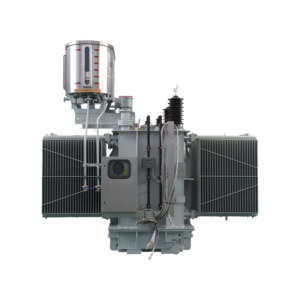
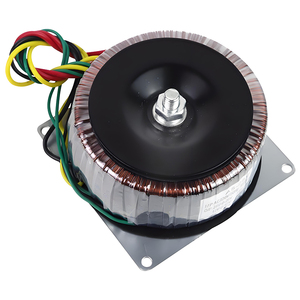
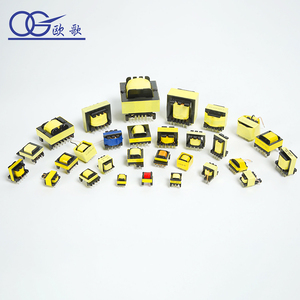
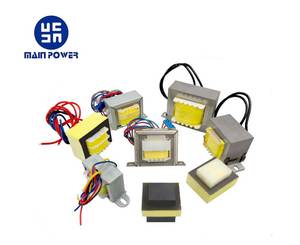
Explore our technical portfolio of high-efficiency distribution transformers, toroidal auto-transformers, and modular low-voltage distribution assemblies manufactured for global power reliability.
Enterprise Infrastructure & Corporate Capabilities
As a premier Chinese manufacturer of Low Voltage (LV) switchgear assemblies, electrical distribution panels, and power transformers, we deliver field-proven reliability backed by stringent international quality frameworks.
Custom OEM/ODM Engineering
Tailor-made low voltage switchgear panels, busbar trunking setups, and step-down autotransformers designed to exact site dimensions and technical tender specifications.
IEC 61439 Form Separation
Full compliance with IEC 61439-1/2 standard architectures, supporting Form 1 up to Form 4b internal segregation for maximum operational safety and maintenance isolation.
Rigorous Type-Testing Validation
Every product line undergoes comprehensive routine and design verification, including short-circuit withstand ($I_{cw}$ up to 100kA), dielectric withstand, and temperature-rise limits.
Green Grid Thermal Efficiency
Utilizing high-grade CRGO silicon steel cores, low-loss copper windings, and advanced thermal simulation to minimize no-load operational losses across industrial grids.
Technical Deep-Dive: Low Voltage Switchgear & Transformer Architecture
Information Gain White Paper for Electrical Engineers, EPC Consultants, and Global Procurement Officers.
1. Standards Alignment: IEC 61439-1/2 & IEEE Technical Compliance
Low voltage (LV) switchgear serves as the operational nerve center for industrial facilities, commercial complexes, and utility substations. Modern electrical networks demand low voltage switchgear assemblies capable of managing nominal currents up to 6300A with nominal operational voltages up to 1000V AC. Compliance with IEC 61439-1 (General rules) and IEC 61439-2 (Power switchgear and controlgear assemblies) guarantees structural integrity, thermal safety, and short-circuit capability under harsh environmental stress.
Key design criteria require strict adherence to Internal Arc Classification (IAC). In the event of an internal flashover, our switchgear enclosures direct explosive gases and thermal energy away from operator corridors through designated pressure-relief channels, preserving operator safety and minimizing peripheral hardware damage.
2. Busbar Thermal Dynamics & Short-Circuit Withstand ($I_{cw}$)
Busbar design is critical to avoiding thermal degradation during peak load cycles. We utilize high-purity, tin-plated E-CU electrolytic copper busbars configured for high current density and optimal surface heat dissipation. System busbars are engineered to withstand prospective short-circuit currents up to 100kA for 1 second ($I_{cw}$), with peak withstand currents ($I_{pk}$) exceeding 220kA.
Dynamic electromagnetic forces generated during short-circuit faults are absorbed by reinforced glass-fiber reinforced polyamide busbar supports. This prevents mechanical distortion, phase-to-phase flashover, and systemic busbar displacement during grid transients.
| Technical Parameter | Low Voltage Switchgear (LV-PSS) | Compact Substation (YBW / CSS) | Industrial Auto Transformer (SBK) |
|---|---|---|---|
| Governing Standard | IEC 61439-1/2, GB/T 7251.12 | IEC 62271-202, GB/T 17467 | IEC 60076, IS 1180, IEEE C57 |
| Rated Operational Voltage | Up to 1000V AC (50/60Hz) | MV: 12kV–36kV / LV: 400V | 220V, 380V, 415V, 440V, 550V |
| Rated Busbar Current | 630A to 6300A | 400A to 2500A | 10KVA to 1500KVA Equivalent |
| Short-Time Withstand ($I_{cw}$) | 50kA / 80kA / 100kA (1s) | 20kA / 25kA (1s MV Side) | Custom Short-Circuit Withstand |
| Ingress Protection Rating | IP31, IP42, IP54, IP65 | IP44 Outdoor / IP54 Compartment | IP20 (Indoor) to IP54 (Enclosed) |
| Internal Segregation Form | Form 1 to Form 4b | Physical Partition (MV/XFRM/LV) | Class H / Class F Insulation Barrier |
Future Sourcing Trends in LV Switchgear & Electrical Transformers
Anticipating global energy transitions, digital grid integration, and eco-friendly procurement requirements for 2025–2030.
Digital Twin Integration & Predictive Diagnostics
Modern LV switchgear is evolving into intelligent edge nodes. Procurement focus has shifted toward assemblies integrated with wireless temperature monitoring sensors along busbar joints, continuous online Partial Discharge (PD) monitoring, and Modbus/IEC 61850 communication gateways for predictive maintenance.
SF6-Free Air Insulation & Synthetic Esters
Global environmental regulations are accelerating the removal of SF6 gas in distribution substations. Sourcing trends prioritize solid-insulated switchgear (SIS) and eco-friendly synthetic ester fluids (biodegradable per IEC 61099), dramatically reducing carbon footprints and fire hazards.
Solar & Wind Inverter-Duty Multi-Winding Units
With solar PV plants and wind farms scaling globally, step-up transformers must handle heavy harmonic distortion (THD) and rapid solar-ramp cycles. Inverter-duty transformers engineered with high K-factor ratings (K-13 to K-20) and electrostatic shielding are becoming mandatory procurement specs.
Pre-Fabricated Skid Substations (CSS)
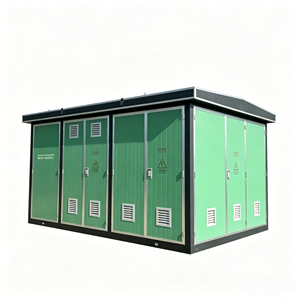
On-site civil construction delays are driving demand for factory-assembled, plug-and-play Compact Substations (YBW models). Pre-commissioned skids integrating MV ring main units, low loss transformers, and LV distribution boards cut project field setup times by up to 70%.
Ultra-Low Loss Amorphous Alloys
Energy efficiency standards (such as EU Ecodesign Tier 2 and BIS Level 3) mandate steep reductions in no-load core losses. The adoption of amorphous metal alloy cores in auto-transformers and distribution units reduces idle losses by up to 60% compared to traditional silicon steel.
Active Arc Extinguishing Systems
Passive arc containment is being augmented by active optical sensors that detect arc flashes in under 2 milliseconds. Sourcing specifications increasingly mandate ultra-fast protective trips to instantly isolate fault zones before pressure waves damage structural busbars.
Technical Procurement Guide for EPC Contractors & Project Engineers
A structured evaluation framework to optimize system longevity, total cost of ownership (TCO), and operational safety when sourcing low voltage electrical distribution hardware.
Environmental & Load Profiling
Evaluate ambient operating temperatures, altitude derating (>1000m), humidity, and seismic conditions. Match enclosure protection ratings (IP31 to IP65) and select appropriate insulation thermal classes (Class F or Class H).
Fault Level & Short-Circuit Calculation
Determine maximum prospective short-circuit fault currents at the installation point. Specify busbar $I_{cw}$ (kA/1s) and $I_{pk}$ ratings to prevent busbar collapse during downstream short circuits.
Internal Segregation & Safety Form
Choose the correct Form of Separation based on maintenance protocols. Industrial continuous-process plants require Form 4b separation so individual functional units can be serviced safely while adjacent compartments remain energized.
Total Cost of Ownership (TCO) Analysis
Calculate long-term operational expense by evaluating load ($P_k$) and no-load ($P_0$) transformer energy losses. Selecting higher-grade low loss core materials yields substantial lifecycle ROI over 20-30 years.
Frequently Asked Questions (FAQ) - Procurement & Technical
Detailed technical responses to common engineering and commercial procurement queries regarding our LV switchgear and transformer manufacturing capabilities.
Form 3b separates functional units from one another and isolates busbars from all functional units, but outgoing cable terminals are not separated from each other. Form 4b provides complete internal separation: functional units are separated from each other, busbars are isolated, and individual outgoing cable terminals for each functional unit are enclosed in their own distinct metallic or non-metallic compartments. Form 4b is recommended for critical industrial plants where live maintenance on one circuit must be performed without exposing technicians to adjacent energized cabling.
Copper conductors possess higher electrical conductivity and lower thermal expansion, resulting in a more compact coil size, lower $I^2R$ losses, and superior resistance to mechanical short-circuit forces. Aluminum conductors offer a significantly lighter weight and cost-effective capital expenditure. When properly engineered with larger cross-sectional areas to compensate for resistivity, aluminum-wound transformers provide reliable thermal performance adhering to the same temperature rise limits (65K oil / 100K winding).
Non-linear loads generate high harmonic currents (3rd, 5th, 7th, 11th orders), which cause skin-effect heating in conductors and stray eddy-current losses in transformer windings. Standard transformers require derating or must be specified with a K-Factor rating (typically K-9, K-13, or K-20). K-factor rated transformers incorporate double-sized neutral conductors, electrostatic grounding shields between primary/secondary windings, and customized coil geometry to suppress harmonic heating without core saturation.
Short-circuit withstand capability is validated through type-testing in accredited high-power test laboratories according to IEC 61439-1 section 10.11. The assembly is subjected to a calibrated short-circuit current for a specified duration (e.g., 50kA for 1.0 second), followed by a peak impulse test ($I_{pk}$). Post-test verification checks dielectric insulation integrity, ensures busbar support insulation remains un-cracked, and confirms that enclosure deformation does not compromise clearance distances or IP protection levels.
Class F insulation systems are rated for a maximum operating temperature of 155°C, with a nominal temperature rise limit of 100°C above a 40°C ambient baseline. Class H insulation systems are rated for a maximum operating temperature of 180°C, accommodating a nominal temperature rise limit of 125°C. Utilizing Class H insulation materials (Nomex, silicone resin, high-temp enamel) provides an extra thermal safety margin, protecting transformers against severe overload spikes and high ambient ambient factory operating conditions.
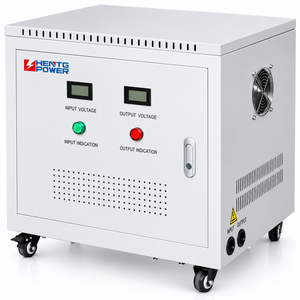
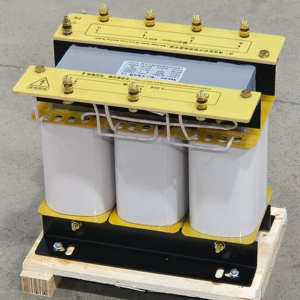
Yes. We specialize in custom OEM step-up and step-down autotransformers (such as our SBK and Toroidal 10KVA-150KVA series) engineered to adapt regional utility voltages (e.g., North American 208V/240V/480V at 60Hz) to standard Asian, European, or South American machine tool voltages (380V/400V/415V at 50Hz). Units are available with tap-changing selectors, dual-frequency cores, and customized multi-tap output terminals.
YBW model compact substations are designed with IP44 or IP54 weather-proof enclosures constructed from anti-corrosive composite materials, stainless steel, or aluminum-zinc alloy sheets. Thermal management is maintained via double-walled insulated roofing, anti-condensation space heaters, automatic forced-air ventilation louvers, and sealed internal partitions separating the Medium Voltage Ring Main Unit (RMU), Transformer compartment, and Low Voltage distribution board.
Standard production lead times for custom low voltage switchgear panels and distribution transformers range from 3 to 6 weeks depending on structural complexity and component availability. Factory Acceptance Testing (FAT) is conducted in our certified testing bay prior to shipment, where clients or third-party inspectors (SGS, TUV, Bureau Veritas) verify dimensional compliance, wiring schematics, insulation resistance, primary current injection, and functional tripping operations.
Partner with China's Premier LV Switchgear Supplier
Contact our senior electrical engineering team today to receive comprehensive technical data sheets, single-line diagram (SLD) reviews, project quotations, and complete product catalogs.