Featured Electrical Distribution & Transformer Solutions
Engineered to global IEC & GB standards, our top-tier distribution boxes, step-up/step-down auto transformers, and compact substations deliver uncompromised energy efficiency, thermal stability, and operational reliability.
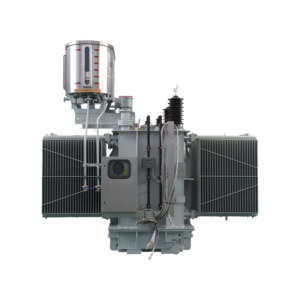
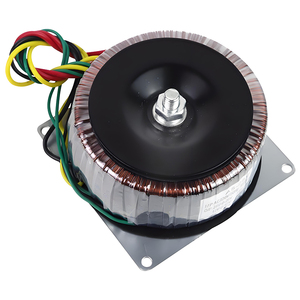
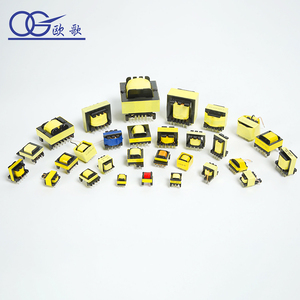
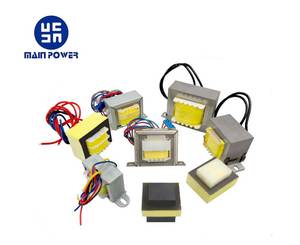
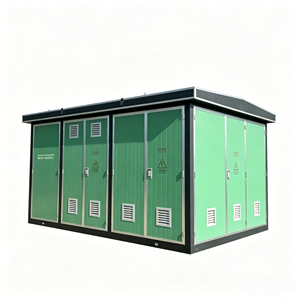
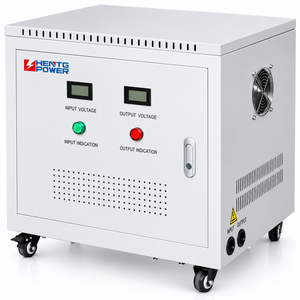
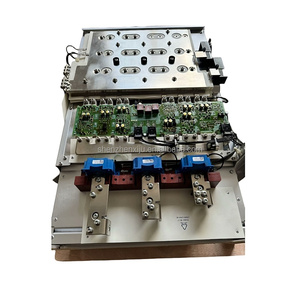
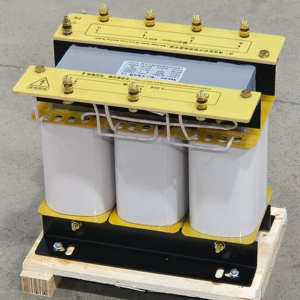
Why Partner With Us: Engineering Excellence & E-E-A-T Capabilities
As a premiere Chinese manufacturer and exporter of low-voltage distribution boxes, switchgear panels, and transformers, we maintain an uncompromising commitment to power safety, precision engineering, and global compliance standards.
Strict ISO 9001 & IEC Compliance
Every distribution box and transformer is built under ISO 9001:2015 certified workflows, fulfilling stringent IEC 61439-1/2, CE, and BIS standards. We perform rigorous in-house dielectric strength, temperature rise, and short-circuit withstand testing prior to shipment.
Advanced Modular Customization
We provide full OEM/ODM manufacturing. From IP65/IP66 enclosure sheet metal fabrication (cold-rolled steel, 304/316L stainless steel, SMC fiberglass) to complex internal busbar layouts, circuit breaker integration, and smart digital metering options.
Global OEM Supply Chain Infrastructure
With over 15+ years serving EPC contractors, power utilities, industrial plants, and commercial developers in 50+ countries, our supply chain ensures rapid lead times, factory-direct wholesale pricing, and lifetime technical support.
Technical Whitepaper: Engineering Next-Generation Distribution Boxes for Industrial & Smart Grid Infrastructure
1. Functional Architecture & Internal Segregation (Form 1 to Form 4)
In modern industrial low-voltage power distribution, a distribution box (DB) acts as the critical nerve center connecting primary transformers, sub-circuits, protection units, and terminal equipment. Standard commercial enclosures often fail when exposed to harsh industrial conditions, high fault currents, or harmonic pollution. Achieving long-term operational uptime requires adhering strictly to International Electrotechnical Commission standard IEC 61439-2.
Depending on operational criticalities, distribution boxes are classified by their internal form of separation (Forms 1 through 4b):
- Form 1: Basic enclosure without internal segregation between busbars, functional units, or connection terminals. Typical for light residential or commercial sub-panels.
- Form 2 (2a / 2b): Segregation of busbars from functional units. Form 2b ensures terminals are also separated from busbars, mitigating accidental arc flashes during field wiring.
- Form 3 (3a / 3b): Separation of busbars from functional units AND separation of all functional units from each other. Form 3b guarantees terminal connection spaces are independently partitioned, safeguarding technicians during live maintenance.
- Form 4 (4a / 4b): The gold standard for heavy industrial plants, data centers, and marine applications. All functional units, incoming/outgoing terminals, and main busbars are entirely isolated in separate metal-clad compartments.
| Enclosure Material Class | Tensile Strength / Mechanical Impact | Corrosion & Chemical Resistance | Thermal Dissipation Capacity | Target Industrial Application |
|---|---|---|---|---|
| Cold-Rolled Steel (SPCC) | High (IK08 - IK10) | Moderate (Requires Epoxy Powder Coating) | Excellent Conduction | Indoor Commercial, Clean Industrial Facilities |
| Stainless Steel (304 / 316L) | Ultra-High (IK10+) | Superior (Salt Spray Test > 1000 Hrs) | Moderate Conduction | Offshore Platforms, Chemical Plants, Marine |
| SMC Fiberglass (Unsaturated Polyester) | High Flame Retardancy (V0 Grade) | Immune to Rust & Acid Attack | Low (Requires Ventilation Design) | Outdoor Telecom, Solar PV Junction Boxes |
| Aluminum-Zinc Alloy Steel (Galvalume) | High Resistance to Deformity | High Self-Healing Oxide Layer | High Thermal Conductivity | Compact Substations & Outdoor Distribution Cabinets |
2. Thermal Dynamics, Heat Dissipation & Ingress Protection Balancing
One of the primary causes of premature electrical failure in distribution boxes is thermal runaway caused by internal copper I²R joule heating combined with solar radiation or high ambient temperatures. When circuit breakers, magnetic contactors, and toroidal or ferrite step-down transformers operate in sealed IP65 or IP66 enclosures, internal ambient temperatures can rise by 30°C to 50°C above external levels.
If unmanaged, elevated temperatures degrade wire insulation, trigger thermal-magnetic breaker nuisance tripping, and reduce electrical lifespan by 50% for every 10°C rise over rated operational limits (Arrhenius Rate Theory). To solve this, advanced OEM manufacturing employs multi-dimensional thermal modeling:
Phase-Change Labyrinth Vents
Specialized IP55/IP65 ventilation louvers with internal hydrophobic membranes allow heat to escape while stopping water droplets, fine dust, and condensation accumulation.
Thermoelectric & Forced Air Cooling
For high-power distribution boxes hosting smart meters or variable speed drives, integrated smart thermostat-controlled fans or heat exchangers maintain fixed interior microclimates.
Busbar Silver-Plating & Sizing
High-purity E-CU 58 copper busbars with electro-tin or silver plating at contact points drastically reduce contact resistance and localized hot spots within the main trunking.
3. Busbar Dynamic Short-Circuit Withstand Capability (Icw & Ipk)
During short-circuit fault conditions, distribution boxes experience extreme electrodynamic forces acting between adjacent busbars. The peak withstand current (Ipk) can create mechanical stresses exceeding thousands of Newtons per meter, capable of bending unreinforced copper bars or snapping insulator supports.
Our engineered distribution boxes incorporate reinforced high-dielectric glass-fiber reinforced polyamide busbar supports, structurally validated via finite element analysis (FEA) to endure short-time withstand currents (Icw) up to 50kA/1s or 100kA/1s without structural deformation or dielectric breakdown.
Global B2B Sourcing Trends: The Shift Toward Smart & Green Distribution Enclosures
Procurement directors and EPC project managers are altering their procurement criteria. Price-per-unit is no longer the sole decision metric; Total Cost of Ownership (TCO), grid intelligence integration, and sustainability now drive purchasing decisions.
1. IoT & Edge Sensing Integration
Distribution boxes are evolving from passive metal junction enclosures into intelligent edge devices equipped with wireless IoT sensors, optical fiber temperature monitoring at busbar joints, digital residual current meters (RCD), and RS485 / Modbus / Zigbee communication protocols for predictive maintenance.
2. Renewable Energy & DC Combiner Solutions
With rapid solar PV, energy storage system (ESS), and EV charging station deployments worldwide, procurement demand for high-voltage DC distribution boxes (1000V DC / 1500V DC) with specialized DC molded case circuit breakers (MCCB) and surge protection devices (SPD Class I+II) has surged by over 40% year-over-year.
3. Modular Rapid-Deployment Architecture
To decrease expensive on-site installation labor, global buyers prioritize pre-wired, factory-assembled, plug-and-play distribution boxes. Standardized DIN-rail configurations, snap-in terminal blocks, and custom pre-punched knockouts reduce field commissioning time by up to 60%.
Frequently Asked Questions (Technical & Procurement FAQ)
Comprehensive answers to common technical queries from power system engineers, procurement specialists, and global importers.
Request a Custom Quote & Technical Consultation Today
Need custom distribution boxes, auto transformers, or compact substation solutions tailored to your engineering specifications? Our technical engineering team provides fast 24/7 technical support and competitive factory-direct pricing.