Executive Engineering Overview: The Physics and Economic Superiority of Auto Transformers
In high-voltage power transmission, industrial motor regulation, electric traction railways, and renewable energy substations, the selection of power transformation equipment dictates the operational expenditure (OPEX) and capital expenditure (CAPEX) of utility grids. As premier China Auto Transformers Factory & Exporters, our engineering philosophy centers on maximizing electromagnetic efficiency through single-winding co-winding autotransformer topology.
Unlike conventional dual-winding transformers—where primary and secondary circuits are linked exclusively via magnetic induction—an autotransformer utilizes a common magnetic circuit and a single continuous winding tapped at intermediate points. This direct electrical coupling alongside magnetic coupling yields significant physical and electrical advantages: reduced core mass, minimal copper volume, lowered no-load losses ($P_0$), and suppressed short-circuit reactance when operating near unity step ratios ($K = V_2 / V_1 \approx 1$).
“The equivalent physical sizing ($S_{eq}$) of an autotransformer relative to a traditional two-winding transformer is governed by the transformation ratio: $S_{eq} = S_{auto} \times (1 - V_L / V_H)$. When stepping voltage from 380V to 415V or 220V to 380V, physical core volume drops by up to 60%, drastically cutting raw material costs while enhancing power density.”
Electromagnetic Topology & Loss Optimization Dynamics
The reduction in copper requirements directly translates to lower winding resistance ($R_{ac}$), minimizing load losses ($P_k = I^2 R$). Furthermore, by utilizing High-Permeability Grain-Oriented Silicon Steel (CRGO grade M0H and M4 silicon steel sheets) stacked via 45-degree full-mitred step-lap joints, our core structures suppress eddy current circulation and hysteresis loss. This achieves ultra-low no-load current ($I_0 < 0.5\%$) and ultra-quiet acoustic footprints (< 55 dBA), complying with stringent EU Ecodesign Tier 2 standards and IEEE C57.12 guidelines.
High-Density Co-Winding
Eliminating isolated secondary windings allows maximum slot fill factors. Oxygen-free copper magnet wire ensures superior thermal conductivity and low resistance.
Thermal Management
Engineered forced air (ANAF/ONAF) and natural convection cooling ducts prevent thermal hot-spots, extending Class H insulation life beyond 30 years.
Dielectric Impulse Withstand
Vacuum Pressure Impregnation (VPI) combined with high-grade epoxy resin delivers dielectric breakdown insulation exceeding 55kV impulse withstand levels.
Technical Deep-Dive: Product Application Spectrum & Engineering Customizations
Global industrial applications demand tailored electromagnetic solutions. As verified Chinese exporters supplying over 50 nations, our autotransformer production lines accommodate diverse operational challenges:
| Transformer Series | Voltage Ratings | Capacity Range | Cooling & Enclosure | Primary Application Target |
|---|---|---|---|---|
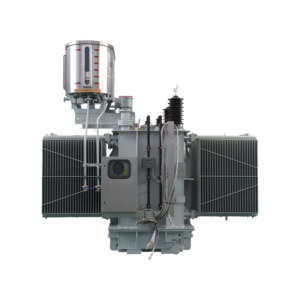
| Railway Traction Auto Series | 55kV / 2x27.5kV | 5 MVA - 25 MVA | ONAN / ONAF Oil-Immersed | High-speed rail catenary power supply, traction substations |
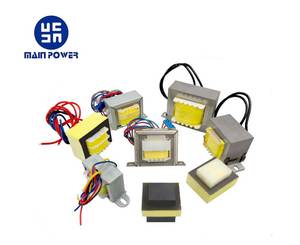
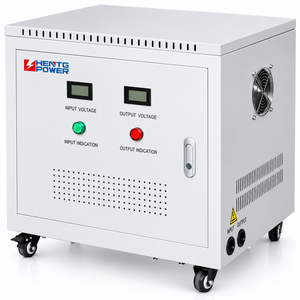
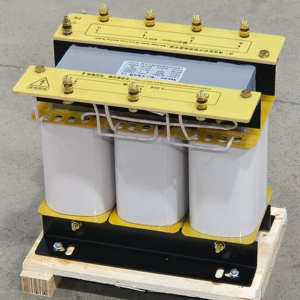
| Industrial 3-Phase Auto Series (SBK/YBW) | 220V / 380V / 415V / 440V | 10 KVA - 500 KVA | IP20 / IP44 Dry-Type & VPI | CNC machinery, factory automation, imported equipment adaptation |
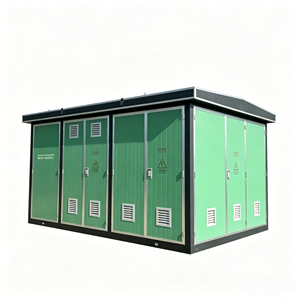
| Modular Compact Substation Auto Units | 10kV to 35kV Step-Down | 500 KVA - 3150 KVA | IP54 Outdoor Modular Container | Urban grid distribution, solar PV plants, wind power farms |
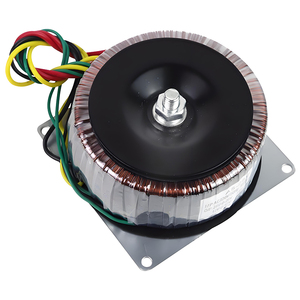
| Precision Toroidal Step-Up/Down | 12V to 38V / 110V / 220V | 100W - 10 KVA | Dry Type Annular Core | Variable frequency drives (VFD), medical equipment, audio isolation |
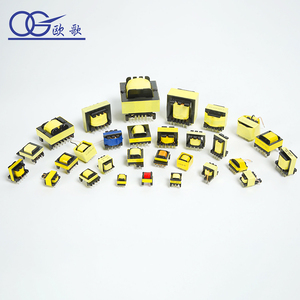
| High-Frequency Ferrite Driver Series | Custom Input/Output | 5W - 500W | EF25 / EFD Core Encapsulated | LED drivers, switched-mode power supplies (SMPS), telecommunications |
Future Procurement Trends for Global Auto Transformer Buyers
The global transition toward decarbonization, microgrids, and electrified logistics is rapidly changing B2B procurement requirements for power transformers. International procurement engineers and EPC contractors must evaluate several critical trends when sourcing from Chinese manufacturers:
1. Total Cost of Ownership (TCO) Valuation
Procurement managers are shifting away from initial purchase price (CAPEX) toward TCO evaluations over a 25-year lifecycle. High-efficiency autotransformers with low load losses save tens of thousands of dollars in capitalized energy waste. China's top factories now provide verified loss test certificates (FAT) adhering to zero-tolerance loss margins under IEC 60076-1.
2. Integration with Non-Linear Loads & Harmonics
Industrial power systems heavily rely on Variable Frequency Drives (VFDs), solar inverters, and arc furnaces that generate K-factor harmonics (3rd, 5th, 11th, 13th order). Modern autotransformers incorporate electrostatic copper shielding, stray flux suppression barriers, and neutral bus reinforcements to withstand harmonic heating without derating capacity.
3. Biodegradable Ester Liquids & Dry-Type Adoption
Environmental regulations in Europe and North America favor synthetic and natural ester transformer oils over traditional mineral oil. Natural ester fluids provide higher flash points (> 300°C), eliminating fire risks while offering 100% biodegradability. Simultaneously, resin-cast dry-type autotransformers are dominating indoor commercial installations.
4. IoT Smart Sensing & Remote Condition Monitoring
Substation autotransformers are increasingly equipped with digital sensors for Dissolved Gas Analysis (DGA), fiber-optic real-time winding hotspot temperature monitoring, and oil moisture tracking. Integrated RS485/Modbus or IEC 61850 communication protocols allow predictive maintenance via SCADA systems.
Future Industry Development & Technological Roadmap
Looking toward the 2030 energy horizon, autotransformer manufacturing is undergoing a paradigm shift characterized by material science breakthroughs and automated production techniques.
Amorphous Alloy Cores: The application of amorphous metal ribbons (Fe-Si-B alloys) in autotransformer cores is drastically lowering no-load losses by up to 70-80% compared to traditional silicon steel. While amorphous metal requires specialized stress-free core frames, Chinese factories are leading commercial scale-up for distribution networks.
Smart Grid Voltage Stabilization: With widespread distributed solar generation fed into medium-voltage distribution networks, localized voltage spikes occur frequently. On-Load Tap Changing (OLTC) autotransformers with solid-state thyristor switches enable rapid micro-second voltage regulation, preventing grid trip-outs.
Enterprise Technical Advantage & Export Infrastructure
Backed by over 15 years of manufacturing excellence, our state-of-the-art Vadodara and Chinese production facilities feature advanced vacuum drying chambers, automated toroidal winding machinery, high-voltage partial discharge testing laboratories, and impulse generator banks capable of handling up to 25 MVA / 66 KV class units.
Every unit leaves our facility certified under strict quality management systems (ISO 9001:2015) and fully compliant with Bureau of Indian Standards (BIS IS 1180: Part 1: 2014), CE directives, and ANSI/IEEE standards.