Featured Vacuum Breakers & Transformer Apparatus
Engineered for extreme dielectric endurance, low chopped current, and zero-maintenance operational safety across international electrical grids.
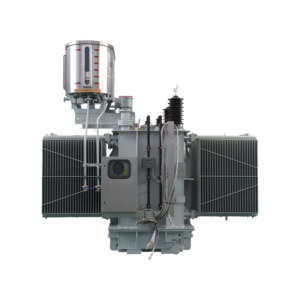
CE Certified 55kV 2x27.5kV Railway Vacuum Breaker & Auto Transformer
Designed for heavy-haul electric railway traction grids, featuring ultra-low energy dissipation and rapid arc quenching.
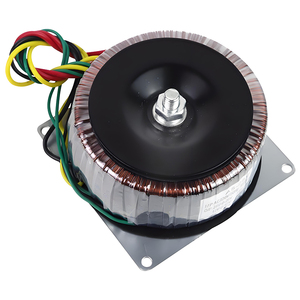
Customizable Isolation & Auto-Transformer Vacuum Breaker Unit
Precision-wound toroidal core integrated with high-vacuum interrupters for multi-tapped industrial output regulation.
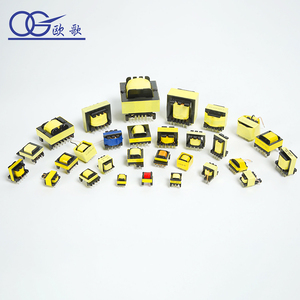
Compact Step-Down Constant-Current Vacuum Switchgear Module
High-frequency ferrite core vacuum interruption unit tailored for auxiliary control power and automated driver circuits.
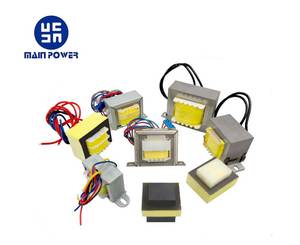
Heavy-Duty Commercial 220V Auto Distribution Vacuum Breaker
Square-format distribution breaker unit engineered for 60Hz commercial infrastructure and uninterrupted load switching.
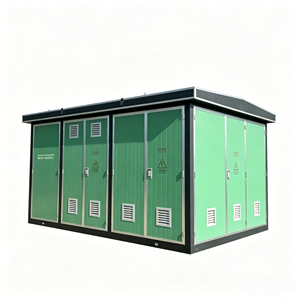
Modular 3-Phase Compact Substation Vacuum Breaker (YBW IP44)
Fully enclosed outdoor compact substation combining medium-voltage vacuum switchgear, transformer, and low-voltage distribution.
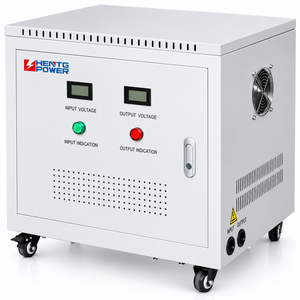
10KVA 220V to 380V 3-Phase Step Up/Down Vacuum Interrupter
Industrial-grade 3-phase aluminum winding autotransformer vacuum breaker unit designed for smooth phase shifting and voltage adaptation.
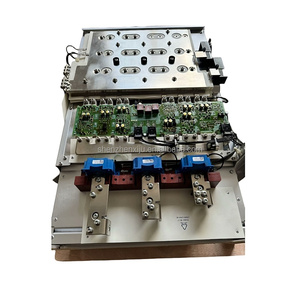
High-End Industrial Fan Transformer & Vacuum Protection Panel
Precision replacement fan transformer assembly equipped with high-durability vacuum switching contacts for severe duty cooling systems.
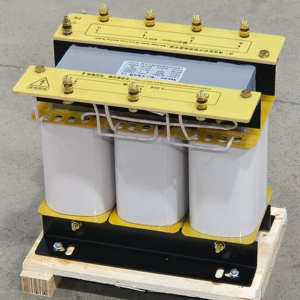
SBK Series 3-Phase Vacuum Isolation & Breaker Assembly
Heavy-capacity isolation breaker unit (up to 150KVA) supporting copper/aluminum windings for plant power conditioning.
China's Vacuum Breaker Manufacturing Ecosystem & Enterprise Benchmarks
A comprehensive evaluation of manufacturing capabilities, metallurgic processing, cleanroom vacuum assembly, and quality assurance frameworks for international procurement managers.
1. The Global Demand Shift Towards Chinese High-Voltage Vacuum Switchgear
The global power distribution landscape is undergoing a monumental energy transition. Utility operators, renewable energy developers, industrial megaprojects, and electrified railway networks are aggressively upgrading grid protection infrastructure. At the center of this transformation is the Vacuum Circuit Breaker (VCB) and Vacuum Interrupter (VI) technology. China has solidified its position as the world's primary hub for advanced vacuum breaker manufacturing, leveraging unmatched supply chain integration, raw material refining (high-purity copper-chromium alloys), and automated manufacturing lines.
Leading Chinese manufacturers, working in synergy with international engineering standards such as ISO 9001:2015, IEC 62271-100, and regional certifications including BIS (IS 1180) and CE mark, now supply over 60% of global vacuum switchgear components. Key manufacturing clusters across Zhejiang, Jiangsu, Guangdong, and collaborative international industrial complexes (such as Vadodara industrial hubs) offer scalable OEM/ODM production ranging from medium-voltage distribution units (12kV–36kV) to high-voltage railway protection systems (55kV 2x27.5kV).
Key Procurement Insight: Sourcing vacuum breakers from premier manufacturers requires evaluating more than unit cost. EPC buyers must inspect contact alloy composition (CuCr25 vs CuCr50), vacuum degasification standards (<10-5 Pa), and type-test verification from independent short-circuit laboratories (STL/KEMA/CESI).
2. Enterprise Manufacturing Advantages & Technical Capabilities
Rooted in over 15 years of continuous electrical engineering innovation under the Pooja Group of Industries and Volta Green Energy manufacturing ecosystem, our facilities embody the gold standard in high-voltage apparatus production. Combining state-of-the-art Chinese vacuum interrupter brazing technology with rigorous quality control, our enterprise provides distinct competitive advantages:
Class 10,000 Cleanroom Vacuum Assembly
Vacuum interrupters are assembled and sealed inside ultra-clean environments utilizing automated high-vacuum brazing furnaces to prevent micro-particulate contamination and preserve dielectric integrity.
APG Solid Embedded Pole Technology
Utilizing Automatic Pressure Gelation (APG) epoxy casting, vacuum interrupters are encapsulated in solid resin poles, delivering immunity against dust, moisture, salt fog, and ambient pollution.
Rigorous In-House Type Testing
Every batch undergoes full dielectric withstand, lightning impulse withstand (BIL up to 185kV), temperature rise testing, and Class M2 mechanical endurance tests (10,000 operations without adjustment).
Custom OEM/ODM Integration
From compact indoor draw-out VCBs to outdoor pole-mounted reclosers and 55kV traction transformers, our design team provides fully tailored busbar connections, secondary wiring, and control logic.
Technical Architecture & Dielectric Physics of Vacuum Interrupters
An engineering analysis of vacuum arc interruption, contact alloy metallurgy, magnetic field geometry, and insulation recovery.
1. The Physics of Vacuum Arc Quenching & Chopped Current Control
Unlike air circuit breakers or SF6 switchgear that rely on gaseous media to cool and extinguish electrical arcs, a vacuum circuit breaker operates in a ultra-high vacuum medium (<10-5 Pa). When contact separation occurs under fault conditions, an electric arc is initiated by metal vaporized from the contact surface (diffuse arc mode). As the alternating current approaches natural current zero, the vapor production ceases, and the metal vapor rapidly condenses on the surrounding contact surfaces and protective metal shield within microseconds.
The rate of dielectric recovery in a vacuum envelope is drastically faster than any gaseous insulation. However, a critical design parameter in vacuum breaker engineering is controlling chopped current. When breaking light inductive currents (such as no-load transformers or reactor circuits), premature arc extinction before natural current zero can induce high-voltage switching surges ($V = L \cdot \frac{di}{dt}$). Our vacuum interrupters utilize proprietary Copper-Chromium (CuCr25 / CuCr50) contact alloys produced via vacuum induction melting. This alloy maintains a low chopping current limit (<2.0 Amperes), effectively eliminating switching overvoltages and protecting downstream insulation.
2. Magnetic Field Contact Structure: AMF vs. RMF Geometry
At high short-circuit interruption currents (e.g., above 20kA), the vacuum arc transitions from a diffuse state to a constricted arc mode, concentrating high thermal energy on localized contact spots. To prevent contact melting and severe erosion, modern vacuum breakers employ advanced magnetic field contact structures:
- Radial Magnetic Field (RMF) Contacts: Spiral-grooved contact structures generate a magnetic field perpendicular to the arc axis, forcing the arc root to continuously rotate rapidly around the contact perimeter at high speed, uniformly distributing thermal stress.
- Axial Magnetic Field (AMF) Contacts: Coil-type underlying structures establish a magnetic field parallel to the arc current. This magnetic field keeps the vacuum arc in a diffuse state even at extremely high breaking currents (up to 50kA/63kA), resulting in minimal contact erosion, low internal pressure rise, and extended electrical life (Class E2 duty).
3. Technical Benchmarking: Vacuum vs. SF6 vs. Air Circuit Breakers
When specifying protective apparatus for power substations, procurement engineers must weigh dielectric performance, environmental regulations, and life-cycle costs. The following matrix illustrates key performance metrics:
| Engineering Parameter | Vacuum Circuit Breaker (VCB) | SF6 Gas Breaker (GCB) | Air Circuit Breaker (ACB) |
|---|---|---|---|
| Dielectric Recovery Speed | Ultra-Fast (Microseconds) | Moderate | Slow |
| Environmental Impact (GWP) | Zero GWP (Eco-Friendly) | High GWP (SF6 = 23,500x CO2) | Zero GWP |
| Electrical Endurance (Class) | Class E2 (10,000+ Operations) | Class E1 (Moderate) | Low (Frequent Maintenance) |
| Mechanical Endurance (Class) | Class M2 (up to 30,000 ops) | Class M1 (10,000 ops) | Class M1 |
| Contact Wear & Maintenance | Maintenance-Free Sealed Pole | Gas Refilling & Leak Checks | Contact Cleaning & Dressing |
| Sub-Zero Temperature Duty | Superior (-40°C to +55°C) | Gas Liquefaction Risk below -30°C | Moderate |
| Total Cost of Ownership (TCO) | Lowest (30-Year Lifecycle) | High (Regulatory Compliance & Handling) | Moderate |
Future Procurement Trends & Technological Roadmaps
Anticipating regulatory changes, eco-design mandates, smart grid digital integration, and ultra-high-voltage vacuum switching innovation over the next decade.
1. Total Phase-Out of SF6 & Migration to Clean-Air Vacuum Units
Environmental regulations, including the European Union's updated F-Gas Regulation and global Net-Zero carbon mandates, are imposing strict bans and heavy taxes on SF6 fluorinated greenhouse gases. The market is accelerating its shift toward Dry-Air insulated Vacuum Circuit Breakers and Solid Embedded Pole (SEP) designs. By 2030, clean-air vacuum switchgear will dominate medium-voltage grid deployments up to 72.5kV globally.
2. IoT-Enabled Smart Breakers with Real-Time Health Diagnostics
Procurement mandates increasingly demand intelligent switchgear capable of continuous condition monitoring. Next-generation vacuum breakers integrate embedded optical fiber temperature sensors, mechanical travel transducers, and wireless Partial Discharge (PD) monitors. Predictive maintenance algorithms analyze contact erosion and mechanism velocity in real-time, preventing catastrophic outages and optimizing asset management.
3. Expansion into High-Voltage Transmission (126kV–252kV)
Historically restricted to medium-voltage applications (≤40.5kV), breakthrough research in multi-break series vacuum interrupters and single-break high-voltage vacuum chambers now enables vacuum switching at 126kV and 252kV power transmission sub-stations, establishing a new paradigm for zero-emission transmission grids.
4. Modular Substation Integration & Compact Eco-Designs
Urbanization and land cost constraints demand radical reductions in substation footprints. Future procurement favors factory-assembled, plug-and-play Compact Substations (YBW model structures) that integrate vacuum circuit breakers, high-efficiency auto-transformers, and intelligent low-voltage panels inside a unified weather-proof IP44 enclosure.
Frequently Asked Technical & Sourcing Questions
Clear engineering answers to assist power engineers, procurement experts, and EPC contractors during vendor qualification.
Q1 What critical parameters should be evaluated when selecting a China vacuum breaker manufacturer?
Key evaluation criteria include: (1) Quality Certifications (ISO 9001:2015, ISO 14001, CE, BIS IS 1180); (2) Type Test Reports from STL-accredited laboratories (such as KEMA, CESI, or XIHARI) verifying short-circuit breaking capacity, BIL impulse withstand, and temperature rise; (3) In-house manufacturing depth—specifically cleanroom class for vacuum interrupter assembly and APG resin casting equipment; (4) Contact metallurgy (CuCr alloy quality); and (5) Proven track record in international exports with documented field operational hours.
Q2 How does vacuum interrupter contact material affect breaker lifespan and dielectric recovery?
Contact material directly governs arc erosion, welding resistance, and current chopping. High-purity Copper-Chromium alloys (CuCr25 or CuCr50) produced via vacuum induction melting offer superior dielectric recovery speeds, minimal chopping currents (<2A), high short-circuit withstand capabilities, and resistance to contact welding during high-inrush closing operations.
Q3 What are the advantages of Solid Embedded Pole (SEP) construction over air-insulated poles?
Solid Embedded Pole technology encapsulates the fragile vacuum interrupter and primary conductive terminals inside epoxy resin using the Automatic Pressure Gelation (APG) process. This solid insulation shields the interrupter from environmental hazards such as humidity, condensation, dust, chemical vapors, and coastal salt corrosion, eliminating surface flashover risks and rendering the pole assembly virtually maintenance-free.
Q4 Can Volta vacuum breaker assemblies handle harmonic-rich environments in solar and wind plants?
Yes. Renewable energy installations generate high harmonic distortion due to solar inverter high-frequency switching and wind power converters. Our vacuum breakers and inverter-duty autotransformers are specifically custom-engineered with reinforced insulation, electrostatic shielding, and de-rated thermal margins to absorb non-linear loads and harmonic heating without premature insulation degradation.
Q5 What is the standard mechanical and electrical operating life (Class M2/E2) of these breakers?
Our vacuum circuit breakers conform to IEC 62271-100 standards for Class M2 mechanical endurance (rated for 10,000 to 30,000 mechanical operations without recalibration or component replacement) and Class E2 electrical endurance (capable of breaking full short-circuit fault current repeatedly without servicing the interrupter).
Q6 How is high-altitude insulation derating managed for installations above 1,000 meters?
At altitudes exceeding 1,000 meters above sea level, reduced air density decreases external dielectric breakdown strength. While the internal vacuum gap remains unaffected, external clearance distances are re-engineered with extended creepage distance insulator bushings or solid resin encapsulation to meet required Basic Impulse Insulation Levels (BIL) per IEC altitude correction factors.
Q7 What routine factory tests are performed on every production unit prior to dispatch?
100% of manufactured units undergo mandatory routine testing prior to packaging: (1) Power-frequency withstand voltage test across open contacts and to earth; (2) Main circuit resistance measurement (micro-ohm test); (3) Mechanical timing and opening/closing speed profile analysis; (4) Vacuum degree check utilizing magnetron vacuum testers; and (5) Operational test of auxiliary circuits and trip coils.
Q8 How do I request a custom OEM technical quotation or factory audit?
Simply click the "Inquire Now" CTA button on any product card or bottom inquiry panel to connect directly with our application engineering team. We provide complete technical datasheets, CAD dimensional drawings, type-test certificates, and arrange on-site or virtual factory audits for qualification.
Partner with China's Premier Vacuum Breakers Manufacturer
Leverage 15+ years of certified manufacturing excellence, custom high-voltage engineering, competitive direct factory pricing, and full lifecycle support for your power infrastructure projects.