Engineering Articles & Insights

Transformer Technical Blog & Knowledge

Explore in-depth technical guides, power grid insights, and industrial transformer innovations.

ISO 9001:2015 & BIS Standards

Industry Updates & Electrical Solutions

Stay informed on power, distribution, dry-type, and renewable duty transformer technology.

Global Power Distribution

Expertise Driven Electrical Engineering

Professional insights from Gujarat's premier power transformer manufacturing leaders.

0%

Oil-Filled Power Transformers remain a practical choice for many utility, industrial, and infrastructure projects. Buyers searching for China-made units should compare more than the quoted price. A transformer must match the actual load, voltage levels, installation environment, and expected operating conditions. Small mismatches can become expensive later.

Start with the nameplate and technical schedule. Check rated capacity, frequency, impedance, cooling method, tap changer range, and insulation requirements. Ask suppliers for routine test reports and clear documentation on applicable standards. Inspect construction details too: radiator arrangement, conservator, bushings, sealing, and the silica gel breather. These details may seem ordinary. They matter in service.

A polished catalog is not proof of a dependable product. Request project references, warranty terms, delivery schedules, and answers from qualified engineers. Confirm how the supplier handles inspection, spare parts, and technical support after shipment. A low quote may leave important items unclear, such as accessories, testing, or packing. Compare like with like.

This guide explores how to assess Chinese manufacturers, review specifications, and identify questions worth asking before purchase. It also considers where price, lead time, and customization fit into the decision. No single supplier is best for every project. Site conditions vary, and a specification that looks complete on paper may still need careful review. Verify the details before committing.
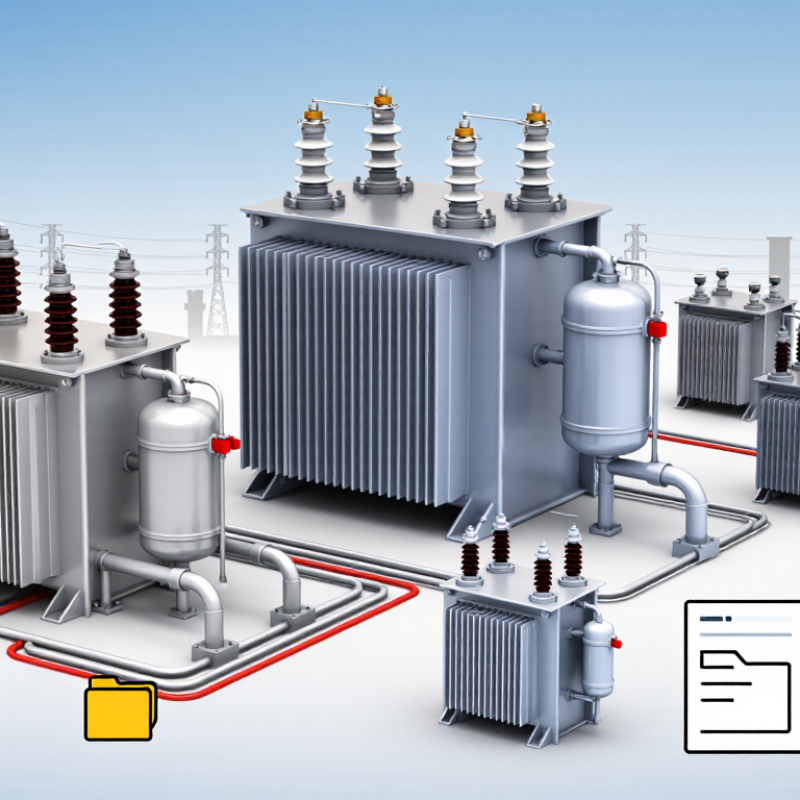
China Best Oil Filled Power Transformers for Sale?

What Is an Oil-Filled Power Transformer?

What Is an Oil-Filled Power Transformer?

An oil-filled power transformer transfers electrical energy between circuits through electromagnetic induction. Its core and windings sit inside a sealed tank filled with insulating liquid, commonly mineral oil or an ester-based fluid. The liquid insulates energized components and carries heat toward the tank walls or external radiators. Inside, thin sheets of electrical steel guide magnetic flux, while copper or aluminum windings handle current. It is a practical design for substations and outdoor installations. But “oil-filled” describes a cooling and insulation system, not a complete performance rating.

The U.S. Department of Energy’s 2013 Distribution Transformers Technical Support Document estimated annual losses of about 61 billion kilowatt-hours across U.S. distribution transformers. That estimate covers multiple transformer designs, not oil-filled units alone, but it shows why efficiency matters. Small losses accumulate.

An oil-filled transformer’s real operating results depend on load, ambient temperature, cooling condition, and maintenance. A warm tank after sustained loading may be normal; rising temperatures or leaks deserve inspection. Buyers should check rated capacity, voltage, impedance, temperature rise, fluid type, and test documentation against the installation needs. One detail is easy to overlook: the same unit can behave differently under uneven daily loads. No catalogue figure captures every site condition.

How Oil-Filled Transformers Work and What They Contain

China Best Oil Filled Power Transformers for Sale?

An oil-filled transformer transfers electrical energy through electromagnetic induction. Its laminated steel core guides magnetic flux, while copper or aluminum windings carry current. Insulating oil surrounds these parts, providing electrical insulation and carrying heat to the tank walls or radiators. Larger units may include a conservator, breather, temperature gauges, and protective relays. Not every design uses the same fittings.

Heat moves. As the transformer operates, losses warm its core and windings. Natural or forced oil circulation carries heat toward cooling surfaces, then cooler oil returns. The U.S. Department of Energy’s 2013 distribution-transformer standards analysis projected cumulative energy savings of 3.63 quadrillion Btu over 30 years. That figure concerns regulated distribution-transformer designs, not every power transformer, but it shows why losses matter. IEC 60076 provides a technical framework for transformer ratings and performance; actual construction and cooling arrangements vary by specification.

Tips: Ask for the nameplate rating, cooling code, test records, and oil-test results. Check moisture and dielectric breakdown strength against applicable test methods, such as IEC 60156. A lab result is useful, but it does not replace inspection. For example, a sound oil sample cannot rule out a loose connection or damaged winding.

China Best Oil Filled Power Transformers for Sale? - How Oil-Filled Transformers Work and What They Contain
Item Typical specification or description How it works or selection guidance
Common distribution rating Typically 50–2,500 kVA; 10 kV or 11 kV primary and 400/230 V secondary are common examples. Steps medium-voltage electricity down for commercial, industrial, or local distribution loads. Actual ratings depend on the network and project requirements.
Substation power ratings Multi-MVA units are used for larger substations; voltage classes may include 35 kV, 66 kV, 110 kV, or higher. Choose capacity and voltage ratio to match the power system study, expected load, fault level, and future expansion plan.
Operating principle Alternating current in the primary winding creates a changing magnetic flux in the core, inducing voltage in the secondary winding. The turns ratio determines the approximate voltage ratio. The oil does not create the voltage; it provides insulation and helps remove heat.
Core and windings A laminated electrical-steel core and copper or aluminium windings are enclosed in the transformer tank. The core provides a magnetic path; the windings transfer electrical energy by electromagnetic induction. Conductor material and design affect losses, weight, and cost.
Insulating liquid Usually mineral insulating oil; some designs use ester-based insulating liquid. The liquid fills spaces around the active parts, provides electrical insulation, and carries heat toward the tank or radiators. Fluid choice should suit fire, environmental, and operating requirements.
Cooling method ONAN (oil natural, air natural) is common for many distribution units; larger designs may use ONAF or other specified cooling arrangements. Natural circulation moves heated oil to cooling surfaces. Fans in ONAF designs increase air flow when required. Confirm the rated capacity for each cooling stage.
Tank and radiators A sealed or conservator-type tank contains the oil and active parts; radiators or corrugated tank walls dissipate heat. Tank construction, pressure protection, corrosion protection, and installation clearances should be checked for the site environment.
Voltage adjustment A de-energized tap changer is commonly provided; an on-load tap changer may be specified where voltage regulation under load is needed. Tap settings adjust the effective winding turns ratio within the designed range. De-energized tap changes require the transformer to be isolated.
Bushings and connections Insulated bushings provide terminals for high-voltage and low-voltage connections; terminal arrangement varies by design. Specify cable or bus connections, phase arrangement, creepage requirements, and any required cable boxes or protective enclosures.
Monitoring and protection Depending on design, accessories may include an oil-level indicator, temperature indicators, pressure-relief device, and conservator breather. Protection and alarm devices help identify abnormal temperature, pressure, or oil-level conditions. Accessory selection depends on transformer type and project specification.
Efficiency and losses No-load loss and load loss are stated in the technical datasheet and verified through applicable tests. Compare guaranteed losses at the specified rating and reference conditions, rather than relying on a general efficiency claim.
Standards and verification IEC 60076 is a widely used series of power-transformer standards; applicable national requirements may also apply. Confirm the governing standard, routine and type tests, insulation levels, impedance, temperature rise, and required documentation in the purchase specification.

Note: Values and configurations shown are typical examples, not a specific product offer. Final specifications should be confirmed against the project design, applicable standards, and site conditions.

Common Transformer Types and Key Technical Specifications

Oil-filled power transformers are selected by duty, not by a “best” label. Small. Common designs include two-winding units for voltage conversion and autotransformers for linked voltage levels. Core-type construction is widely used, while shell-type designs suit some specialized applications. Conservator and sealed-tank arrangements handle oil expansion differently. Check rated power in MVA, voltage ratio, frequency, vector group, and percentage impedance against the network study. The IEC 60076 series covers power-transformer ratings, temperature rise, insulation, and testing. Yet compliance alone cannot guarantee a good site match.

Cooling and insulation define operating limits. ONAN uses natural oil and air circulation; ONAF adds forced-air cooling with fans. Specify no-load and load losses, winding temperature rise, insulation level, tap range, and sound limits. Ask for guaranteed values and test records, then compare them at stated reference conditions. The IEA’s Electricity Grids and Secure Energy Transitions (2023) estimates annual grid investment must increase from about $300 billion to over $600 billion by 2030. That expansion makes accurate transformer data commercially important. Still, procurement tables can miss altitude, harmonic loading, or restricted ventilation. A site review can catch those gaps.

How to Evaluate Oil-Filled Transformers for Sale in China

China Best Oil Filled Power Transformers for Sale?

When evaluating oil-filled transformers for sale in China, start with the actual duty, not the catalogue headline. Match rated capacity, voltage ratio, frequency, vector group, impedance, and cooling method to your project. Check no-load and load losses separately; a lower purchase price may lead to higher operating costs. Small details matter. Confirm oil type, temperature rise, sound level, altitude limits, and enclosure protection against the installation conditions.

Ask for routine test records tied to the unit’s serial number, plus applicable type-test evidence and a clear inspection plan. IEC 60076 provides the core international transformer standards; verify which parts apply to your specification. The IEA’s 2023 report, Electricity Grids and Secure Energy Transitions, estimates that 80 million kilometres of grid need to be added or refurbished by 2040. That signals broad equipment demand, but it does not prove any supplier’s delivery date. Check production milestones, shipping terms, warranty exclusions, and spare-parts availability in writing.

Review the tank welds, bushings, conservator, pressure-relief device, and oil-leak controls in inspection photos or during a factory visit. Request temperature-rise and loss results, not just a certificate cover page. Paper ratings can mislead. A neat spreadsheet is not the whole story; project-specific checks are easy to overlook, and I would recheck the final drawings before approving manufacture.

How to Evaluate Oil-Filled Transformers for Sale in China

Selected nominal AC grid voltage levels in China (kV)

These are nominal system voltage levels, not sales figures or transformer rankings. When comparing oil-filled transformers, confirm that the rated high- and low-voltage sides match the intended connection point, and review efficiency, impedance, temperature-rise limits, insulation level, and test reports.

Installation, Safety, and Maintenance Requirements

China Best Oil Filled Power Transformers for Sale?

Installation, Safety, and Maintenance Requirements

An oil-filled power transformer can look ready while its foundation, cable terminations, or ventilation still need attention. Before delivery, confirm the unit’s voltage, capacity, impedance, and connection group match the project design. Check the access route and lifting points, too. A small mismatch can become an expensive site problem. Install the transformer on a stable, level base, with suitable clearances and oil containment for the location. Oil leaks matter.

Before energizing, qualified personnel should verify grounding, protective devices, cable connections, and oil level against the manufacturer’s instructions. Follow applicable electrical codes and IEEE C57.93 guidance for installation and maintenance. The U.S. Department of Energy’s 2013 distribution-transformer rule analysis projected about 3.4 quadrillion Btu in cumulative energy savings over 30 years. That figure reflects updated efficiency standards, not the savings of any single transformer (78 FR 23336).

Maintenance works best when it follows operating conditions, not just a calendar. Record oil temperature, load, noise, and visible leaks during inspections. Periodic oil testing can help identify moisture or deterioration; IEC 60422 provides guidance for supervising mineral insulating oils. Use thermography to check for unusual hot spots, and investigate changes rather than merely filing the readings away. Keep inspection records. They reveal trends, though they cannot replace a trained technician’s judgment. Before servicing, isolate and verify the equipment is de-energized, and follow site-specific safety procedures.

FAQS

What is an oil-filled power transformer?

It transfers electrical energy between circuits through electromagnetic induction. Its core and windings sit in a sealed tank filled with insulating liquid.

What does the insulating liquid do?

It insulates energized parts and carries heat toward the tank walls or external radiators. Small details matter.

Where are oil-filled transformers commonly used?

They are practical for substations and outdoor installations. Their suitability still depends on the site and project requirements.

Which specifications should buyers check?

Check rated capacity, voltage ratio, frequency, vector group, impedance, and cooling method. Also review temperature rise, fluid type, sound level, and enclosure protection.

How can operating costs be assessed?

Compare no-load and load losses separately. A lower purchase price may mean higher operating costs over time.

What test documents should be requested?

Ask for routine test records linked to the unit’s serial number. Request relevant type-test evidence and a clear inspection plan.

What physical details deserve inspection?

Review tank welds, bushings, the conservator, pressure-relief device, and oil-leak controls. Photos help, but an inspection may reveal more.

Can catalogue ratings predict performance at a specific site?

Not fully. Load patterns, ambient temperature, cooling condition, and maintenance affect results. I would recheck the final drawings; that step is easy to miss.

Conclusion

Oil-Filled Power Transformers use insulating oil to cool internal components and help prevent electrical faults. They typically contain a magnetic core, primary and secondary windings, an oil-filled tank, bushings, and protective devices. As electrical energy passes through the windings, the transformer adjusts voltage for transmission or distribution, while the oil carries heat away from the core and coils. Common designs include distribution, power, and specialized transformers, with selection based on capacity, voltage ratio, cooling method, efficiency, insulation level, and operating conditions.

When evaluating transformers for sale in China, buyers should compare technical specifications, construction quality, test documentation, service support, and suitability for the intended installation. Proper site preparation, grounding, ventilation, and safe handling are essential. Regular inspections should check oil condition and level, leaks, temperature, connections, and protective equipment. Following a planned maintenance schedule helps support reliable performance and extends equipment service life.

Evelyn

Evelyn

Evelyn is a professional marketing specialist with a strong understanding of product strategy, customer needs, and digital communication. As a valued member of the company, she combines market insight with practical product knowledge to create clear, useful, and engaging content for both industry......